
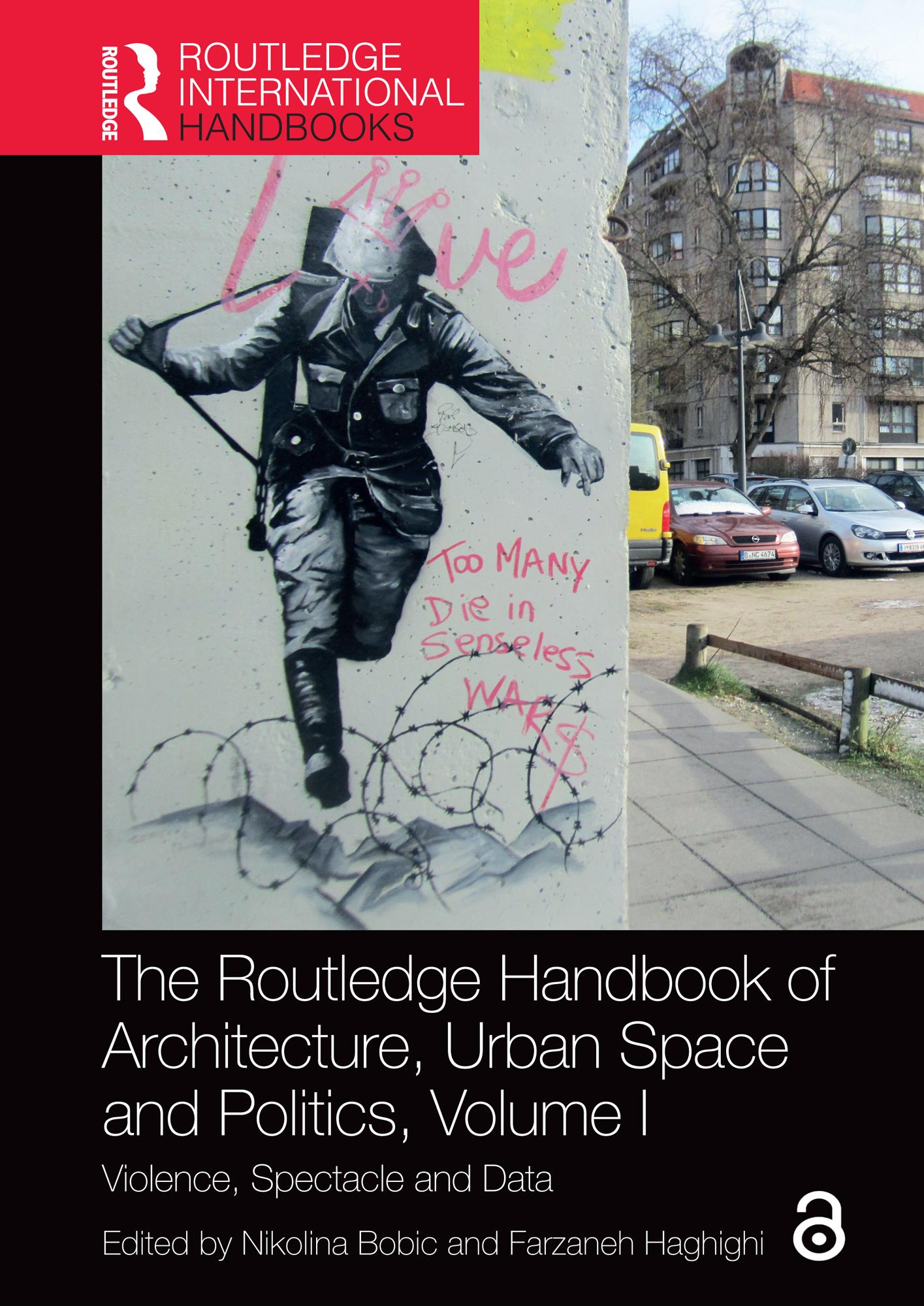
For architecture and urban space to have relevance in the 21st Century, we cannot merely reignite the approaches of thought and design that were operative in the last century. This is despite, or because of, the nexus between politics and space often being theorized as a representation or by-product of politics. As a symbol or an effect, the spatial dimension is depoliticized. Consequently, architecture and the urban are halted from fostering any systematic change as they are secondary to the event and therefore incapable of performing any political role. This handbook explores how architecture and urban space can unsettle the unquestioned construct of the spatial politics of governing.
Considering both ongoing and unprecedented global problems – from violence and urban warfare, the refugee crisis, borderization, detention camps, terrorist attacks to capitalist urbanization, inequity, social unrest and climate change – this handbook provides a comprehensive and multidisciplinary research focused on the complex nexus of politics, architecture and urban space. Volume I starts by pointing out the need to explore the politics of spatialization to make sense of the operational nature of spatial oppression in contemporary times. The operative and active political reading of space is disseminated through five thematics: Violence and War Machines; Security and Borders; Race, Identity and Ideology; Spectacle and the Screen; and Mapping Landscapes and Big Data.
This first volume of the handbook frames cutting-edge contemporary debates and presents studies of actual theories and projects that address spatial politics. This Handbook will be of interest to anyone seeking to meaningfully disrupt the reduction of space to an oppressive or neutral backdrop of political realities.
Chapters 1 and 23 of this book are freely available as a downloadable Open Access PDF at http://www.taylorfrancis.com under a Creative Commons Attribution (CC-BY) 4.0 license.
Zahle einfach mit Karte, Klarna, Apple Pay oder Google Pay. Nicht zufrieden? Du hast immer ein 14-tägiges Widerrufsrecht. Lies mehr in unseren AGB. Hast du Fragen, schreib uns eine E-Mail an hello@memmo.org.
Memmo macht das Lernen einfacher – wo auch immer du bist. Bei uns findest du deine Kursbücher und smarte Lerntools an einem Ort: Zusammenfassungen, Quizzes, Podcasts und Lernkarten. Und Ted, dein Lernbuddy, beantwortet alles, was du wissen möchtest. Über 50.000 Studierende lernen bereits hier – gemacht, damit du schneller lernst und weniger Stress hast.