
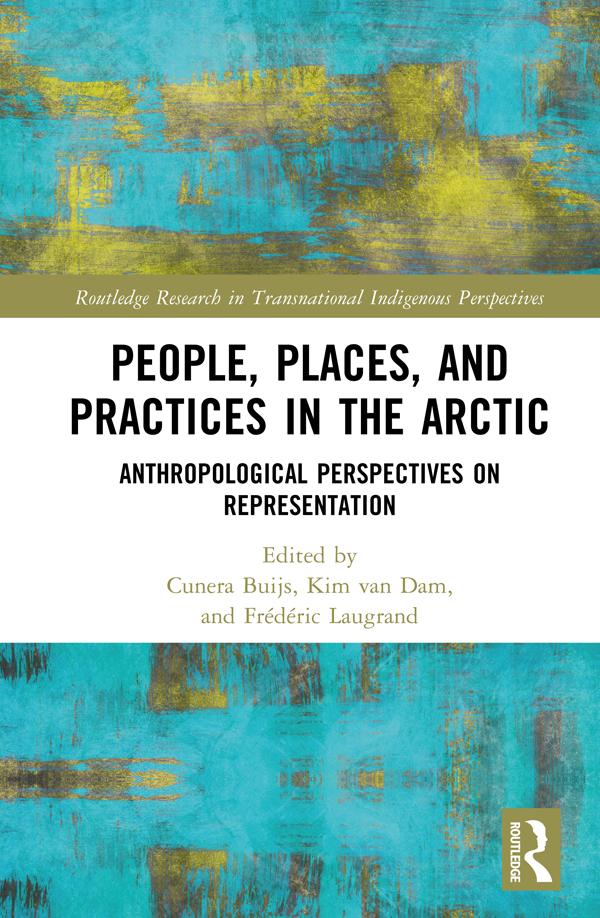
This collection follows anthropological perspectives on peoples (Canadian Inuit, Norwegian Sámi, Yupiit from Alaska, and Inuit from Greenland), places, and practices in the Circumpolar North from colonial times to our post-modern era. This volume brings together fresh perspectives on theoretical concepts, colonial/imperial descriptions, collaborative work of non-Indigenous and Indigenous researchers, as well as articles written by representatives of Indigenous cultures from an inside perspective. The scope of the book ranges from contributions based on unpublished primary sources, missionary journals, and fairly unknown early Indigenous sources and publications, to those based on more recent Indigenous testimonies and anthropological fieldwork, museum exhibitions, and (self)representations in the fields of fashion, marketing, and the arts.
The aim of this volume is to explore the making of representations for and/or by Circumpolar North peoples. The authors follow what representations have been created in the past and in some cases continue to be created in the present, and the Indigenous employment of representations that has continuity with the past and also goes beyond "traditional" utilization. By studying these representations, we gain a better understanding of the dynamics of a society and its interaction with other cultures, notably in the context of the dominant culture’s efforts to assimilate Indigenous people and erase their story. People’s ideas about themselves and of "the Other" are never static, not even if they share the same cultural background. This is even more the case in the contact zone of the intercultural arena. Images of "the Other" vary according to time and place, and perceptions of "others" are continuously readjusted from both sides in intercultural encounters.
This volume has been prepared by the Research Group Circumpolar Cultures (RGCC) which is based in the Netherlands. Its members conduct research on social and cultural change focusing on topics that are of interest to the Indigenous peoples of the Arctic. The RGCC builds on a long tradition in Arctic studies in the Netherlands (Nico Tinbergen, Geert van den Steenhoven, Gerti Nooter, and Jarich Oosten) and can rely on rich Arctic collections of artefacts and photographs in anthropological museums and extensive library collections. The expertise of the RGCC in Arctic studies is internationally acknowledged by academics as well as circumpolar peoples.
Zahle einfach mit Karte, Klarna, Apple Pay oder Google Pay. Nicht zufrieden? Du hast immer ein 14-tägiges Widerrufsrecht. Lies mehr in unseren AGB. Hast du Fragen, schreib uns eine E-Mail an hello@memmo.org.
Memmo macht das Lernen einfacher – wo auch immer du bist. Bei uns findest du deine Kursbücher und smarte Lerntools an einem Ort: Zusammenfassungen, Quizzes, Podcasts und Lernkarten. Und Ted, dein Lernbuddy, beantwortet alles, was du wissen möchtest. Über 50.000 Studierende lernen bereits hier – gemacht, damit du schneller lernst und weniger Stress hast.