
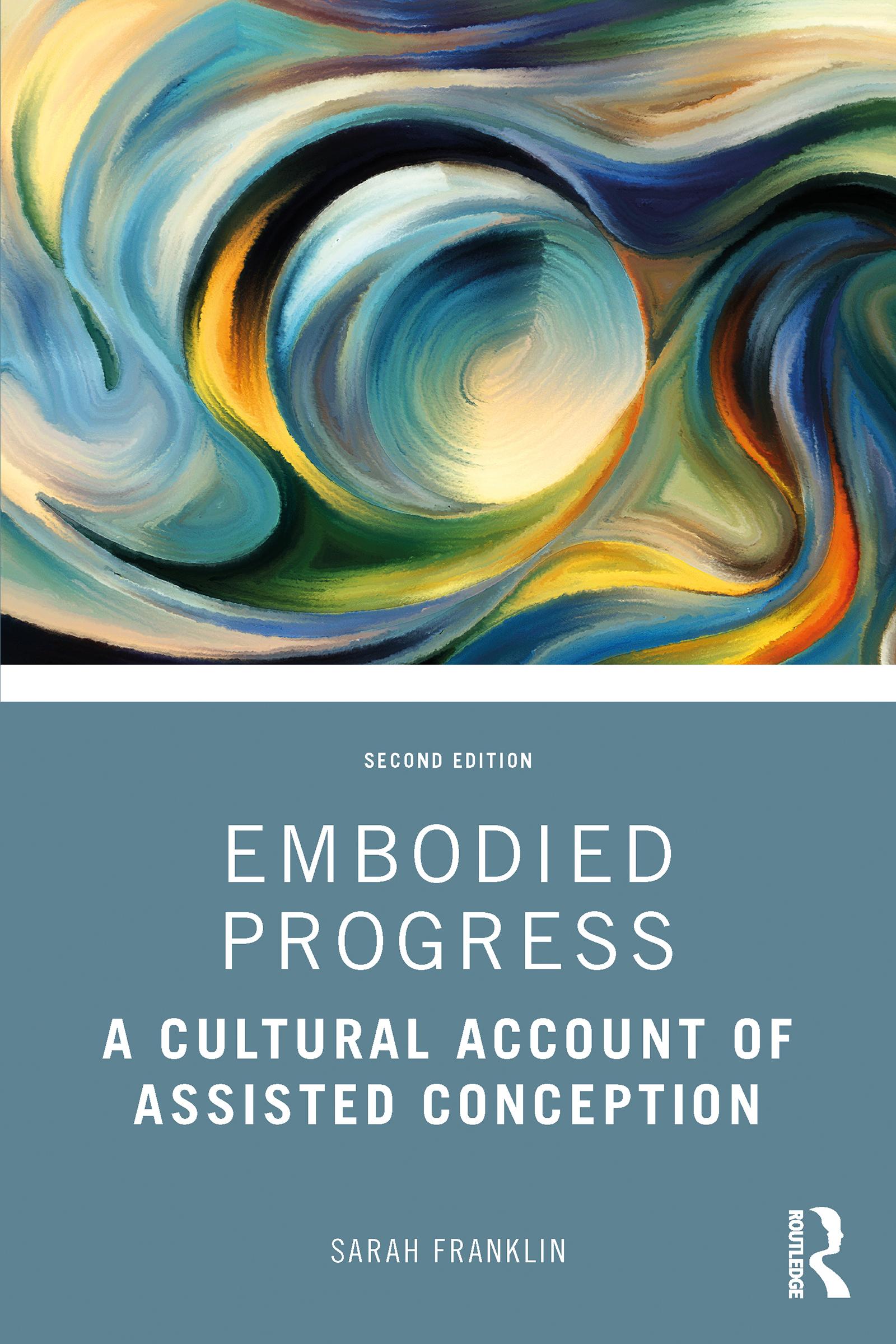
This new edition of Sarah Franklin’s classic monograph on the development of in vitro fertilisation (IVF) includes two entirely new chapters reflecting on the relevance of the book’s findings in the context of the past two decades and providing a ‘state-of-the-art’ review of the field today.
Over the past 25 years, both the assisted conception industry and the academic field of reproductive studies have grown enormously. IVF, in particular, is belatedly becoming recognised as one of the most influential technologies of the twentieth and twenty-first centuries, with a far-reaching set of implications that have to date been underestimated, understudied and under-reported. This pioneering text was the first to explore the emergence of commercial IVF in the United Kingdom, where the technique was originally developed. During the 1980s, the British Parliament devised a unique system of comprehensive national regulation of assisted reproduction amidst fractious public and media debate over IVF and embryo research. Franklin chronicles these developments and explores their significance in relation to classic anthropological debates about the meanings of kinship, gender and the 'biological facts' of parenthood. Drawing on extensive personal interviews with women and couples undergoing IVF, as well as ethnographic fieldword in early IVF clinics, the book explores the unique demands of the IVF technique. In richly detailed chapters, it documents the ‘topsy-turvy’ world of IVF, and how the experience of undergoing IVF changes its users in ways they had not anticipated. Franklin argues that such experiences reveal a crucial feature of translational biomedical procedures more widely – namely, that these are ‘hope technologies’ that paradoxically generate new uncertainties and risks in the very space of their supposed resolution. The final chapter closely engages with the ‘hope technology’ concept, as well as the idea of ‘having to try’ and uses these frames to link contemporary reproductive studies to core sociological and anthropological arguments about economy, society and technology.
In the context of rapid fertility decline and huge growth in the fertility industry, this volume is even more relevant today than when it was first published at the dawn of what Franklin calls the era of 'iFertility'. Embodied Progress is an essential read for all social science academics and students with an interested in the burgeoning new field of reproductive studies. It is also a valuable resource for practitioners working in the fields of reproductive health, biomedicine and policy.
Zahle einfach mit Karte, Klarna, Apple Pay oder Google Pay. Nicht zufrieden? Du hast immer ein 14-tägiges Widerrufsrecht. Lies mehr in unseren AGB. Hast du Fragen, schreib uns eine E-Mail an hello@memmo.org.
Memmo macht das Lernen einfacher – wo auch immer du bist. Bei uns findest du deine Kursbücher und smarte Lerntools an einem Ort: Zusammenfassungen, Quizzes, Podcasts und Lernkarten. Und Ted, dein Lernbuddy, beantwortet alles, was du wissen möchtest. Über 50.000 Studierende lernen bereits hier – gemacht, damit du schneller lernst und weniger Stress hast.