
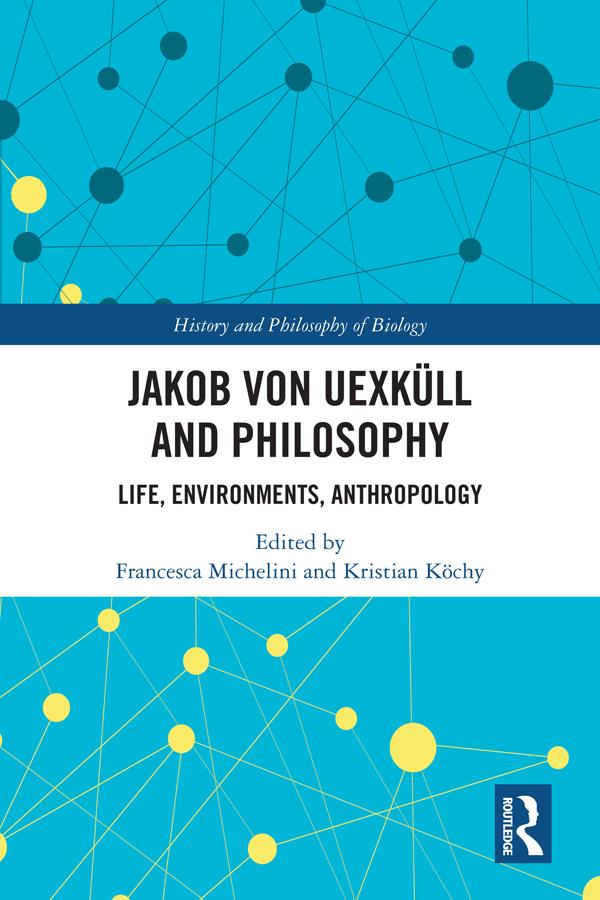
Dismissed by some as the last of the anti-Darwinians, his fame as a rigorous biologist even tainted by an alleged link to National Socialist ideology, it is undeniable that Jakob von Uexküll (1864-1944) was eagerly read by many philosophers across the spectrum of philosophical schools, from Scheler to Merleau-Ponty and Deleuze and from Heidegger to Blumenberg and Agamben. What has then allowed his name to survive the misery of history as well as the usually fatal gap between science and humanities?
This collection of essays attempts for the first time to do justice to Uexküll’s theoretical impact on Western culture. By highlighting his importance for philosophy, the book aims to contribute to the general interpretation of the relationship between biology and philosophy in the last century and explore the often neglected connection between continental philosophy and the sciences of life. Thanks to the exploration of Uexküll’s conceptual legacy, the origins of cybernetics, the overcoming of metaphysical dualisms, and a refined understanding of organisms appear variedly interconnected.
Uexküll’s background and his relevance in current debates are thoroughly examined as to appeal to undergraduate and postgraduate students, as well as postdoctoral researchers in fields such as history of the life sciences, philosophy of biology, critical animal studies, philosophical anthropology, biosemiotics and biopolitics.
Zahle einfach mit Karte, Klarna, Apple Pay oder Google Pay. Nicht zufrieden? Du hast immer ein 14-tägiges Widerrufsrecht. Lies mehr in unseren AGB. Hast du Fragen, schreib uns eine E-Mail an hello@memmo.org.
Memmo macht das Lernen einfacher – wo auch immer du bist. Bei uns findest du deine Kursbücher und smarte Lerntools an einem Ort: Zusammenfassungen, Quizzes, Podcasts und Lernkarten. Und Ted, dein Lernbuddy, beantwortet alles, was du wissen möchtest. Über 50.000 Studierende lernen bereits hier – gemacht, damit du schneller lernst und weniger Stress hast.