
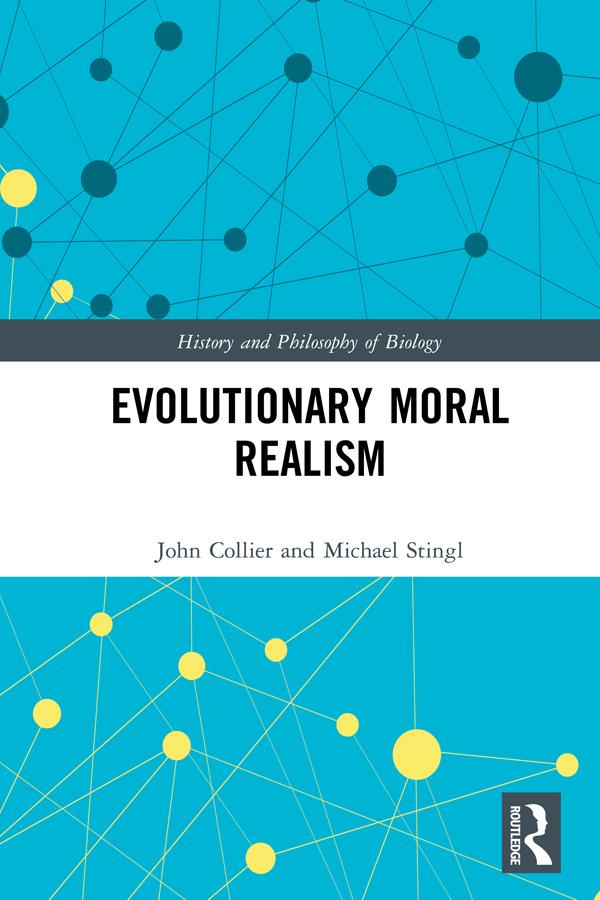
Against standard approaches to evolution and ethics, this book develops the idea that moral values may find their origin in regularly recurring features in the cooperative environments of species of organisms that are social and intelligent.
Across a wide range of species that are social and intelligent, possibilities arise for helping others, responding empathetically to the needs of others, and playing fairly. The book identifies these underlying environmental regularities as biological natural kinds and as natural moral values. As natural kinds, moral values help to provide more complete explanations for the selection of traits that arise in response to them. For example, helping in an aquatic environment is quite different than helping in an arboreal environment, and so we can expect the selection of traits for helping to reflect these underlying environmental differences. With the human ability to name, talk, and reason about important features of our environment, moral values become part of moral discourse and argument, helping to produce coherent systems of moral thought.
Combining a naturalistic approach to morality with an equal emphasis on moral argument and truth, this book will be of interest to philosophers and historians of biology, theoretical biologists, comparative psychologists, and moral philosophers.
Zahle einfach mit Karte, Klarna, Apple Pay oder Google Pay. Nicht zufrieden? Du hast immer ein 14-tägiges Widerrufsrecht. Lies mehr in unseren AGB. Hast du Fragen, schreib uns eine E-Mail an hello@memmo.org.
Memmo macht das Lernen einfacher – wo auch immer du bist. Bei uns findest du deine Kursbücher und smarte Lerntools an einem Ort: Zusammenfassungen, Quizzes, Podcasts und Lernkarten. Und Ted, dein Lernbuddy, beantwortet alles, was du wissen möchtest. Über 50.000 Studierende lernen bereits hier – gemacht, damit du schneller lernst und weniger Stress hast.