
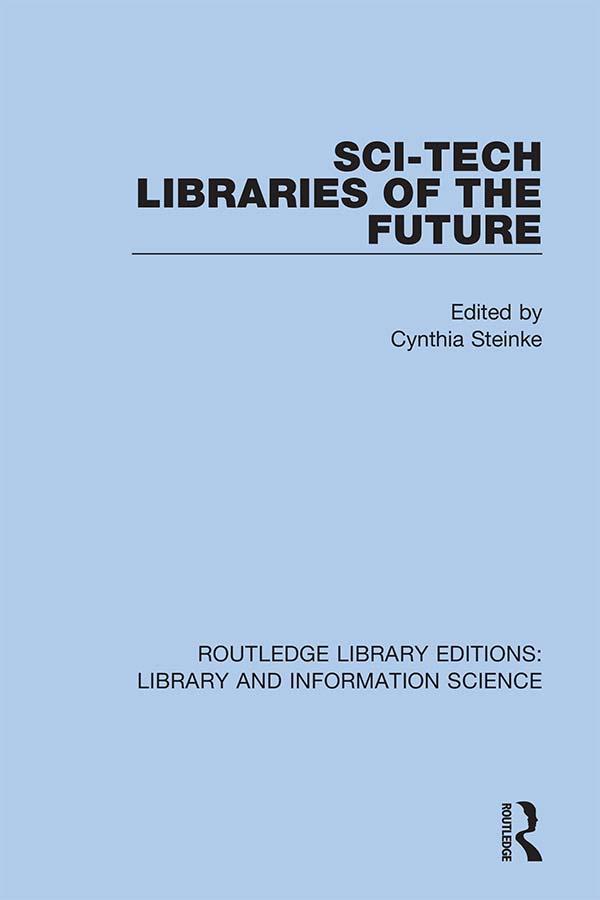
What will future sci-tech libraries be like? Who will be the key players? In this insightful volume, first published in 1992, leaders in sci-tech librarianship reflect on their years in the profession and predict how the sci-tech library will look in ten years. It takes a close look at the revolution in the communication of scientific information and how technology has transformed the process of knowledge delivery and acquisitions. It prepares libraries to react to new channels of scholarly communication that in the future may challenge the viability of the research library. Most importantly, it emphasizes how the rapid pace of change in science, communication, and computers has pushed libraries to aggressively seek to become central to the knowledge formation and transfer process - just to survive. These provocative chapters reveal how sci-tech librarians need to work with scientists and engineers to understand their changing information needs and to participate in the planning and development of new information systems.
This book examines all areas of the scientific process that will be affected by change: the way research is conducted, communicated, transferred, stored, and delivered. The changes discussed in this book encompass researchers, librarians, information managers, publishers, and users. Some of the important topics discussed include an in-depth analysis of the information needs of science and engineering and how to best develop the electronic means to meet them; leadership challenges in the future electronic, computer, or virtual library; concern over the quality of information services for scientists delivered by non-scientist librarians; a ten-year prediction for sci-tech librarians and sci-tech publishers; the science library building of the future; the impact of increasingly interdisciplinary scientific research; and the effect of federal policy on sci-tech libraries.
Zahle einfach mit Karte, Klarna, Apple Pay oder Google Pay. Nicht zufrieden? Du hast immer ein 14-tägiges Widerrufsrecht. Lies mehr in unseren AGB. Hast du Fragen, schreib uns eine E-Mail an hello@memmo.org.
Memmo macht das Lernen einfacher – wo auch immer du bist. Bei uns findest du deine Kursbücher und smarte Lerntools an einem Ort: Zusammenfassungen, Quizzes, Podcasts und Lernkarten. Und Ted, dein Lernbuddy, beantwortet alles, was du wissen möchtest. Über 50.000 Studierende lernen bereits hier – gemacht, damit du schneller lernst und weniger Stress hast.