
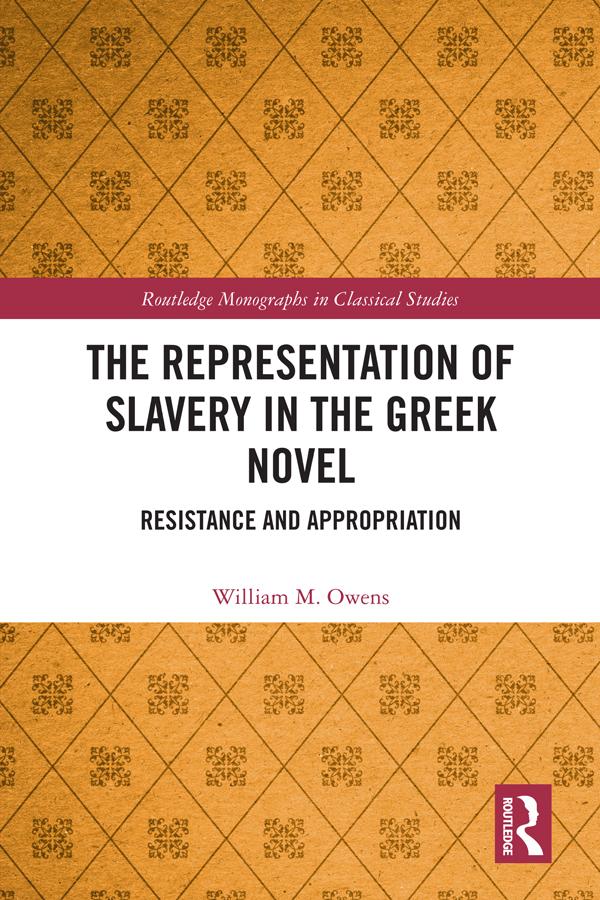
This volume offers the first comprehensive treatment of how the five canonical Greek novels represent slaves and slavery. In each novel, one or both elite protagonists are enslaved, and Owens explores the significance of the genre’s regular social degradation of these members of the elite.
Reading the novels in the context of social attitudes and stereotypes about slaves, Owens argues for an ideological division within the genre: the earlier novelists, Xenophon of Ephesus and Chariton, challenge and undermine elite stereotypes; the three later novelists, Longus, Achilles Tatius, and Heliodorus, affirm them. The critique of elite thinking about slavery in Xenophon and Chariton opens the possibility that these earlier authors and their readers included literate ex-slaves. The interests and needs of these authors and their readers shaped the emerging genre and not only made the protagonists’ slavery a key motif but also made slavery itself a theme that helped define the genre.
The Representation of Slavery in the Greek Novel will be of interest not only to students of the ancient novel but also to anyone working on slavery in the ancient world.
Zahle einfach mit Karte, Klarna, Apple Pay oder Google Pay. Nicht zufrieden? Du hast immer ein 14-tägiges Widerrufsrecht. Lies mehr in unseren AGB. Hast du Fragen, schreib uns eine E-Mail an hello@memmo.org.
Memmo macht das Lernen einfacher – wo auch immer du bist. Bei uns findest du deine Kursbücher und smarte Lerntools an einem Ort: Zusammenfassungen, Quizzes, Podcasts und Lernkarten. Und Ted, dein Lernbuddy, beantwortet alles, was du wissen möchtest. Über 50.000 Studierende lernen bereits hier – gemacht, damit du schneller lernst und weniger Stress hast.