
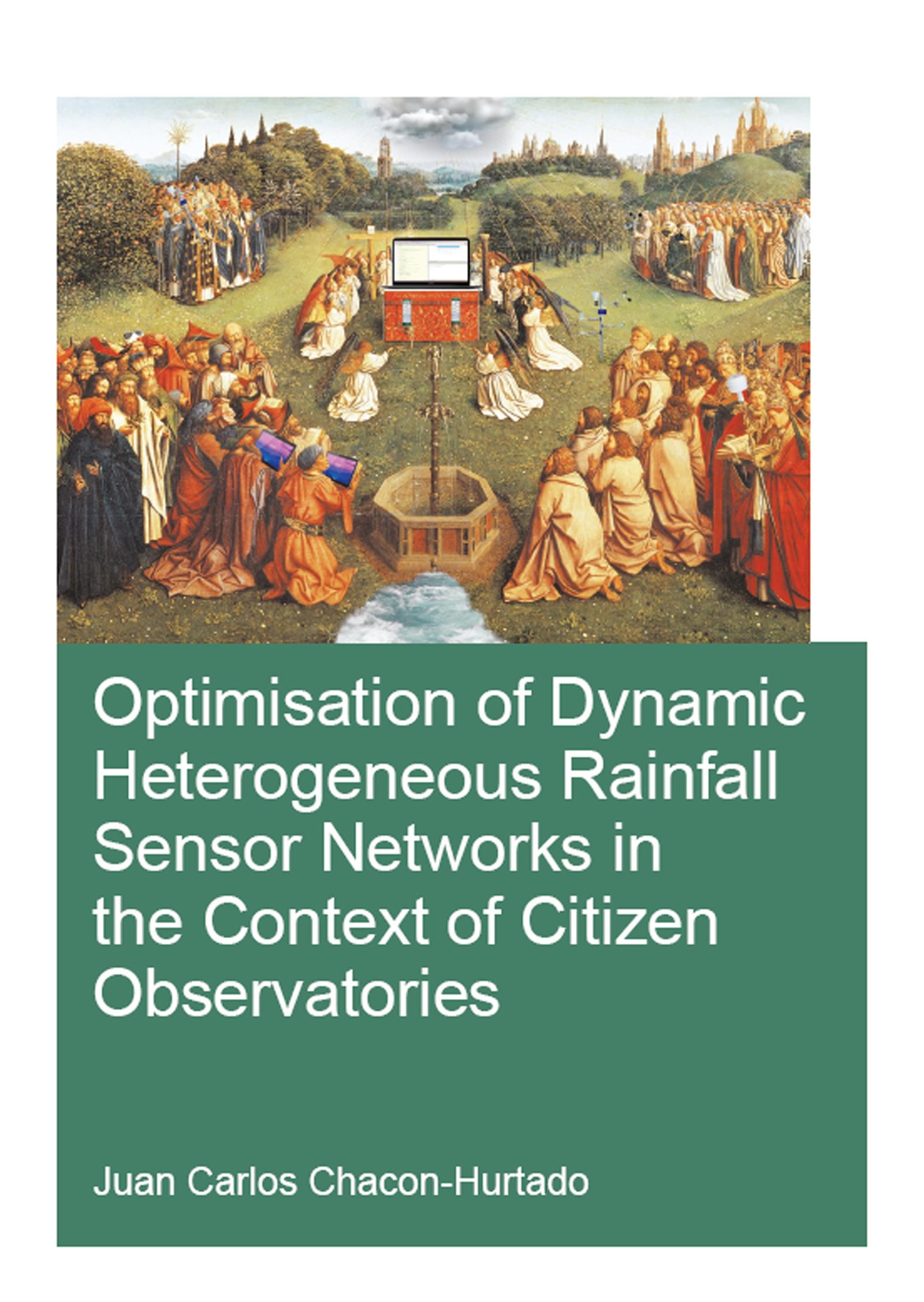
Precipitation drives the dynamics of flows and storages in water systems, making its monitoring essential for water management. Conventionally, precipitation is monitored using in-situ and remote sensors. In-situ sensors are arranged in networks, which are usually sparse, providing continuous observations for long periods at fixed points in space, and due to the high costs of such networks, they are often sub-optimal. To increase the efficiency of the monitoring networks, we explore the use of sensors that can relocate as rainfall events develop (dynamic sensors), as well as increasing the number of sensors involving volunteers (citizens). This research focusses on the development of an approach for merging heterogeneous observations in non-stationary precipitation fields, exploring the interactions between different definitions of optimality for the design of sensor networks, as well as development of algorithms for the optimal scheduling of dynamic sensors. This study was carried out in three different case studies, including Bacchiglione River (Italy), Don River (U.K.) and Brue Catchment (U.K.) The results of this study indicate that optimal use of dynamic sensors may be useful for monitoring precipitation to support water management and flow forecasting.
Zahle einfach mit Karte, Klarna, Apple Pay oder Google Pay. Nicht zufrieden? Du hast immer ein 14-tägiges Widerrufsrecht. Lies mehr in unseren AGB. Hast du Fragen, schreib uns eine E-Mail an hello@memmo.org.
Memmo macht das Lernen einfacher – wo auch immer du bist. Bei uns findest du deine Kursbücher und smarte Lerntools an einem Ort: Zusammenfassungen, Quizzes, Podcasts und Lernkarten. Und Ted, dein Lernbuddy, beantwortet alles, was du wissen möchtest. Über 50.000 Studierende lernen bereits hier – gemacht, damit du schneller lernst und weniger Stress hast.