
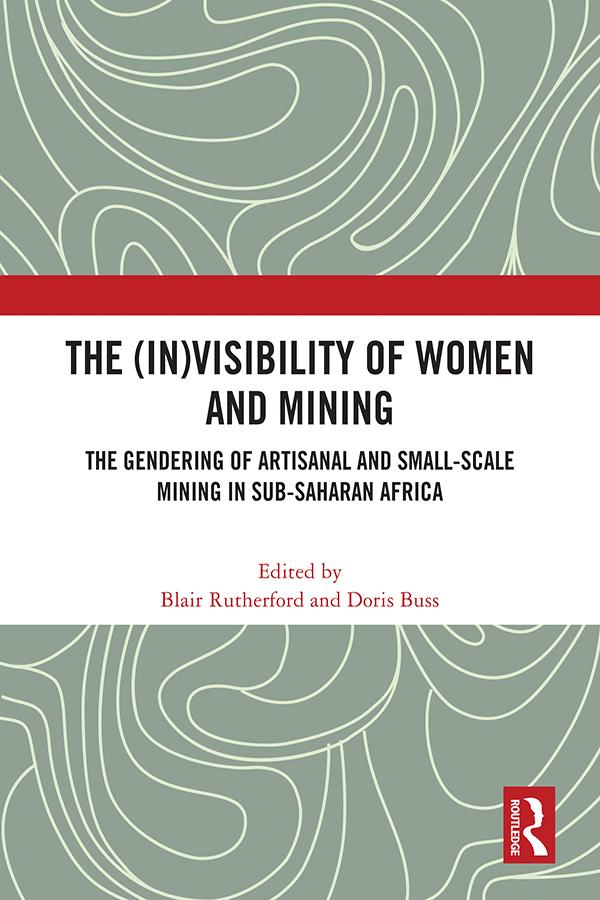
The chapters in this book provide in- depth insight into the gender norms and contexts in which women work in the expanding informal mining sector in sub- Saharan Africa.
Collectively, the research here provides a nuanced account of women’s livelihood strategies in artisanal and small- scale mining (ASM, as its generally known) in ways that challenge images of women— as either victimized by mining or empowered by mining livelihoods, or both— that tend to dominate the growing array of donor and policy interventions in this sector. The authors come from different disciplinary traditions— anthropology, economics, political science, mining engineering, law— but all place questions of gendered power front and centre in their analyses of sociocultural, institutional, economic and political relationships, practices and arrangements within which women navigate their mining livelihoods. The physical or representational presence (and sometimes absence) of women in ASM sites is a linking theme, with the chapters exploring different dimensions of mining and gender— the gendered divisions of labour, migration, land ownership, cultural norms, and gendered authority relations— but also how ‘women’ materialize and are seen and unseen in the growing array of transnational interventions in this sector.
The chapters in this book were originally published as a special issue of the Canadian Journal of African Studies.
Zahle einfach mit Karte, Klarna, Apple Pay oder Google Pay. Nicht zufrieden? Du hast immer ein 14-tägiges Widerrufsrecht. Lies mehr in unseren AGB. Hast du Fragen, schreib uns eine E-Mail an hello@memmo.org.
Memmo macht das Lernen einfacher – wo auch immer du bist. Bei uns findest du deine Kursbücher und smarte Lerntools an einem Ort: Zusammenfassungen, Quizzes, Podcasts und Lernkarten. Und Ted, dein Lernbuddy, beantwortet alles, was du wissen möchtest. Über 50.000 Studierende lernen bereits hier – gemacht, damit du schneller lernst und weniger Stress hast.