
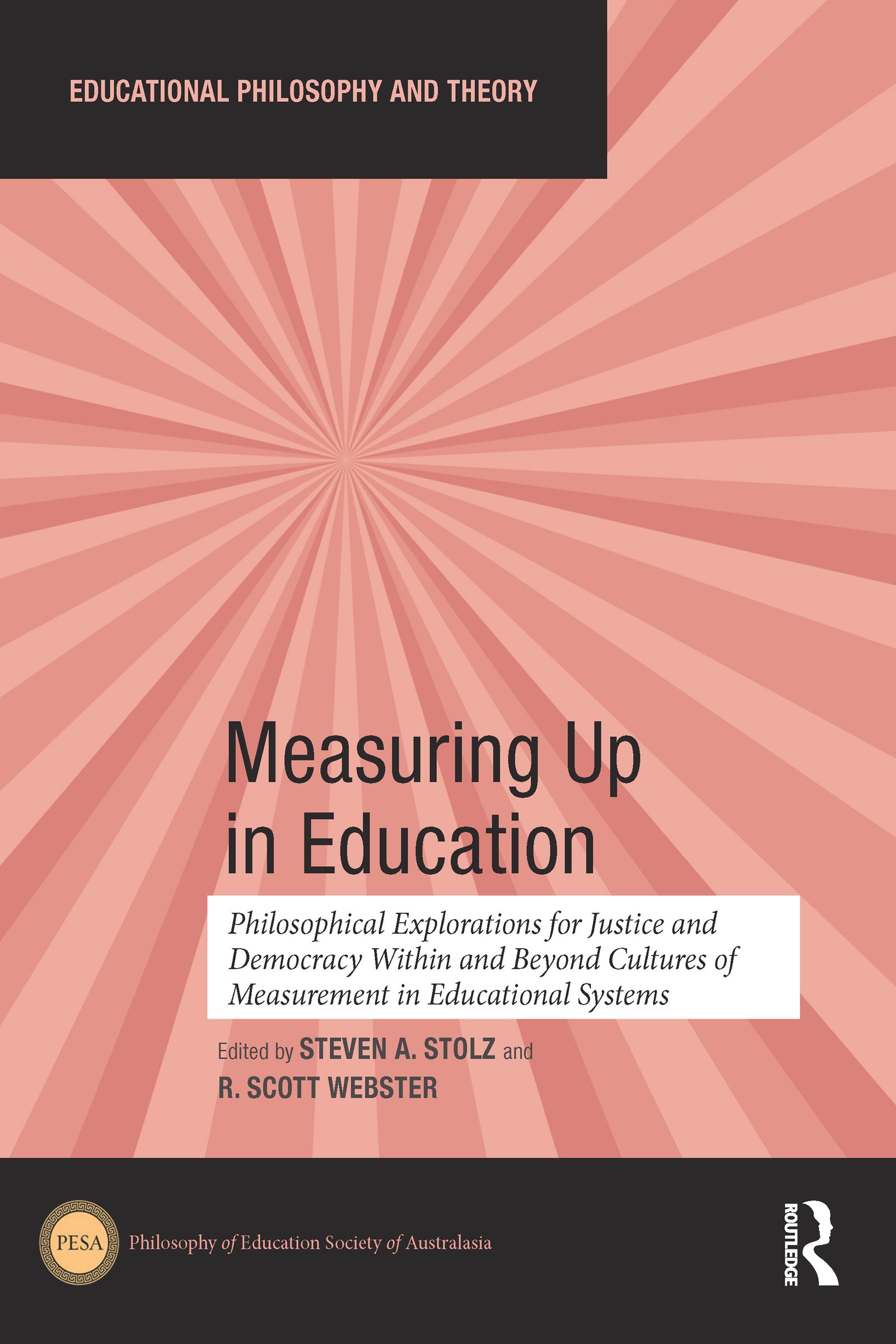
Cultures of measurement are often considered to dominate educational practices, to the degree that, as Biesta (2010) has identified in Good Education in an Age of Measurement we no longer measure what we value, but rather we have become conditioned to value what is measured. A clear example of this occurs when institutions and staff "teach to the test" by emphasising narrow conceptions of learning and of knowledge, simply because the consequences of high-stakes assessments have important implications regarding funding, resources, and even tenure.
This collection explores, via various philosophical means, how valuable educational practices can occur within and beyond cultures of measurement. What seems to be required is for practitioners in education to regain their relationship to the overall purposes of education, such as the furthering of justice and democracy for both individual students and societies as a whole. Such a reconnection has the potential to re-humanise curricular experiences for students, which may have become dehumanised through particular cultures of measurement. It is argued that certain legitimate measures can advance justice and democracy, and so careful attention must be assigned to their validity and value.
This book was originally published as a special issue of Educational Philosophy and Theory.
Zahle einfach mit Karte, Klarna, Apple Pay oder Google Pay. Nicht zufrieden? Du hast immer ein 14-tägiges Widerrufsrecht. Lies mehr in unseren AGB. Hast du Fragen, schreib uns eine E-Mail an hello@memmo.org.
Memmo macht das Lernen einfacher – wo auch immer du bist. Bei uns findest du deine Kursbücher und smarte Lerntools an einem Ort: Zusammenfassungen, Quizzes, Podcasts und Lernkarten. Und Ted, dein Lernbuddy, beantwortet alles, was du wissen möchtest. Über 50.000 Studierende lernen bereits hier – gemacht, damit du schneller lernst und weniger Stress hast.