
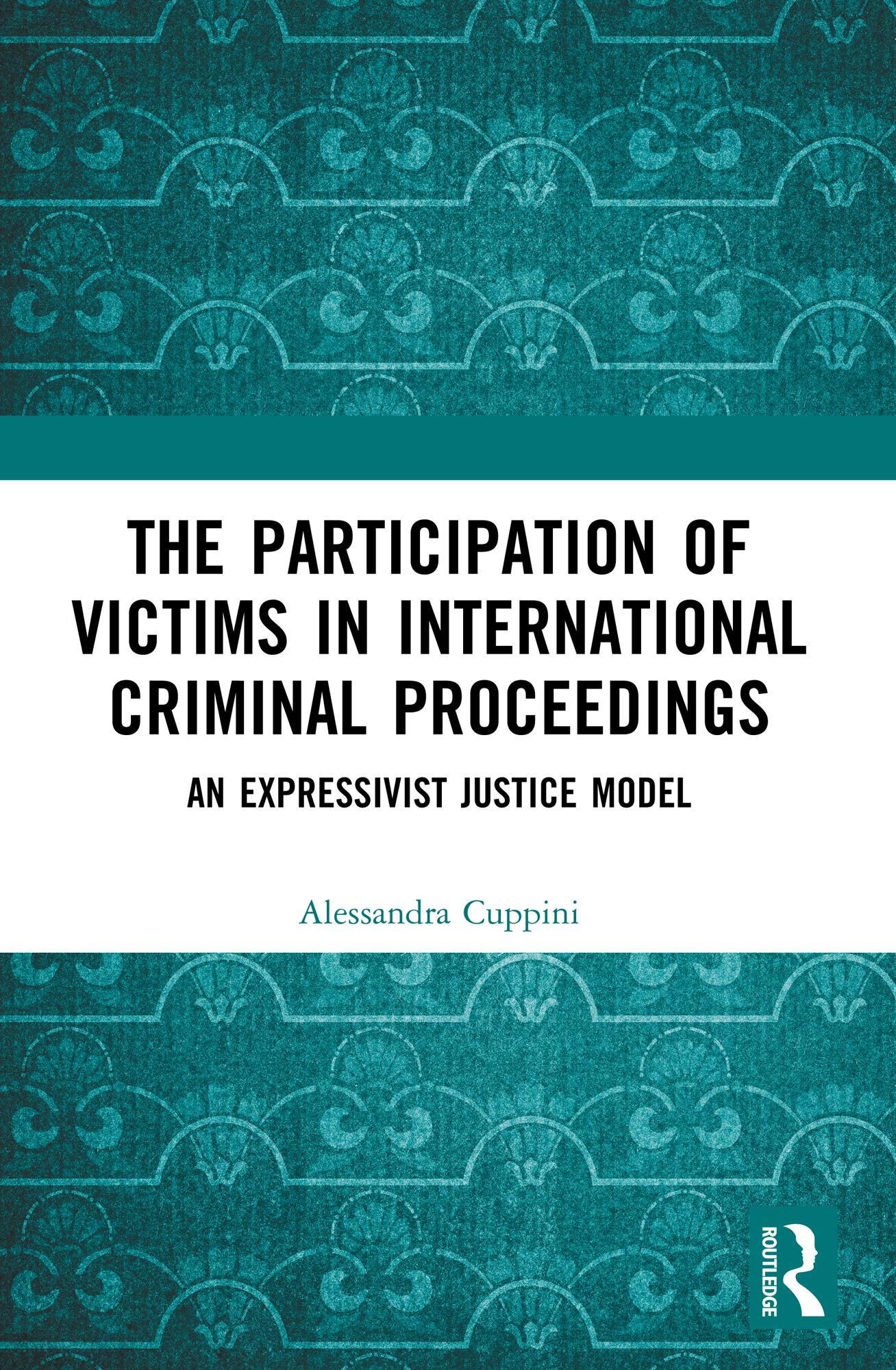
This book argues that the expressivist justice model provides a meaningful foundation for the participation of victims in international criminal proceedings.
Traditional criminal justice theories have tended to marginalise the role afforded to victims while informing the criminal procedures utilised by international criminal courts. As a result, giving content to, shaping, and enhancing victims’ participatory rights have been some of the most debated issues in international criminal justice. This book contributes to this debate by advancing expressivism, which has the capacity to create a historical narrative of gross human rights violations, as a core of international criminal justice able to provide a worthwhile basis for the participation of victims in proceedings and clarifying the scope and content of their participatory rights. The work provides an in-depth discussion on issues related to victims’ participatory rights from the perspective of international human rights law, victimology, and the philosophical foundation of international criminal justice.
The book will be a valuable resource for researchers, academics, and policymakers working in the areas of international criminal justice, international human rights law, transitional justice, and conflict studies.
Zahle einfach mit Karte, Klarna, Apple Pay oder Google Pay. Nicht zufrieden? Du hast immer ein 14-tägiges Widerrufsrecht. Lies mehr in unseren AGB. Hast du Fragen, schreib uns eine E-Mail an hello@memmo.org.
Memmo macht das Lernen einfacher – wo auch immer du bist. Bei uns findest du deine Kursbücher und smarte Lerntools an einem Ort: Zusammenfassungen, Quizzes, Podcasts und Lernkarten. Und Ted, dein Lernbuddy, beantwortet alles, was du wissen möchtest. Über 50.000 Studierende lernen bereits hier – gemacht, damit du schneller lernst und weniger Stress hast.