
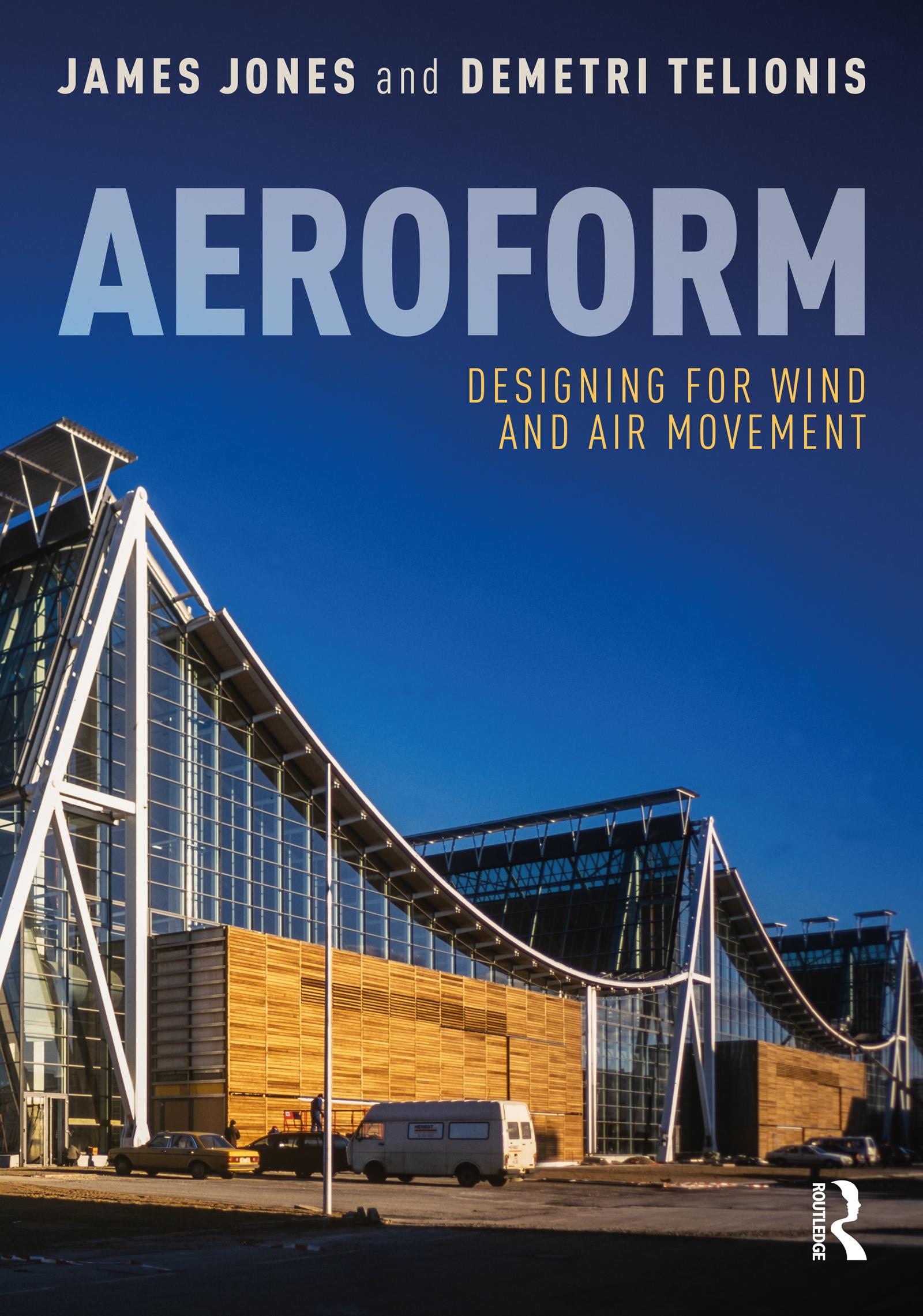
Aeroform: Designing for Wind and Air Movement provides a comprehensive introduction to applying aerodynamic principles to architectural design. It presents a challenge to architects and architectural engineers to give shape to the wind and express its influence on architectural form.
The wind pushes and pulls on our buildings, infiltrates and exfiltrates through cracks and openings, and lifts roofs during storm events. It can also offer opportunities for resource conservation through natural ventilation or a biophilic connection between indoors and out. This book provides basic concepts in fluid mechanics such as materials, forces, equilibrium, pressure, and hydrostatics; introduces the reader to the concept of airflow; and provides strategies for designing for wind resistance, especially in preventing uplift. Natural ventilation and forced airflow are explored using examples such as Thomas Herzog’s Hall 26 in Hanover, RWE Ag building in Essen Germany, and the Kimbell Art Museum in Texas. Finally, issues of wind and airflow measurement are addressed.
A reference for students and practitioners of architecture and architectural engineering, this book is richly illustrated and presents complex concepts of aerodynamic engineering in easy-to-understand language. It prepares the architect or architectural engineer to design buildings that are visually expressive of a dialogue between wind and built form.
Zahle einfach mit Karte, Klarna, Apple Pay oder Google Pay. Nicht zufrieden? Du hast immer ein 14-tägiges Widerrufsrecht. Lies mehr in unseren AGB. Hast du Fragen, schreib uns eine E-Mail an hello@memmo.org.
Memmo macht das Lernen einfacher – wo auch immer du bist. Bei uns findest du deine Kursbücher und smarte Lerntools an einem Ort: Zusammenfassungen, Quizzes, Podcasts und Lernkarten. Und Ted, dein Lernbuddy, beantwortet alles, was du wissen möchtest. Über 50.000 Studierende lernen bereits hier – gemacht, damit du schneller lernst und weniger Stress hast.