
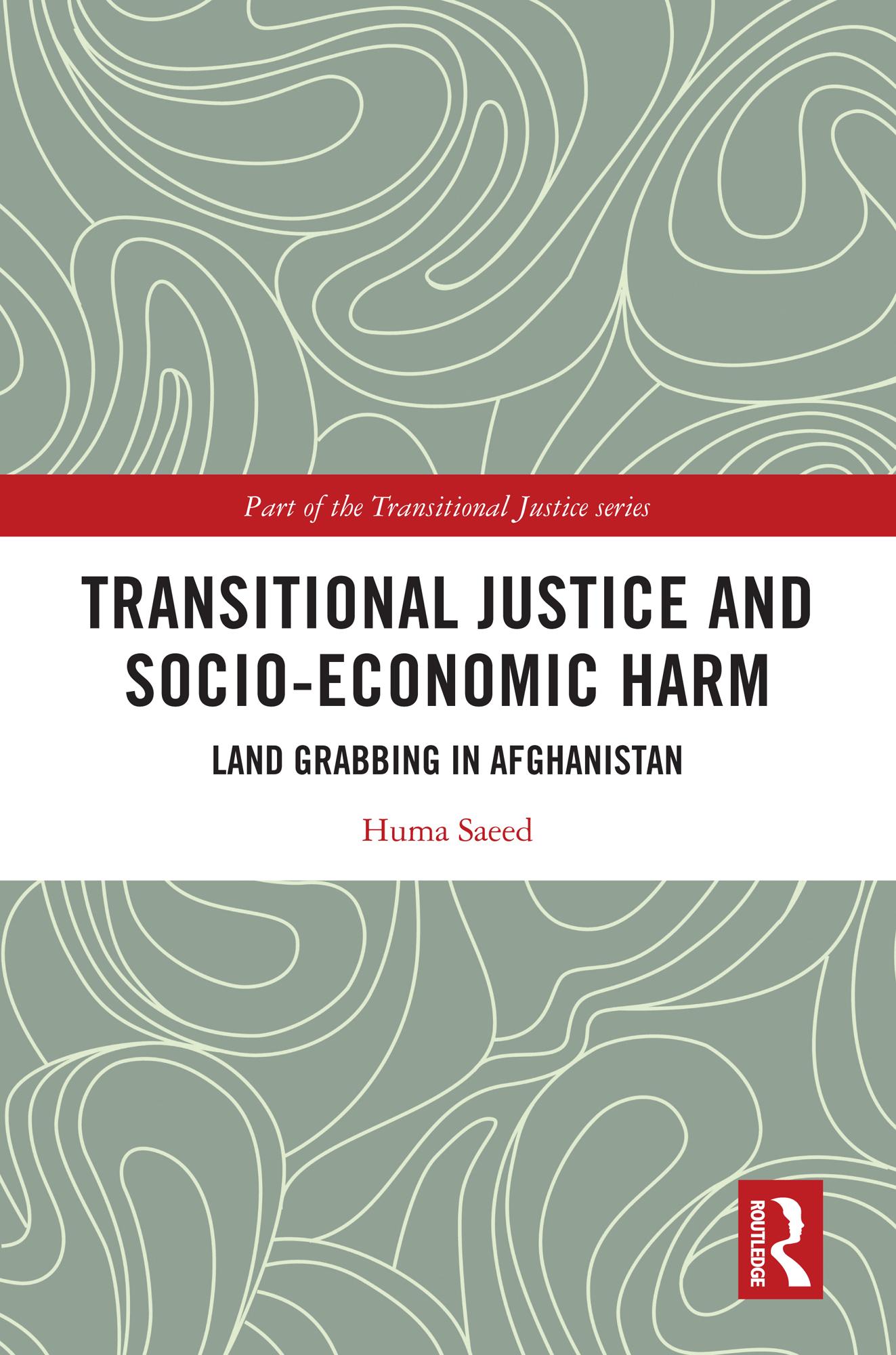
Maintaining the importance of socio-economic issues in devising transitional justice mechanisms, this book examines the widespread practice of land grabbing in Afghanistan.
On 3 September 2003, 100 armed police officers bulldozed around 30 homes in the Sherpur neighborhood of Kabul, Afghanistan, evicting over 250 people. Historically, the land was part of the property of the Ministry of Defense, of which a zone was allocated to the ministry’s employees who had built homes and had lived there for nearly 30 years. After the demolition, however, the land was distributed among 300 high-ranking government officials, including ministers, deputy ministers, governors and other powerful warlords. Land grabbing in Afghanistan has become a widespread practice across the country. Based on over 50 semi-structured interviews with key informants and group discussions with war victims and local experts in Kabul, the current book examines the relevance of transitional justice discourse and practice in response to this situation. Following a critical criminological concern with social harm, the book maintains that it is not enough to consider a country’s political history of violent conflict and the violation of civil and political rights alone. Rather, to decide on appropriate transitional justice mechanisms, it is crucial to consider a country’s socio-economic background, and above all the socio-economic harm inflicted on people during periods of violent conflict.
This original and detailed account of the socio-economic challenges faced by transitional justice mechanisms will be of interest to those studying and working in this area in law, politics, development studies and criminology.
Zahle einfach mit Karte, Klarna, Apple Pay oder Google Pay. Nicht zufrieden? Du hast immer ein 14-tägiges Widerrufsrecht. Lies mehr in unseren AGB. Hast du Fragen, schreib uns eine E-Mail an hello@memmo.org.
Memmo macht das Lernen einfacher – wo auch immer du bist. Bei uns findest du deine Kursbücher und smarte Lerntools an einem Ort: Zusammenfassungen, Quizzes, Podcasts und Lernkarten. Und Ted, dein Lernbuddy, beantwortet alles, was du wissen möchtest. Über 50.000 Studierende lernen bereits hier – gemacht, damit du schneller lernst und weniger Stress hast.