
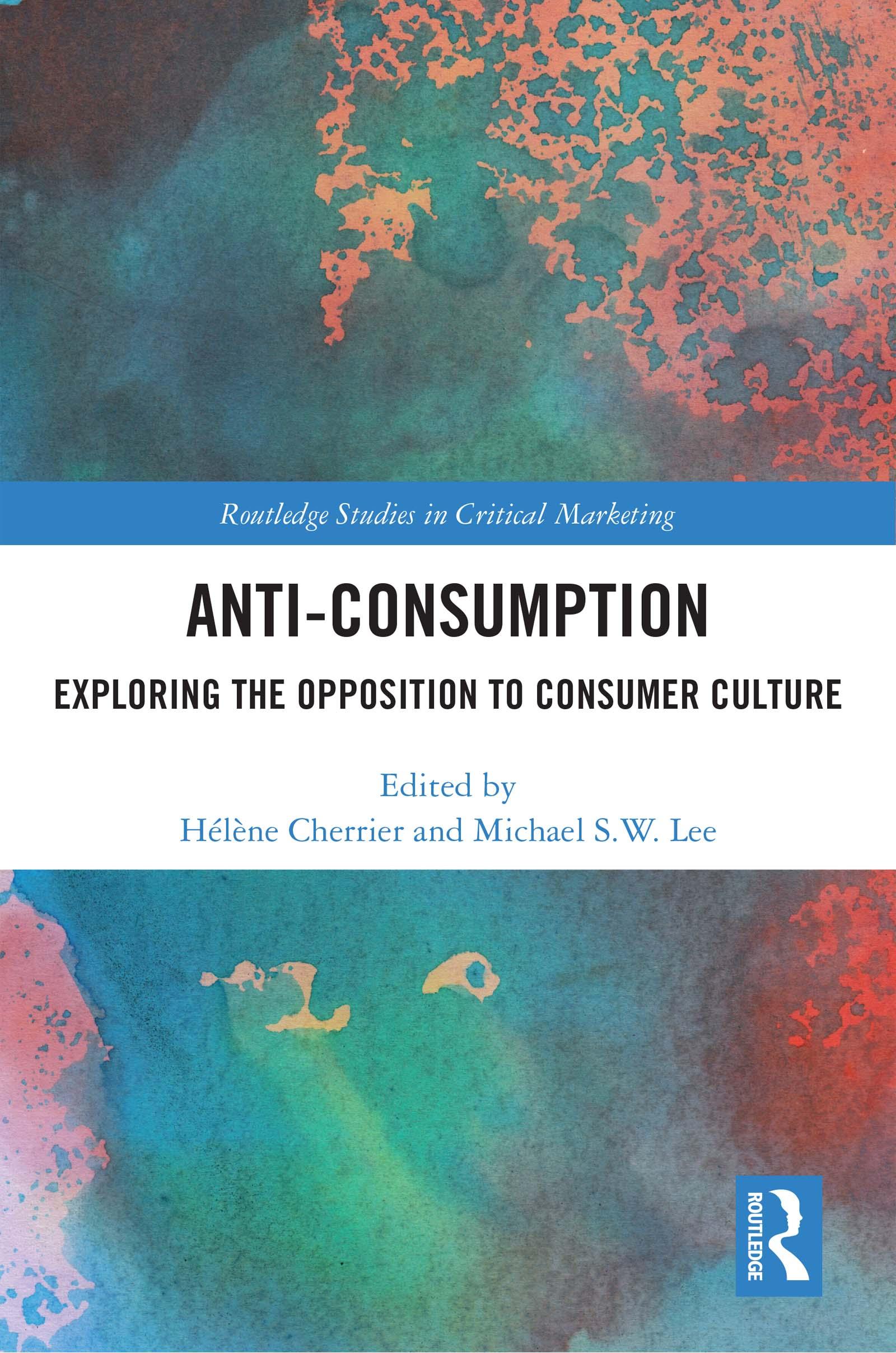
In this edited volume, the leading scholars in the field engage with consumers, marketers, corporations and policymakers as well as space dynamics and network formation to provide an in-depth examination of anti-consumption: a voluntary behavioural inclination to minimise rather than grow, to decelerate and simplify and to reduce the unnecessary exploitation of resources fuelled by consumer culture. This book does not place anti-consumption on the high moral ground but rather demonstrates its complexity to spur innovative and critical thinking on how people, organisations, businesses and governments can treat consumption more as a necessity for survival than as a tool for self-expression, pleasure and economic growth.
The first part of this book looks at anti-consumption from a diversity of perspectives. It analyses voluntary simplicity, a self-motivated engagement in consumption reduction, and boycotting, a politically-motivated reaction against unacceptable corporate practices, as distinct manifestations of anti-consumption that nonetheless remain rooted in the logic of the market. Paving the way to critical perspectives on the interface between anti-consumption, people and the environment, the second part of the book projects anti-consumption to issues of waste production and provides possible answers to global challenges of resources depletion, social inequalities and global warming. In this section, anti-consumption is critically assessed as an actor of change, both in terms of social change and paradigm change. To move the field forward, the third part of this book presents several theoretical frameworks that help set a roadmap for future research.
Anti-Consumption will be of direct interest to scholars and researchers within the fields of marketing, consumer research, business studies, environmental studies and sustainability. It will also be of value to those researching the economics and/or sociology of markets.
Zahle einfach mit Karte, Klarna, Apple Pay oder Google Pay. Nicht zufrieden? Du hast immer ein 14-tägiges Widerrufsrecht. Lies mehr in unseren AGB. Hast du Fragen, schreib uns eine E-Mail an hello@memmo.org.
Memmo macht das Lernen einfacher – wo auch immer du bist. Bei uns findest du deine Kursbücher und smarte Lerntools an einem Ort: Zusammenfassungen, Quizzes, Podcasts und Lernkarten. Und Ted, dein Lernbuddy, beantwortet alles, was du wissen möchtest. Über 50.000 Studierende lernen bereits hier – gemacht, damit du schneller lernst und weniger Stress hast.