
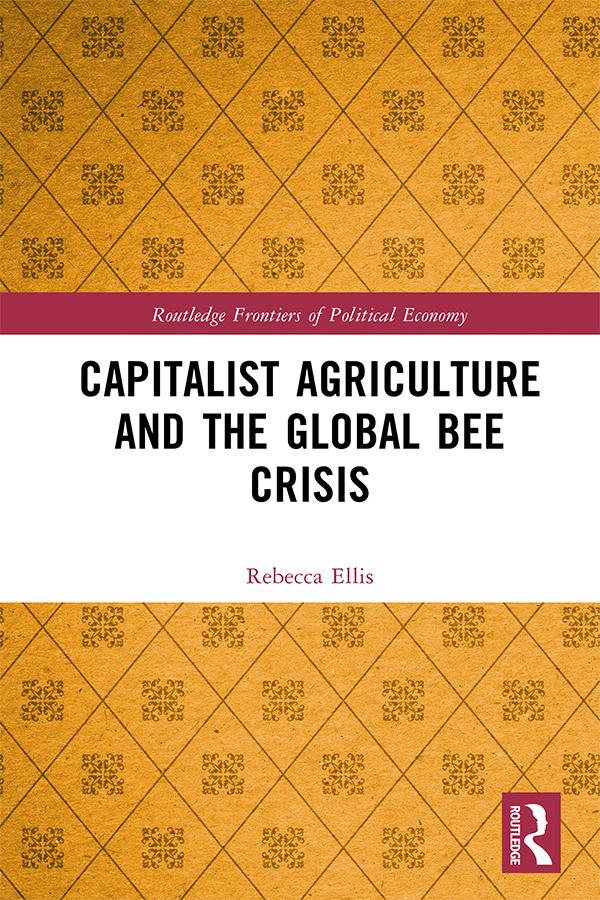
Capitalist agriculture relies heavily on the pollination work of bees, but this system harms bees in innumerable ways. Indeed, human agriculture is one of the main culprits for the declining populations of wild bees and the declining health of honeybees. This book presents a political ecology of pollination that critically examines how managed honey bees and wild bees are harmed by capitalist agriculture.
The book focuses on the three most urgent problems: the standardization and simplification of landscapes through monocultures; the use of pesticides including neonicotinoids, other insecticides, herbicides, and fungicides; and the embeddedness of commercial, migratory beekeeping in the capitalist agriculture system which, among other things, has the potential to spread pests and pathogens across continents. At the heart of this crisis is the power and influence that a small group of agrochemical corporations have over national and international agricultural policy. The book argues for an interspecies alliance of small-scale farmers, bee advocates, beekeepers, environmentalists, and bees themselves, along with a vision for an agricultural system that nurtures multispecies flourishing.
This book will be of significant interest to readers of political ecology, animal geography, environmental anthropology, food system studies, and critical animal studies.
Zahle einfach mit Karte, Klarna, Apple Pay oder Google Pay. Nicht zufrieden? Du hast immer ein 14-tägiges Widerrufsrecht. Lies mehr in unseren AGB. Hast du Fragen, schreib uns eine E-Mail an hello@memmo.org.
Memmo macht das Lernen einfacher – wo auch immer du bist. Bei uns findest du deine Kursbücher und smarte Lerntools an einem Ort: Zusammenfassungen, Quizzes, Podcasts und Lernkarten. Und Ted, dein Lernbuddy, beantwortet alles, was du wissen möchtest. Über 50.000 Studierende lernen bereits hier – gemacht, damit du schneller lernst und weniger Stress hast.