
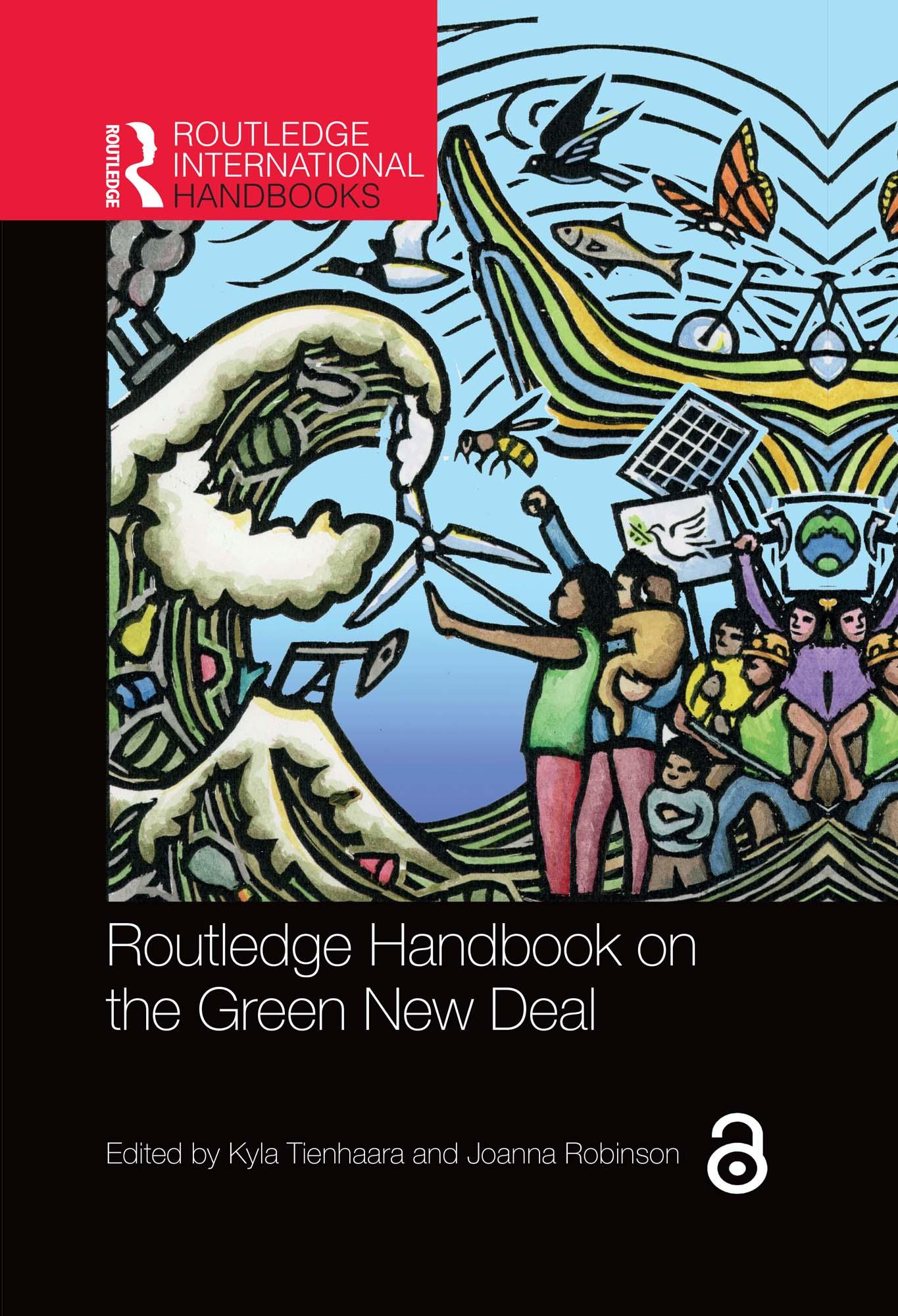
In recent years, the Green New Deal has moved from relative obscurity to front and centre of policy discussions and public debates about how to respond to the climate crisis. It has been credited with radically changing the nature of the conversation on climate change and with re-energizing the environmental movement at a critical time. All Green New Deal proposals share an emphasis on the need for governments (rather than markets) to lead the energy transition. However, they differ in other respects. This Handbook analyses the fundamentals underlying all Green New Deals as well as exploring national and regional variations.
It is divided into three parts. The first part examines the political economy of the Green New Deal focussing not just on how proposals will be costed but also on opportunities for a fundamental transformation of both national economies and the global economic system. The second part explores issues of justice, which are central to many Green New Deal proposals, including Indigenous rights, racial and gender equity, and justice for the Global South. In the third part, authors detail case studies of Green New Deal proposals and plans at the local, national, and regional level.
This book will be an invaluable research and reference volume for students and scholars in economics, politics, sociology, geography, and environmental studies. It should also be of interest to those actively involved in climate and environmental policymaking.
Zahle einfach mit Karte, Klarna, Apple Pay oder Google Pay. Nicht zufrieden? Du hast immer ein 14-tägiges Widerrufsrecht. Lies mehr in unseren AGB. Hast du Fragen, schreib uns eine E-Mail an hello@memmo.org.
Memmo macht das Lernen einfacher – wo auch immer du bist. Bei uns findest du deine Kursbücher und smarte Lerntools an einem Ort: Zusammenfassungen, Quizzes, Podcasts und Lernkarten. Und Ted, dein Lernbuddy, beantwortet alles, was du wissen möchtest. Über 50.000 Studierende lernen bereits hier – gemacht, damit du schneller lernst und weniger Stress hast.