
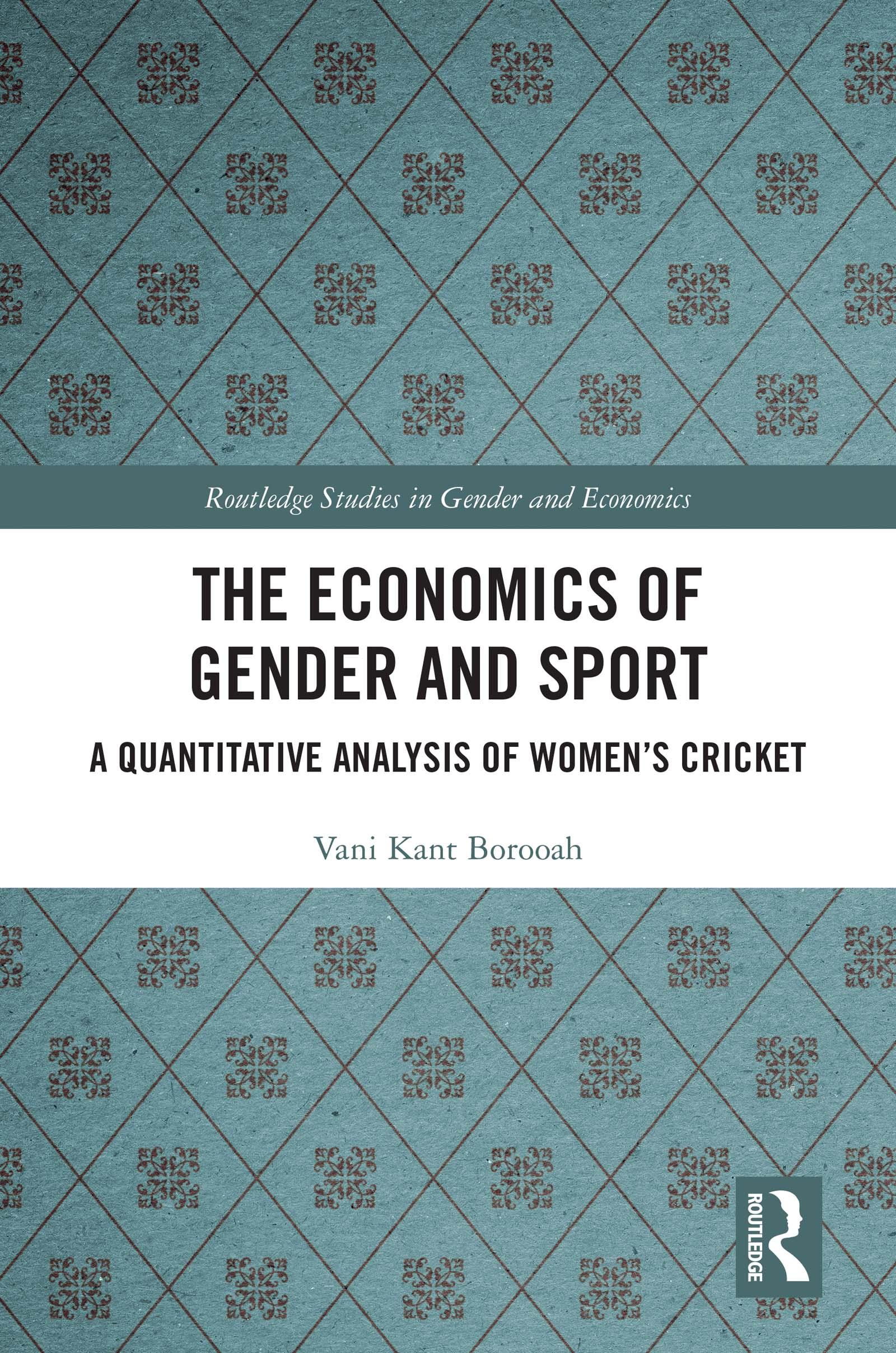
While women’s cricket, and women’s sport in general, has gained enormously in popularity in terms of both spectators and TV audiences, comparatively little is known about it and its participants, and there are few, if any, quantitative assessments of the game. The Economics of Gender and Sport: A Quantitative Analysis of Women’s Cricket fills that gap.
The work analyses the different forms of cricket - Test cricket, One-day, T20 – and is based on the latest sets of available data. It seeks to answer questions such as how well female cricketers play, how well they are paid, who the superstars are, and how competitive women’s cricket is. It also examines more general issues which affect men’s cricket too, with the over-arching theme of this book being inequality. First, the chapters discuss inequality in the distribution of luck. The book discusses the importance of luck in cricket and suggests a way of distinguishing between luck and ability in determining match outcomes. Second there is access inequality, which means that players from certain groups have an advantage in terms of being chosen to play in representative teams. Third, there is inequality in tournament outcomes, and this carries implications for the degree of competitive balance in contests between teams. Fourth is the issue of inequality in the quality of umpiring in men’s and women’s cricket. Fifth, there is inequality between men and women in their respective remunerations as cricketeers. Lastly, there is inequality in performance between players: the book explains how batting and bowling averages can be adjusted to better reflect player performance.
The volume will find an audience among advanced students and researchers in sports economics, sports-related and gender studies. More generally, it will appeal to lovers of cricket who wish to read about the game in terms which are more than simply anecdotal.
Zahle einfach mit Karte, Klarna, Apple Pay oder Google Pay. Nicht zufrieden? Du hast immer ein 14-tägiges Widerrufsrecht. Lies mehr in unseren AGB. Hast du Fragen, schreib uns eine E-Mail an hello@memmo.org.
Memmo macht das Lernen einfacher – wo auch immer du bist. Bei uns findest du deine Kursbücher und smarte Lerntools an einem Ort: Zusammenfassungen, Quizzes, Podcasts und Lernkarten. Und Ted, dein Lernbuddy, beantwortet alles, was du wissen möchtest. Über 50.000 Studierende lernen bereits hier – gemacht, damit du schneller lernst und weniger Stress hast.