
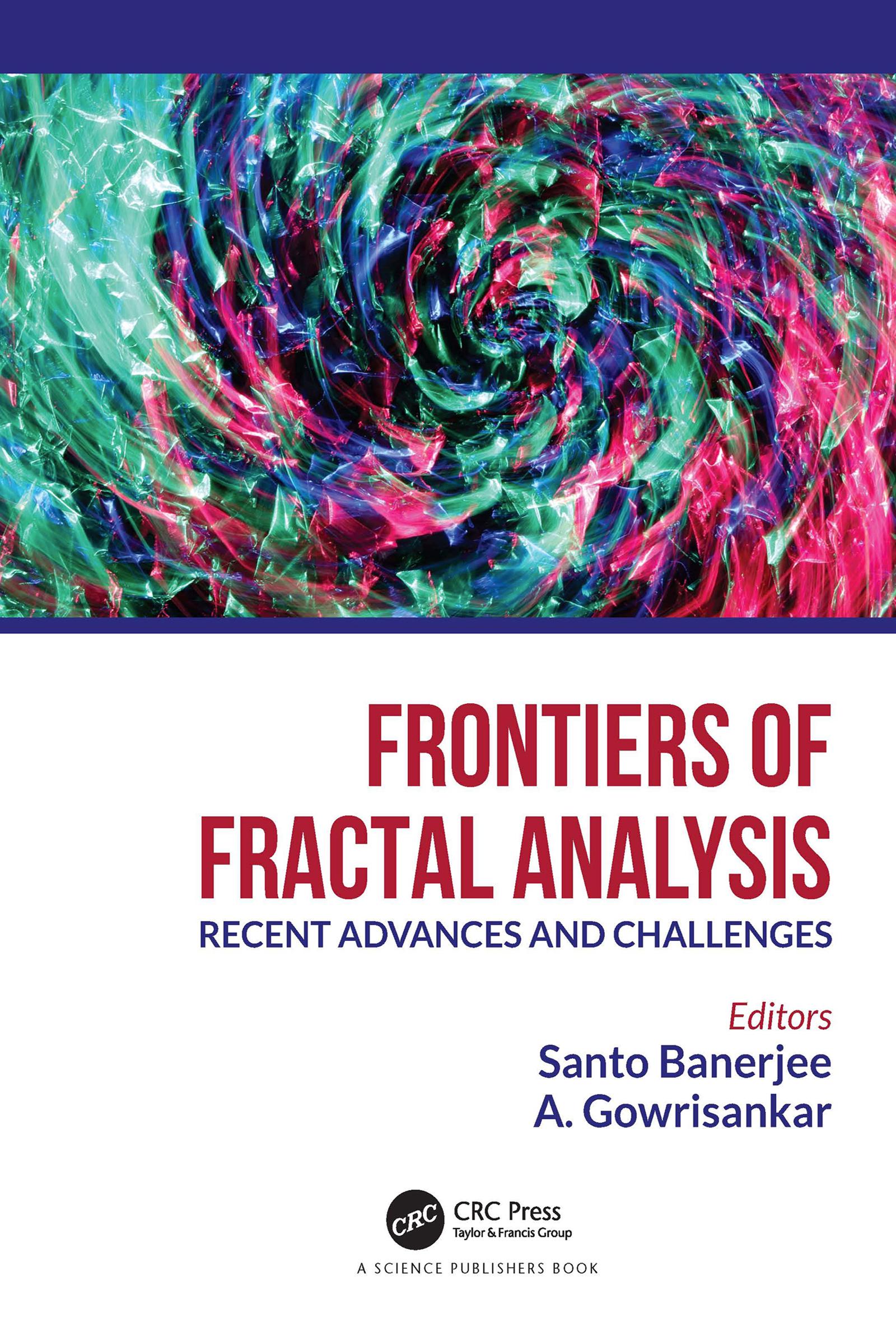
The history of describing natural objects using geometry is as old as the advent of science itself, in which traditional shapes are the basis of our intuitive understanding of geometry. However, nature is not restricted to such Euclidean objects which are only characterized typically by integer dimensions. Hence, the conventional geometric approach cannot meet the requirements of solving or analysing nonlinear problems which are related with natural phenomena, therefore, the fractal theory has been born, which aims to understand complexity and provide an innovative way to recognize irregularity and complex systems. Although the concepts of fractal geometry have found wide applications in many forefront areas of science, engineering and societal issues, they also have interesting implications of a more practical nature for the older classical areas of science. Since its discovery, there has been a surge of research activities in using this powerful concept in almost every branch of scientific disciplines to gain deep insights into many unresolved problems.
This book includes eight chapters which focus on gathering cutting-edge research and proposing application of fractals features in both traditional scientific disciplines and in applied fields.
Zahle einfach mit Karte, Klarna, Apple Pay oder Google Pay. Nicht zufrieden? Du hast immer ein 14-tägiges Widerrufsrecht. Lies mehr in unseren AGB. Hast du Fragen, schreib uns eine E-Mail an hello@memmo.org.
Memmo macht das Lernen einfacher – wo auch immer du bist. Bei uns findest du deine Kursbücher und smarte Lerntools an einem Ort: Zusammenfassungen, Quizzes, Podcasts und Lernkarten. Und Ted, dein Lernbuddy, beantwortet alles, was du wissen möchtest. Über 50.000 Studierende lernen bereits hier – gemacht, damit du schneller lernst und weniger Stress hast.