
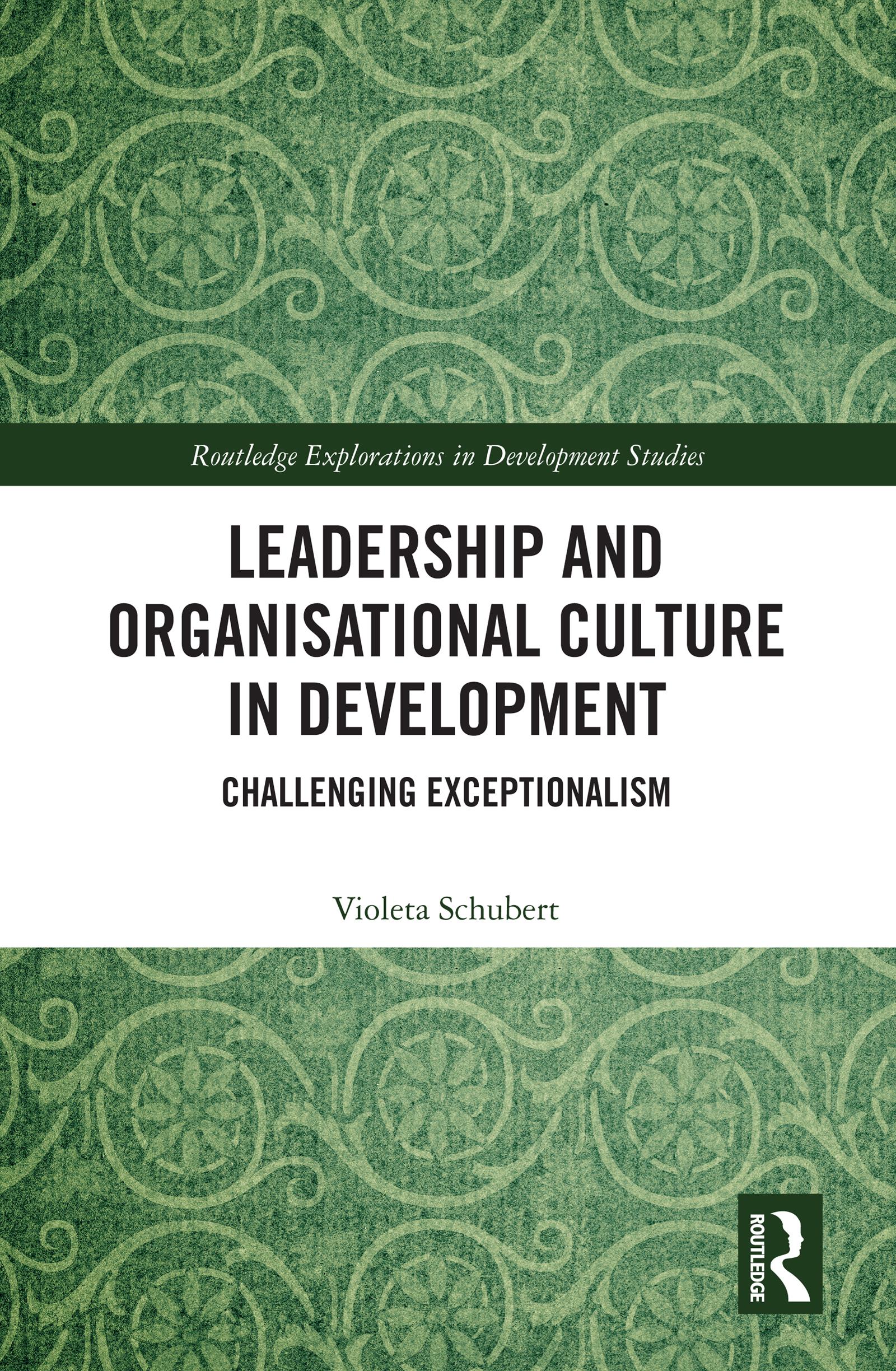
This book uses organisational theory to explore how power and leadership operate in development organisations in different contexts and at different levels.
Culture as a tool for enacting change is of particular importance within organisational and leadership analysis but often limiting. Notions of exceptionalism within the development sector mean that lessons from other organisational contexts are often disregarded or deemed irrelevant. In examining the way that culture operates in organisational and leadership analysis and in development thinking and approaches, the book invites closer attention to modes of organising and leading. The book examines development exceptionalism and the leadership fetishism that it evokes as a panacea for addressing disorder and crisis. The term organisationalism is deployed to capture the endeavours to control and manage, produce and reproduce organisation, and the manifestations, responses and imprints of ‘seeing like an organisation’. The modes and manifestations of organisationalism are especially notable in times of crisis and disorder, accusations of wrongdoings, bad culture and bad leadership.
This book makes an important contribution to debates on development exceptionalism and leadership and as such will be of interest to researchers in development studies and management studies and related disciplines across sociology, politics and global governance.
Zahle einfach mit Karte, Klarna, Apple Pay oder Google Pay. Nicht zufrieden? Du hast immer ein 14-tägiges Widerrufsrecht. Lies mehr in unseren AGB. Hast du Fragen, schreib uns eine E-Mail an hello@memmo.org.
Memmo macht das Lernen einfacher – wo auch immer du bist. Bei uns findest du deine Kursbücher und smarte Lerntools an einem Ort: Zusammenfassungen, Quizzes, Podcasts und Lernkarten. Und Ted, dein Lernbuddy, beantwortet alles, was du wissen möchtest. Über 50.000 Studierende lernen bereits hier – gemacht, damit du schneller lernst und weniger Stress hast.