
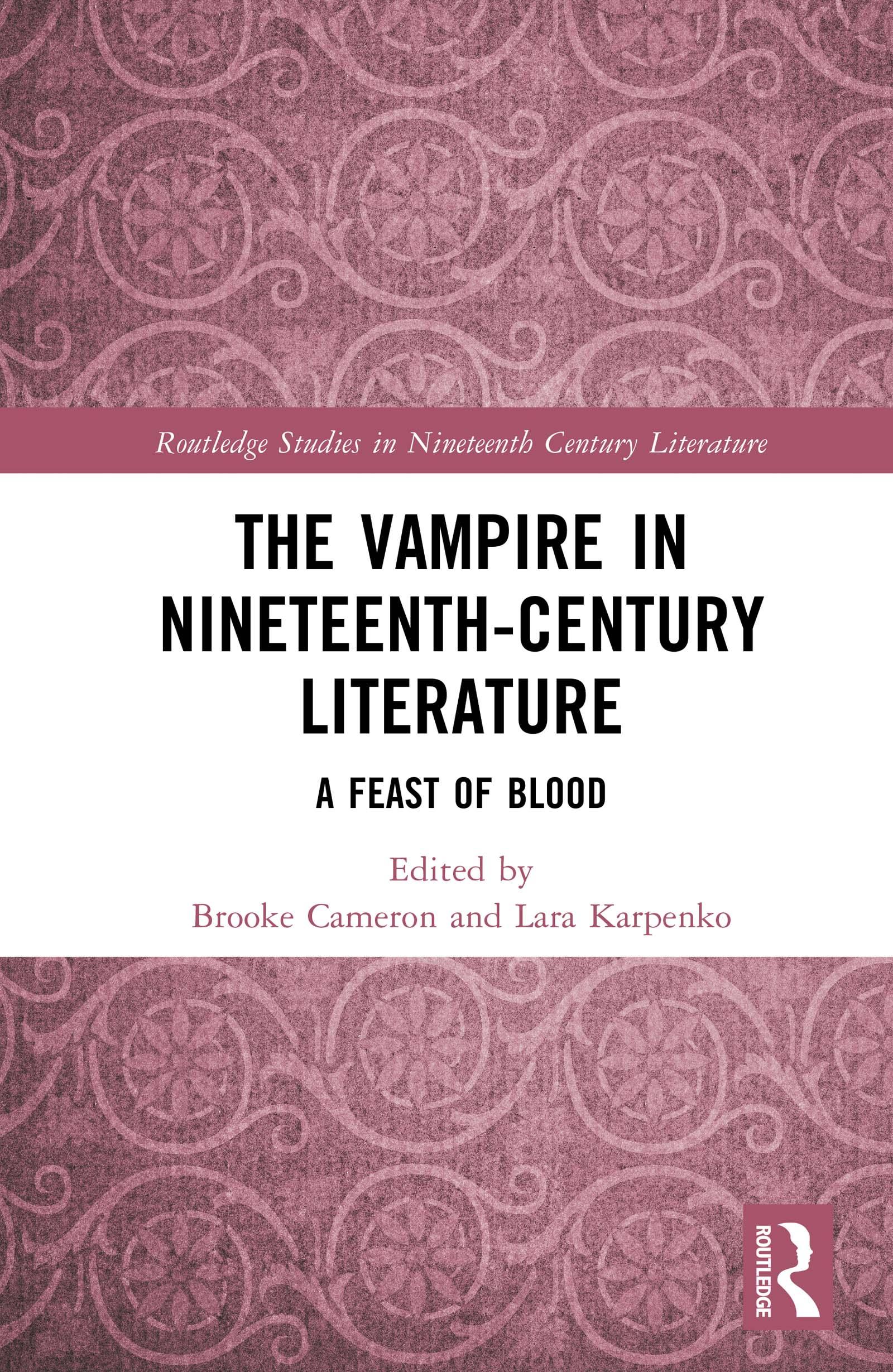
Against the social and economic upheavals that characterized the nineteenth century, the border-bending nosferatu embodied the period’s fears as well as its forbidden desires. This volume looks at both the range among and legacy of vampires in the nineteenth century, including race, culture, social upheaval, gender and sexuality, new knowledge and technology. The figure increased in popularity throughout the century and reached its climax in Dracula (1897), the most famous story of bloodsuckers. This book includes chapters on Bram Stoker’s iconic novel, as well as touchstone texts like John William Polidori’s The Vampyre (1819) and Sheridan Le Fanu’s Carmilla (1872), but it also focuses on the many “Other” vampire stories of the period. Topics discussed include: the long-war veteran and aristocratic vampire in Varney; the vampire as addict in fiction by George MacDonald; time discipline in Eric Stenbock’s Studies of Death; fragile female vampires in works by Eliza Lynn Linton; the gender and sexual contract in Mary Elizabeth Braddon’s “Good Lady Ducayne;” cultural appropriation in Richard Burton’s Vikram and the Vampire; as well as Caribbean vampires and the racialized Other in Florence Marryat’s The Blood of the Vampire. While drawing attention to oft-overlooked stories, this study ultimately highlights the vampire as a cultural shape-shifter whose role as “Other” tells us much about Victorian culture and readers’ fears or desires.
Zahle einfach mit Karte, Klarna, Apple Pay oder Google Pay. Nicht zufrieden? Du hast immer ein 14-tägiges Widerrufsrecht. Lies mehr in unseren AGB. Hast du Fragen, schreib uns eine E-Mail an hello@memmo.org.
Memmo macht das Lernen einfacher – wo auch immer du bist. Bei uns findest du deine Kursbücher und smarte Lerntools an einem Ort: Zusammenfassungen, Quizzes, Podcasts und Lernkarten. Und Ted, dein Lernbuddy, beantwortet alles, was du wissen möchtest. Über 50.000 Studierende lernen bereits hier – gemacht, damit du schneller lernst und weniger Stress hast.