
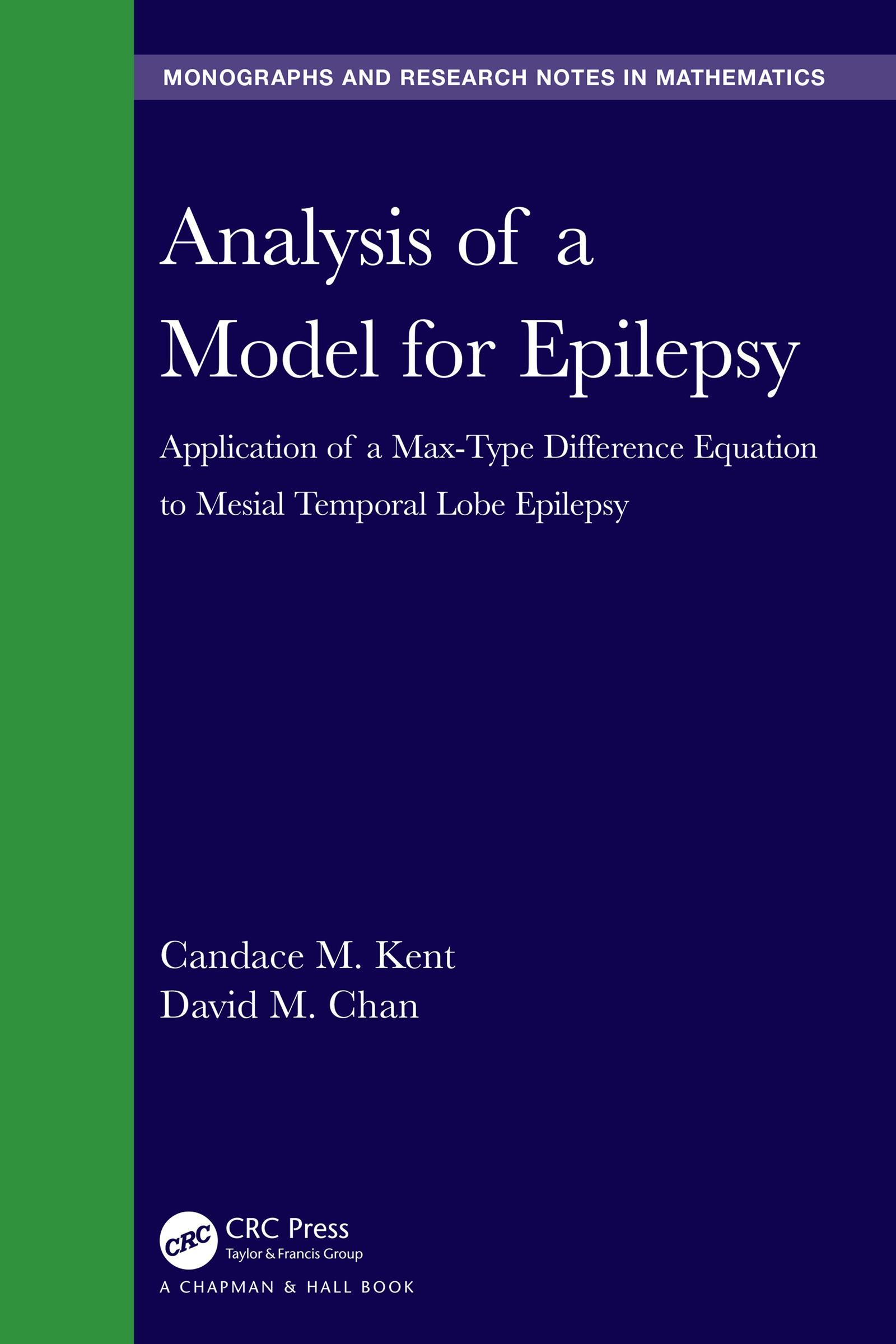
In the 1960s and 1970s, mathematical biologists Sir Robert M. May, E.C. Pielou, and others utilized difference equations as models of ecological and epidemiological phenomena. Since then, with or without applications, the mathematics of difference equations has evolved into a field unto itself. Difference equations with the maximum (or the minimum or the "rank-type") function were rigorously investigated from the mid-1990s into the 2000s, without any applications in mind. These equations often involved arguments varying from reciprocal terms with parameters in the numerators to other special functions.
Recently, the authors of Analysis of a Model for Epilepsy: Application of a Max-Type Difference Equation to Mesial Temporal Lobe Epilepsy and their colleagues investigated the first known application of a "max-type" difference equation. Their equation is a phenomenological model of epileptic seizures. In this book, the authors expand on that research and present a more comprehensive development of mathematical, numerical, and biological results. Additionally, they describe the first documented instance of a novel dynamical behavior that they call rippled almost periodic behavior, which can be described as an unpredictable pseudo-periodic behavior.
Features:
- Suitable for researchers in mathematical neuroscience and potentially as supplementary reading for postgraduate students
- Thoroughly researched and replete with references
Zahle einfach mit Karte, Klarna, Apple Pay oder Google Pay. Nicht zufrieden? Du hast immer ein 14-tägiges Widerrufsrecht. Lies mehr in unseren AGB. Hast du Fragen, schreib uns eine E-Mail an hello@memmo.org.
Memmo macht das Lernen einfacher – wo auch immer du bist. Bei uns findest du deine Kursbücher und smarte Lerntools an einem Ort: Zusammenfassungen, Quizzes, Podcasts und Lernkarten. Und Ted, dein Lernbuddy, beantwortet alles, was du wissen möchtest. Über 50.000 Studierende lernen bereits hier – gemacht, damit du schneller lernst und weniger Stress hast.