
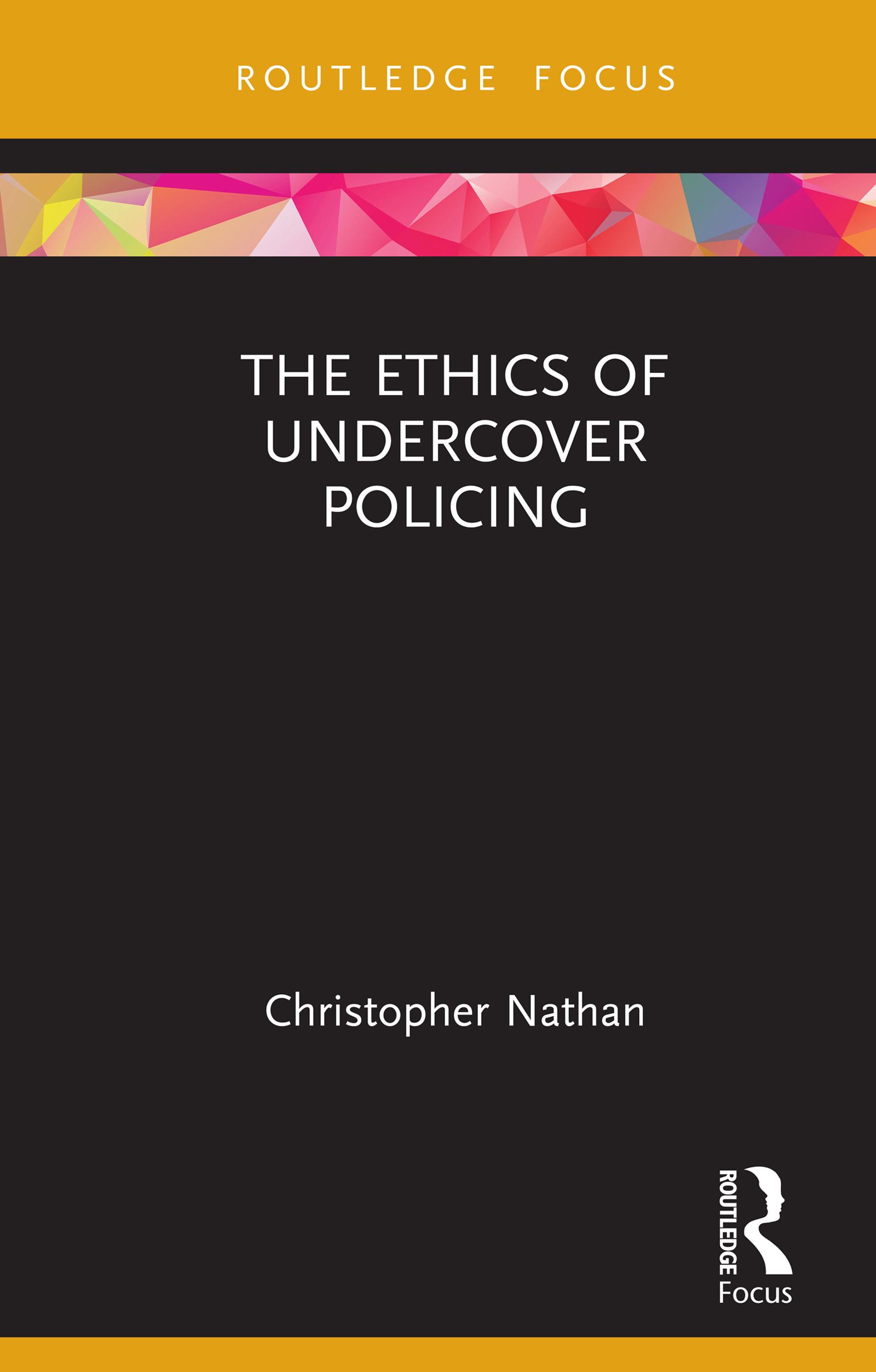
Despite the media controversies surrounding high-profile cases of undercover policing, it is not always clear what ethical issues are at stake. Can undercover policing be justified? What are the ethical issues surrounding concealment and infiltration? What larger questions does undercover policing raise about the nature of policing and the legitimacy of coercive state action?
In this timely and clear account, Christopher Nathan explores these questions and more. He rejects the view that the consequences of undercover policing always justify the means, instead advancing an argument that through their actions people can make themselves morally liable to some forms of undercover policing. Drawing on several recent, high-profile case studies, Christopher Nathan argues for a new understanding of proportionality in undercover policing that takes account of innocent parties, vulnerable targets, and manipulation into wrongful action. He also defends a central role for the judiciary in the oversight of undercover policing.
Zahle einfach mit Karte, Klarna, Apple Pay oder Google Pay. Nicht zufrieden? Du hast immer ein 14-tägiges Widerrufsrecht. Lies mehr in unseren AGB. Hast du Fragen, schreib uns eine E-Mail an hello@memmo.org.
Memmo macht das Lernen einfacher – wo auch immer du bist. Bei uns findest du deine Kursbücher und smarte Lerntools an einem Ort: Zusammenfassungen, Quizzes, Podcasts und Lernkarten. Und Ted, dein Lernbuddy, beantwortet alles, was du wissen möchtest. Über 50.000 Studierende lernen bereits hier – gemacht, damit du schneller lernst und weniger Stress hast.