
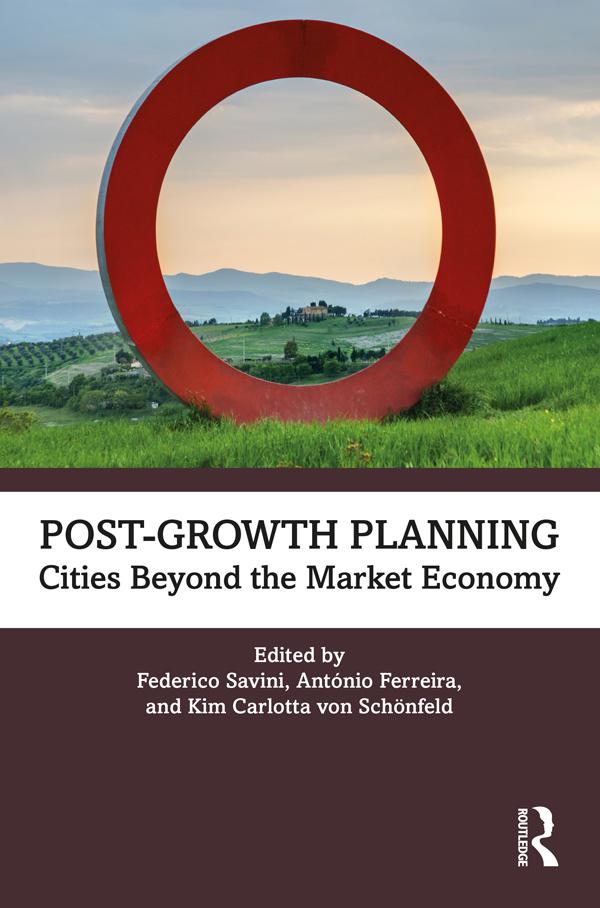
This book draws on a wide range of conceptual and empirical materials to identify and examine planning and policy approaches that move beyond the imperative of perpetual economic growth. It sketches out a path towards planning theories and practices that can break the cyclical process of urban expansion, crises, and recovery that negatively affect ecosystems and human lives.
To reduce the dramatic social and environmental impact of urbanization, this book offers both a critique of growth-led urban development and a prefiguration of ecologically regenerative and socially just ways of organizing cities and regions. It uncovers emerging possibilities for post-growth planning in the fields of collective housing, mobility, urban commoning, ecological land-use, urban–rural symbiosis, and alternative planning worldviews. It provides a toolkit of concepts and real-life examples for urban scholars, urbanists, activists, architects, and designers seeking to make cities prosper within planetary boundaries.
This book speaks to both experts and beginners in post-growth thinking. It concludes with a manifesto and glossary of key terms for urban scholars, students, and practitioners.
Zahle einfach mit Karte, Klarna, Apple Pay oder Google Pay. Nicht zufrieden? Du hast immer ein 14-tägiges Widerrufsrecht. Lies mehr in unseren AGB. Hast du Fragen, schreib uns eine E-Mail an hello@memmo.org.
Memmo macht das Lernen einfacher – wo auch immer du bist. Bei uns findest du deine Kursbücher und smarte Lerntools an einem Ort: Zusammenfassungen, Quizzes, Podcasts und Lernkarten. Und Ted, dein Lernbuddy, beantwortet alles, was du wissen möchtest. Über 50.000 Studierende lernen bereits hier – gemacht, damit du schneller lernst und weniger Stress hast.