
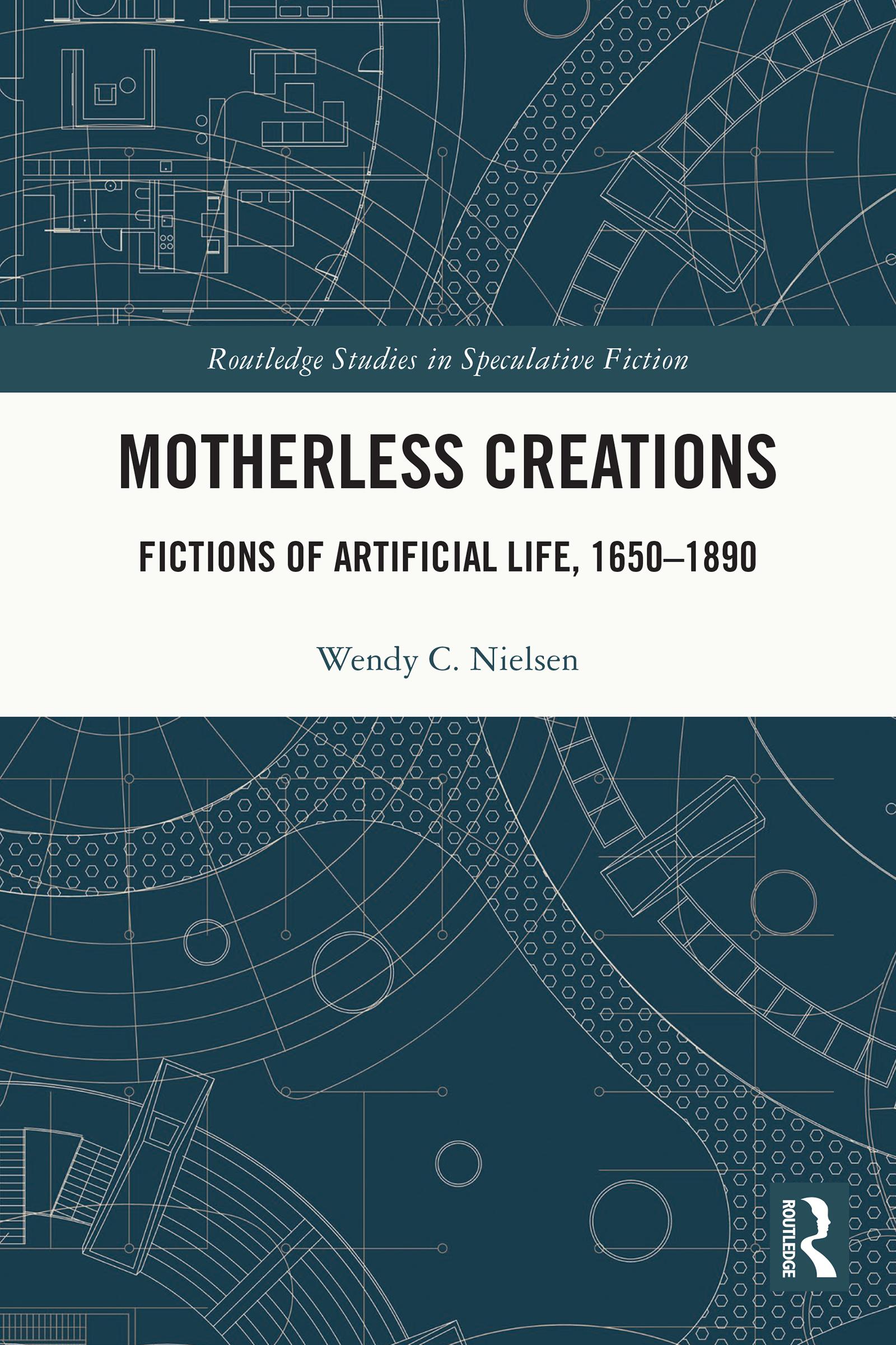
This book explains the elimination of maternal characters in American, British, French, and German literature before 1890 by examining motherless creations: Pygmalion’s statue, Frankenstein’s creature, homunculi, automata, androids, golems, and steam men. These beings typify what is now called artificial life, living systems made through manufactured means. Fantasies about creating life ex-utero were built upon misconceptions about how life began, sustaining pseudoscientific beliefs about the birthing body. Physicians, inventors, and authors of literature imagined generating life without women to control the process of reproduction and generate perfect progeny. Thus, some speculative fiction before 1890 belongs to the literary genealogy of transhumanism, the belief that technology will someday transform some humans into superior, immortal beings. Female motherless creations tend to operate as sexual companions. Male ones often emerge as subaltern figures analogous to enslaved beings, illustrating that reproductive rights inform readers’ sense of who counts as human in fictions of artificial life.
Zahle einfach mit Karte, Klarna, Apple Pay oder Google Pay. Nicht zufrieden? Du hast immer ein 14-tägiges Widerrufsrecht. Lies mehr in unseren AGB. Hast du Fragen, schreib uns eine E-Mail an hello@memmo.org.
Memmo macht das Lernen einfacher – wo auch immer du bist. Bei uns findest du deine Kursbücher und smarte Lerntools an einem Ort: Zusammenfassungen, Quizzes, Podcasts und Lernkarten. Und Ted, dein Lernbuddy, beantwortet alles, was du wissen möchtest. Über 50.000 Studierende lernen bereits hier – gemacht, damit du schneller lernst und weniger Stress hast.