
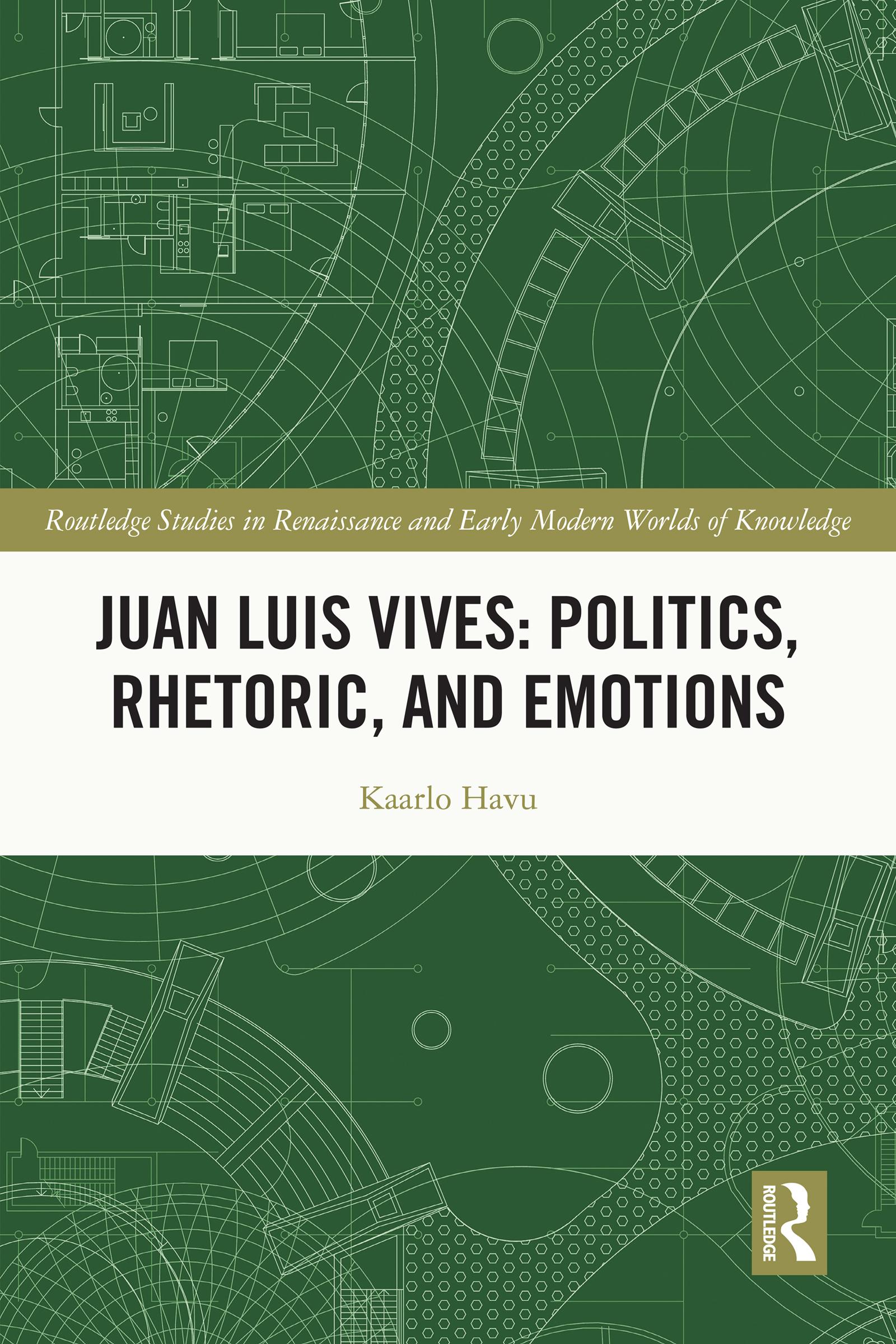
By looking at rhetoric and politics, this book offers a novel account of Juan Luis Vives’ intellectual oeuvre. It argues that Vives adjusted rhetorical theory to a monarchical context in which direct speech was not a possibility, demonstrated how Erasmian languages of ethical self-government and political peace were actualised rhetorically and critically in a princely environment, and finally, rethought the cognitive and emotional foundations of humanist rhetoric in his late and famous De anima et vita (1538). Ultimately, towards the end of his life, Vives epitomised a distinctively cognitive view of politics; he maintained that political concord was not a direct outcome of institutional or legal reform or of the spiritual transformation of the Christian world (an optimistic Erasmian interpretation) but that concord could only be upheld once the dynamics of emotions that motivated political action were understood and controlled through responsible rhetoric that respected decorum and civility.
Zahle einfach mit Karte, Klarna, Apple Pay oder Google Pay. Nicht zufrieden? Du hast immer ein 14-tägiges Widerrufsrecht. Lies mehr in unseren AGB. Hast du Fragen, schreib uns eine E-Mail an hello@memmo.org.
Memmo macht das Lernen einfacher – wo auch immer du bist. Bei uns findest du deine Kursbücher und smarte Lerntools an einem Ort: Zusammenfassungen, Quizzes, Podcasts und Lernkarten. Und Ted, dein Lernbuddy, beantwortet alles, was du wissen möchtest. Über 50.000 Studierende lernen bereits hier – gemacht, damit du schneller lernst und weniger Stress hast.