
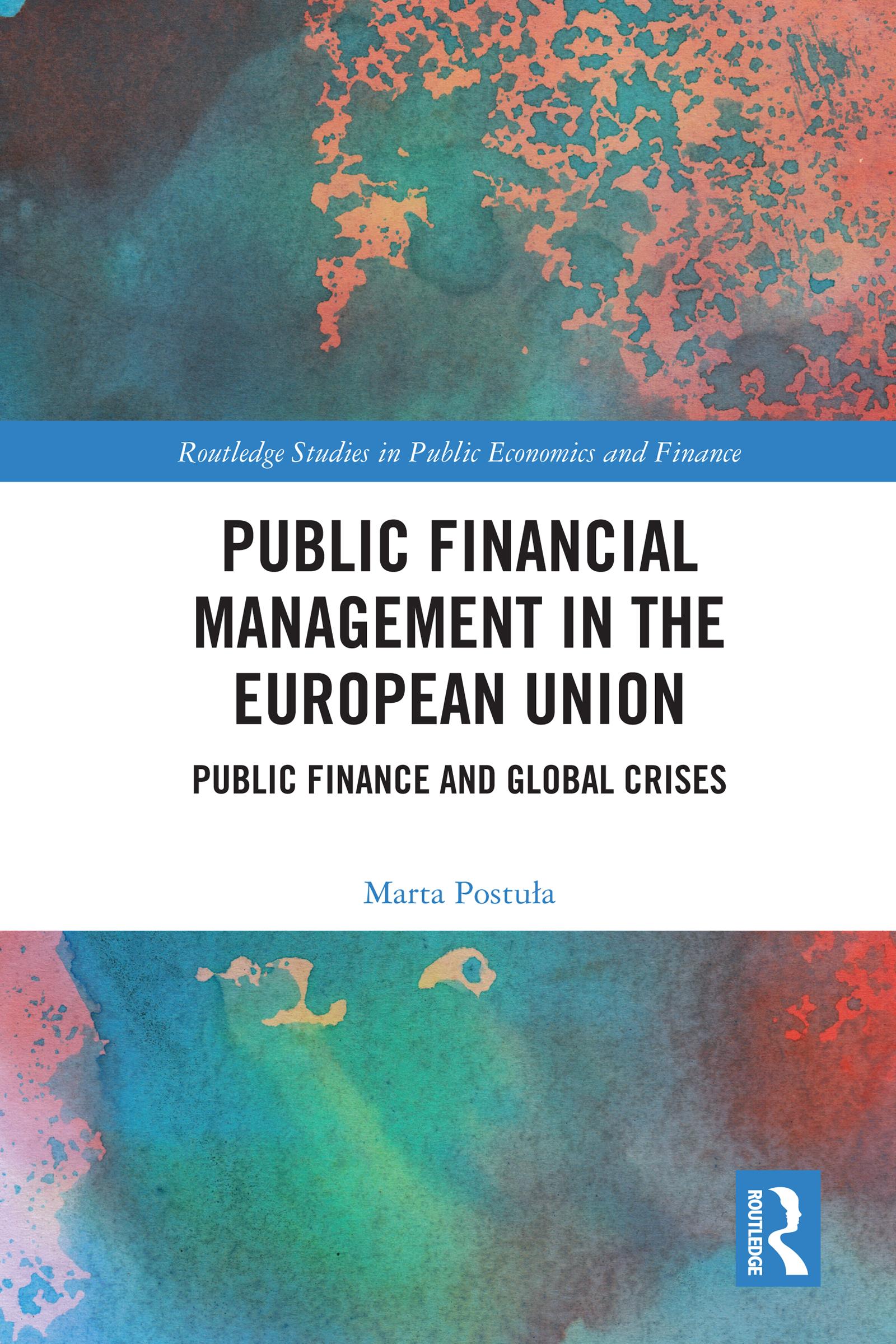
This book reveals how to create efficient institutions and coordinate policy on a transnational scale to ensure that European Union integration can best meet social needs. It offers a combined technocratic and humanist perspective on the discussion of public financial management. The state, as part of its public policy, should seek to preserve our social and environmental values, yet there are mounting imbalances in society which point to the growing role of the state in minimising them. Under such circumstances, it is worth reflecting on how new challenges could require updated, more complex formulas, to deal with crises in current times and for social and economic policy making by states and the European Union generally, which would ensure their compatibility with the world financial markets. The work offers an in-depth and unique performance analysis of European Union institutions compared to the national entities of EU Member States. It contributes to the ongoing debate on global public goods and the processes involved in managing their provision. Further, it discusses public finance management instruments, indicating their historical evolution in practice and their effectiveness measured with the Human Development Index. The author presents a proposal of how to manage global, European and national public goods across three areas: environmental protection, transnational infrastructure projects and social policy. The book analyses public financial management instruments used during the recent pandemic, making a distinction between regular and emergency instruments and assessing their effectiveness in specific economic situations. This will be of interest to researchers and students of economics and finance, as well as decision makers and practitioners from governments, international organisations and specific non-governmental organisations concerned with issues of public finance management.
Zahle einfach mit Karte, Klarna, Apple Pay oder Google Pay. Nicht zufrieden? Du hast immer ein 14-tägiges Widerrufsrecht. Lies mehr in unseren AGB. Hast du Fragen, schreib uns eine E-Mail an hello@memmo.org.
Memmo macht das Lernen einfacher – wo auch immer du bist. Bei uns findest du deine Kursbücher und smarte Lerntools an einem Ort: Zusammenfassungen, Quizzes, Podcasts und Lernkarten. Und Ted, dein Lernbuddy, beantwortet alles, was du wissen möchtest. Über 50.000 Studierende lernen bereits hier – gemacht, damit du schneller lernst und weniger Stress hast.