
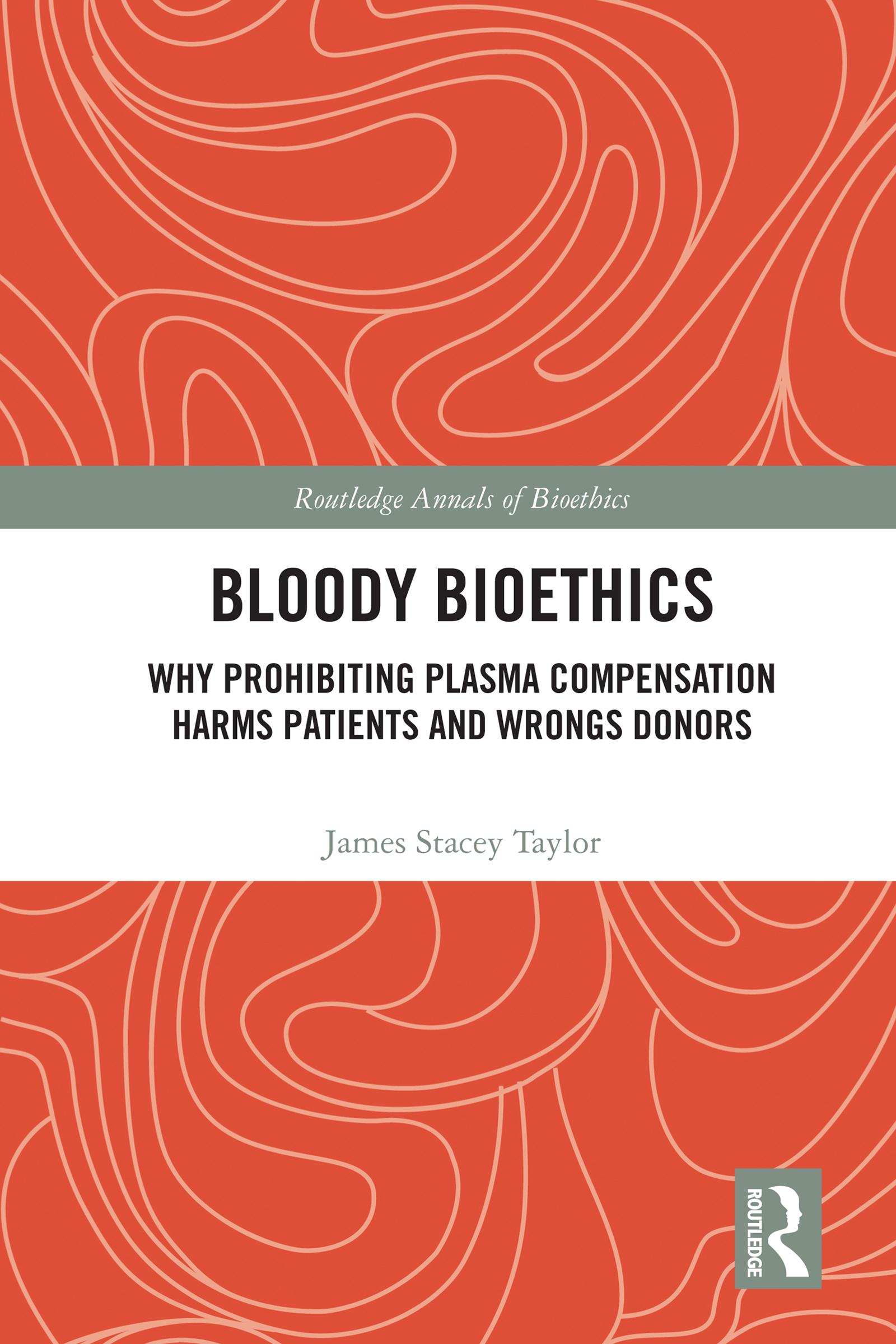
This is the first book to argue in favor of paying people for their blood plasma. It does not merely argue that offering compensation to plasma donors is morally permissible. It argues that prohibiting donor compensation is morally wrong—and that it is morally wrong for all of the reasons that are offered against allowing donor compensation.
Opponents of donor compensation claim that it will reduce the amount and quality of plasma obtained, exploit and coerce donors, and undermine social cohesion. James Stacey Taylor argues that empirical evidence demonstrates that compensating plasma donors greatly increases the amount of plasma obtained with no adverse effects on the quality of the pharmaceutical products that are manufactured from it. Prohibiting compensation thus harms patients by reducing their access to the medicines they need. He also argues that it is the prohibition of compensation—not its offer—that exploits donors, fails to respect the moral need to secure a person’s authoritative consent to her treatment, and prevents donors from giving their informed consent to donate. Prohibiting compensation thus not only harms patients but also wrongs donors.
Bloody Bioethics will appeal to researchers, advanced students, and medical professionals interested in bioethics, moral philosophy, and the moral limits of markets.
Zahle einfach mit Karte, Klarna, Apple Pay oder Google Pay. Nicht zufrieden? Du hast immer ein 14-tägiges Widerrufsrecht. Lies mehr in unseren AGB. Hast du Fragen, schreib uns eine E-Mail an hello@memmo.org.
Memmo macht das Lernen einfacher – wo auch immer du bist. Bei uns findest du deine Kursbücher und smarte Lerntools an einem Ort: Zusammenfassungen, Quizzes, Podcasts und Lernkarten. Und Ted, dein Lernbuddy, beantwortet alles, was du wissen möchtest. Über 50.000 Studierende lernen bereits hier – gemacht, damit du schneller lernst und weniger Stress hast.