
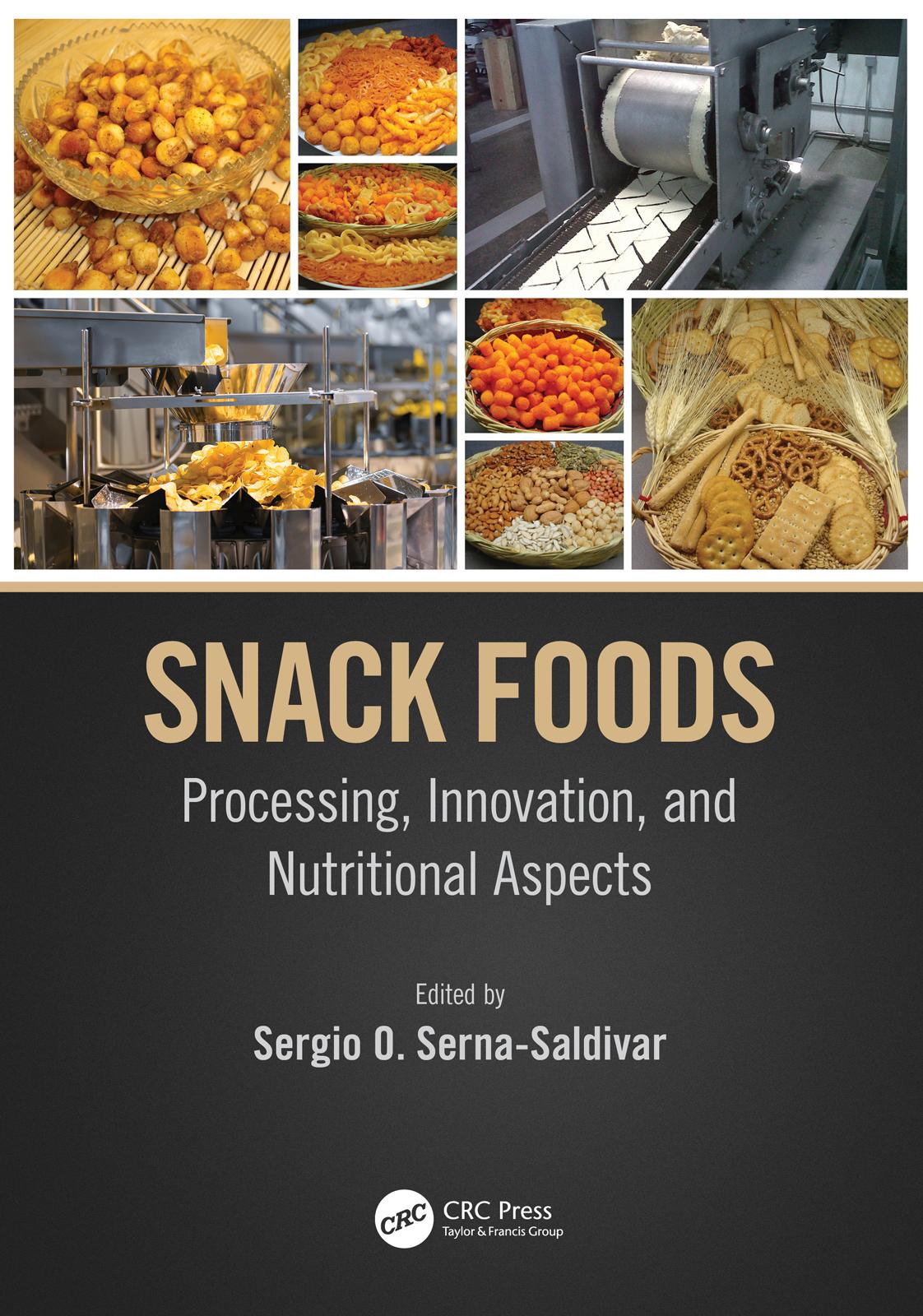
The diverse segments of the snack industries that generate close to $520 billion of annual sales are adapting to new consumer´s expectations, especially in terms of convinience, flavor, shelf life, and nutritional and health claims. Snack Foods: Processing, Innovation, and Nutritional Aspects was conceptualized to thoroughly cover practical and scientific aspects related to the chemistry, technology, processing, functionality, quality control, analysis, and nutrition and health implications of the wide array of snacks derived from grains, fruits/vegetables, milk and meat/poultry/seafood.
This book focuses on novel topics influencing food product development like innovation, new emerging technologies and the manufacturing of nutritious and health-promoting snacks with a high processing efficiency. The up-to-date chapters provide technical reviews emphasising flavored salty snacks commonly used as finger foods, including popcorn, wheat-based products (crispbreads, pretzels, crackers), lime-cooked maize snacks (tortilla chips and corn chips), extruded items (expanded and half products or pellets), potato chips, peanuts, almonds, tree nuts, and products derived from fruits/vegetables, milk, animal and marine sources.
Key Features:
- Describes traditional and novel processes and unit operatios used for the industrial production of plant and animal-based snacks.
- Depicts major processes employed for the industrial production of raw materials, oils, flavorings and packaging materials used in snack food operations.
- Contains relevant and updated information about quality control and nutritional attributes and health implications of snack foods.
- Includes simple to understand flowcharts, relevant information in tables and recent innovations and trends.
Divided into four sections, Snack Foods aims to understand the role of the major unit operations used to process snacks like thermal processes including deep-fat frying, seasoning, packaging and the emerging 3-D printing technology. Moreover, the book covers the processing and characteristics of the most relevant raw materials used in snack operations like cereal-based refined grits, starches and flours, followed by chapters for oils, seasoning formulations and packaging materials. The third and most extensive part of the book is comprised of several chapters which describe the manufacturing and quality control of snacks mentioned above. The fourth section is comprised of two chapters related to the nutritional and nutraceutical and health-promoting properties of all classes of snacks discussed herein.
Zahle einfach mit Karte, Klarna, Apple Pay oder Google Pay. Nicht zufrieden? Du hast immer ein 14-tägiges Widerrufsrecht. Lies mehr in unseren AGB. Hast du Fragen, schreib uns eine E-Mail an hello@memmo.org.
Memmo macht das Lernen einfacher – wo auch immer du bist. Bei uns findest du deine Kursbücher und smarte Lerntools an einem Ort: Zusammenfassungen, Quizzes, Podcasts und Lernkarten. Und Ted, dein Lernbuddy, beantwortet alles, was du wissen möchtest. Über 50.000 Studierende lernen bereits hier – gemacht, damit du schneller lernst und weniger Stress hast.