
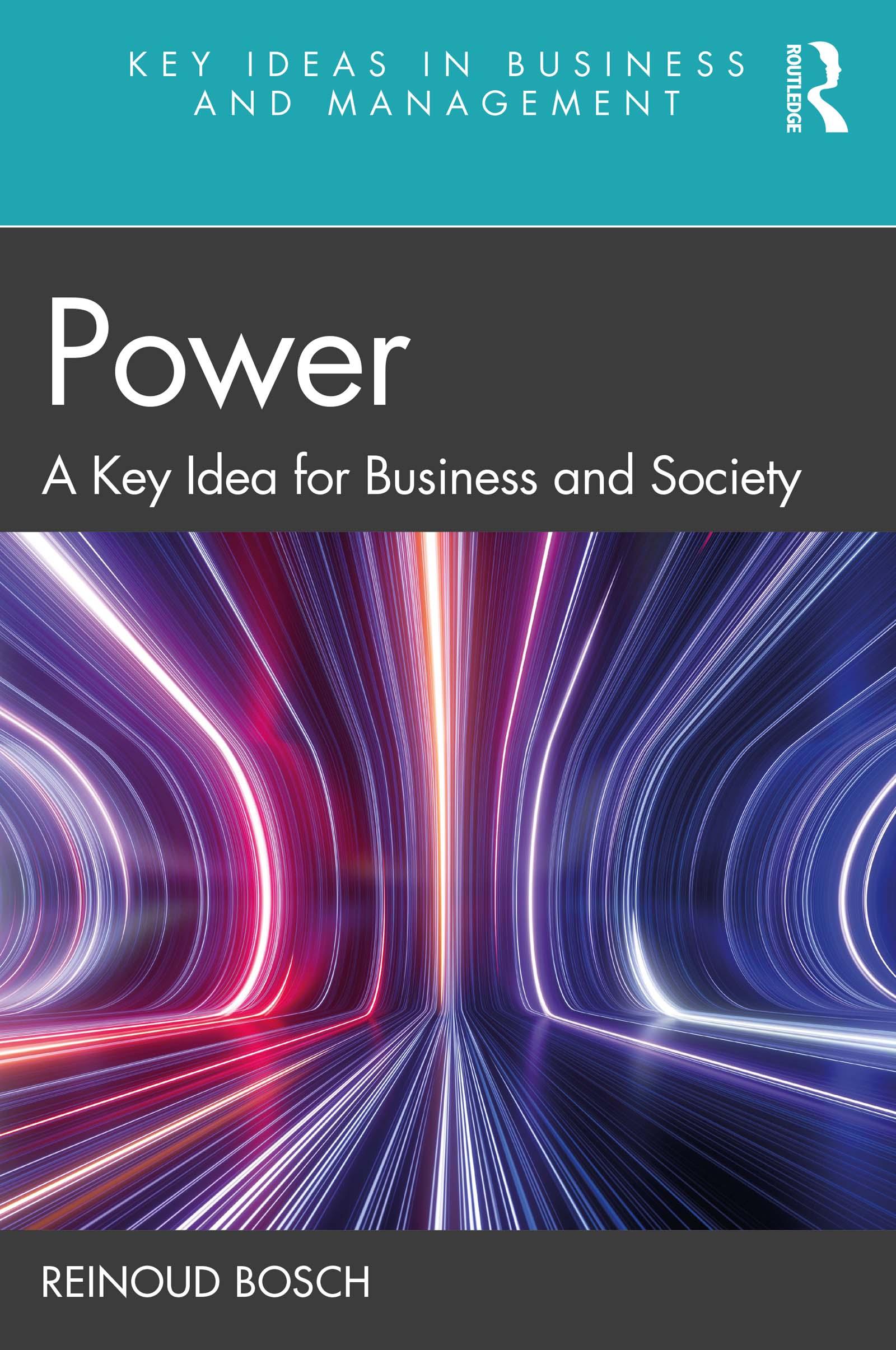
Power plays a central role in business and management. But what is power exactly, and what are key elements of this concept? Defining power as relative ability, this book discusses structures of power, individual power, the exercise of power, strategy, and collective power.
While discussing these key components, ideas of important thinkers about power, from Plato to Foucault, Weber to Lukes, Machiavelli to Kahneman, Sun to Kotter, and Barnard to Clegg, are discussed and interpretively categorized into a toolbox of conceptual elements – what Blumer referred to as sensitizing concepts. This toolbox of sensitizing concepts allows the selection of those elements of the concept of power that provide the most constructive and effective practical understanding in particular situations.
The core message behind the discussion is that knowledge of key components of the concept of power is empowering. It is empowering to learn about aspects of structures of power, individual power, the exercise of power, strategy, and collective power. Understanding such conceptual components empowers students, researchers, practitioners, and other readers to use their understanding in interpreting, theorizing about, and dealing with the complexities of power in their particular situations – without tying them to any preconceived general theories about power.
Zahle einfach mit Karte, Klarna, Apple Pay oder Google Pay. Nicht zufrieden? Du hast immer ein 14-tägiges Widerrufsrecht. Lies mehr in unseren AGB. Hast du Fragen, schreib uns eine E-Mail an hello@memmo.org.
Memmo macht das Lernen einfacher – wo auch immer du bist. Bei uns findest du deine Kursbücher und smarte Lerntools an einem Ort: Zusammenfassungen, Quizzes, Podcasts und Lernkarten. Und Ted, dein Lernbuddy, beantwortet alles, was du wissen möchtest. Über 50.000 Studierende lernen bereits hier – gemacht, damit du schneller lernst und weniger Stress hast.