
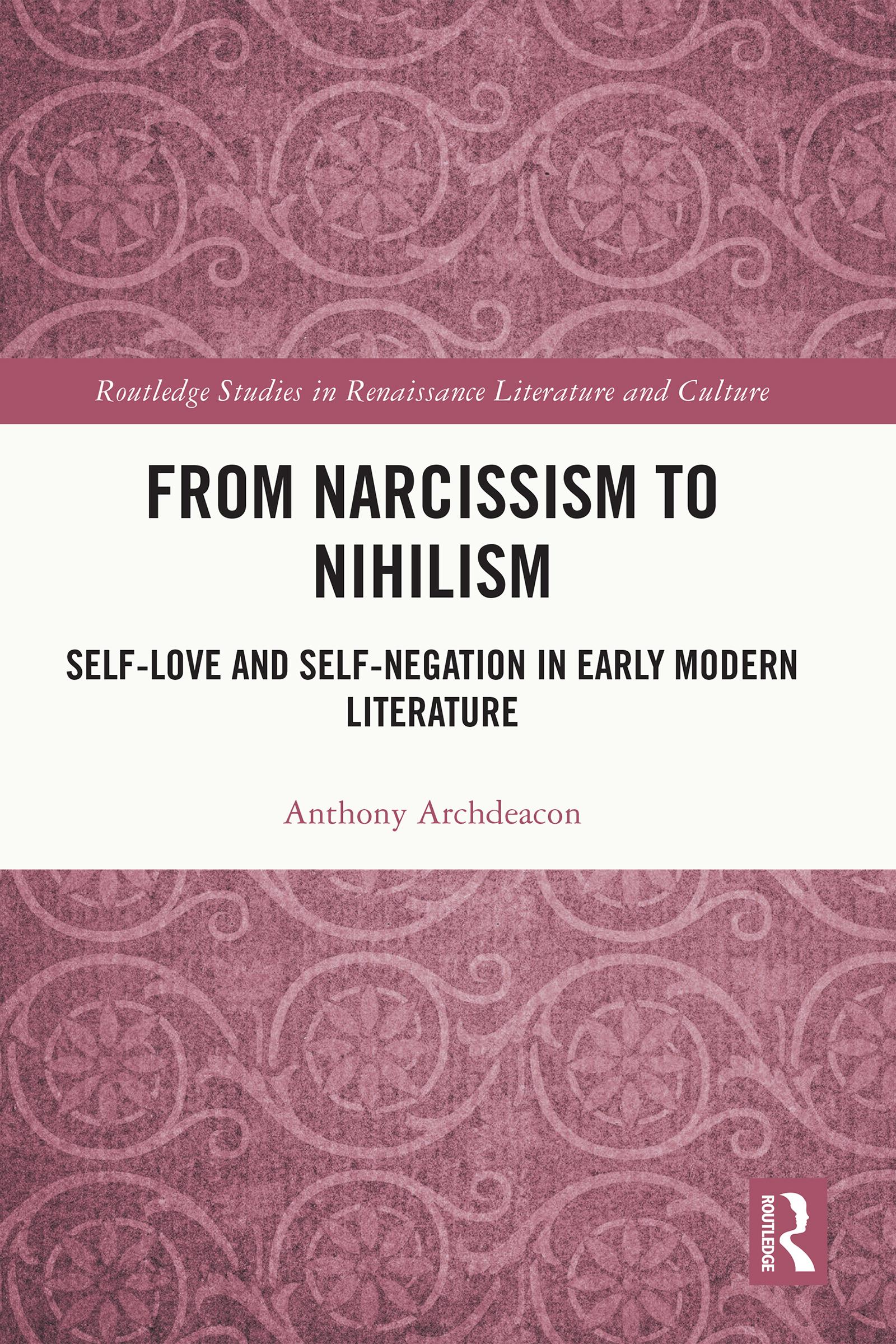
This book explores how the myth of Narcissus, which is at once about self-love and self-destruction, desire and death, beauty and pain, became an ambivalent symbol of humanistic endeavour, and articulated the conflicts of early modern authorship.
In early modern literature, there were expressions of humanistic self-congratulation that sometimes verged on narcissism, and at the same time expressions of self-doubt and anxiety that verged on nihilism. The themes of self-love and self-negation had a long history in western thought, and this book shows how the medieval treatments of the themes developed into something distinctive in the sixteenth century. The two themes, either individually or combined, encompass such topics as poverty, unrequited love, transgressive sexuality, sexual violence, suicidality, self-worth, authorship, religious penitence, martyrdom, courtly ambition and tyranny.
Archdeacon uses over 100 texts from the sixteenth and early seventeenth centuries to show how the early modern writer existed in a culture of contrary forces pulling towards either self-affirmation or self-erasure. Writers attempted to negotiate between the polarised extremes of self-love and self-negation, realising that they are fundamental to how we respond to each other, our selves and the world.
Zahle einfach mit Karte, Klarna, Apple Pay oder Google Pay. Nicht zufrieden? Du hast immer ein 14-tägiges Widerrufsrecht. Lies mehr in unseren AGB. Hast du Fragen, schreib uns eine E-Mail an hello@memmo.org.
Memmo macht das Lernen einfacher – wo auch immer du bist. Bei uns findest du deine Kursbücher und smarte Lerntools an einem Ort: Zusammenfassungen, Quizzes, Podcasts und Lernkarten. Und Ted, dein Lernbuddy, beantwortet alles, was du wissen möchtest. Über 50.000 Studierende lernen bereits hier – gemacht, damit du schneller lernst und weniger Stress hast.