
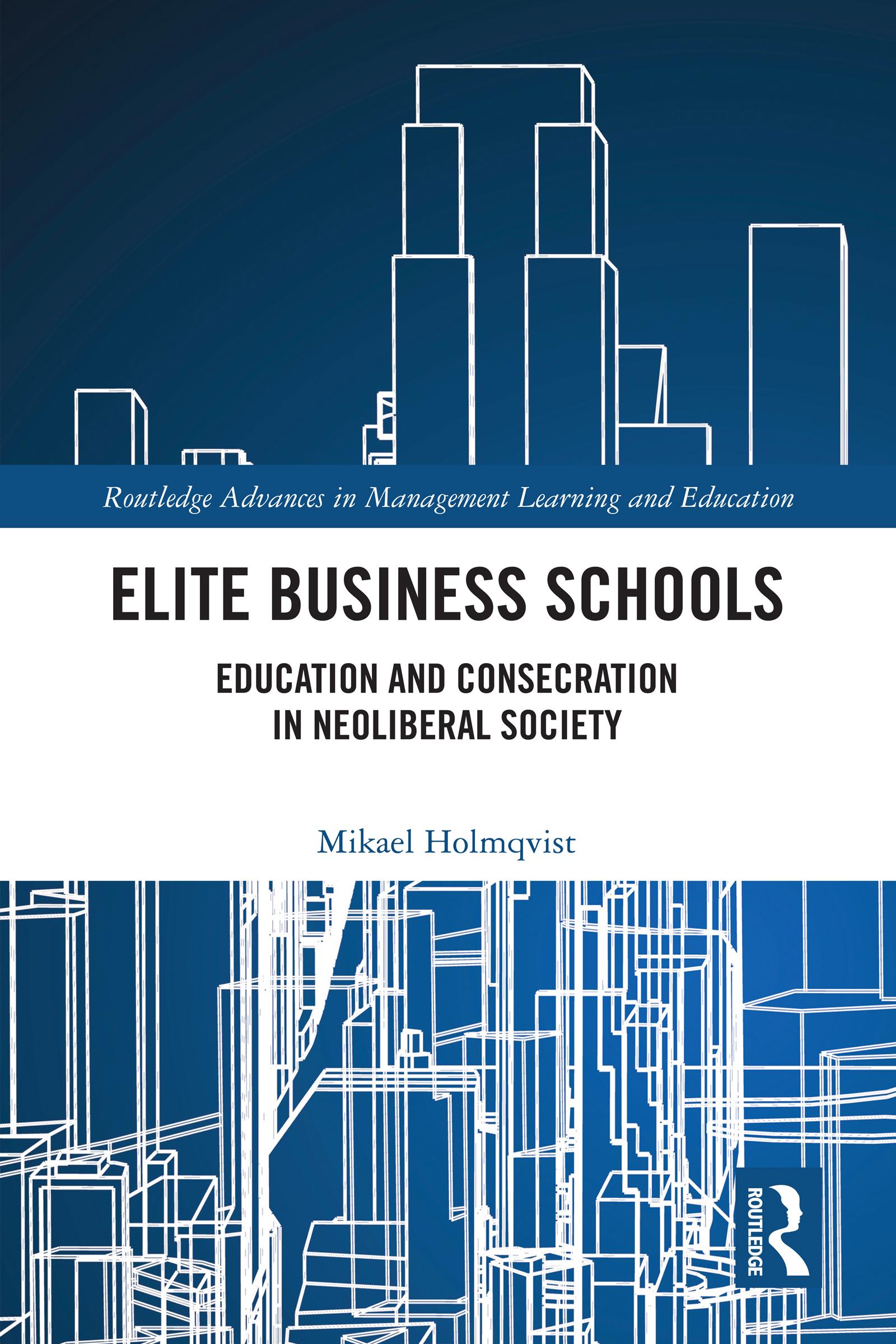
Social scientists are paying increasing attention to the business and financial elites: There’s a great need to understand who these elites are, what they do, and what makes them tick, as individuals but also as a class. By examining elite business schools, the institutions that train and prepare people to assume important leadership and decision-making positions in business, finance and related sectors, we may also learn how the economic elites are made. A key argument in this book is that elite schools are known to create powerful groups in society, offering them the intellectual and analytical means to act as leaders, but, most importantly, the social, moral and aesthetic skills that are deemed necessary to exercise power; in all essential respects elite schools consecrate people. By dominating much of higher education today, and by doing so in a way that creates and reproduces a market-based organization and control of society, elite business schools represent certain interests and ideologies that affect the lives of most people. In understanding how the modern economy is run, elite business schools, therefore, represent critical study objects.
This book, based on an in-depth study of the Stockholm School of Economics (SSE), offers a sociological analysis of the world of elite business schools. Specifically, this book examines the consecration of SSE’s students from a number of perspectives and in a number of situations, focusing on student union activities, school culture, faculty behavior, teaching, courses and alumni events, noting the symbolic importance of economics and particularly the school’s unique relation among the world’s business schools to the Nobel Prize.
The book addresses the topics with regards to the sociology of elites, management education and organizational studies and will be of interest to researchers, academics, and students also interested in business history, higher education studies, and sociology of education.
Zahle einfach mit Karte, Klarna, Apple Pay oder Google Pay. Nicht zufrieden? Du hast immer ein 14-tägiges Widerrufsrecht. Lies mehr in unseren AGB. Hast du Fragen, schreib uns eine E-Mail an hello@memmo.org.
Memmo macht das Lernen einfacher – wo auch immer du bist. Bei uns findest du deine Kursbücher und smarte Lerntools an einem Ort: Zusammenfassungen, Quizzes, Podcasts und Lernkarten. Und Ted, dein Lernbuddy, beantwortet alles, was du wissen möchtest. Über 50.000 Studierende lernen bereits hier – gemacht, damit du schneller lernst und weniger Stress hast.