
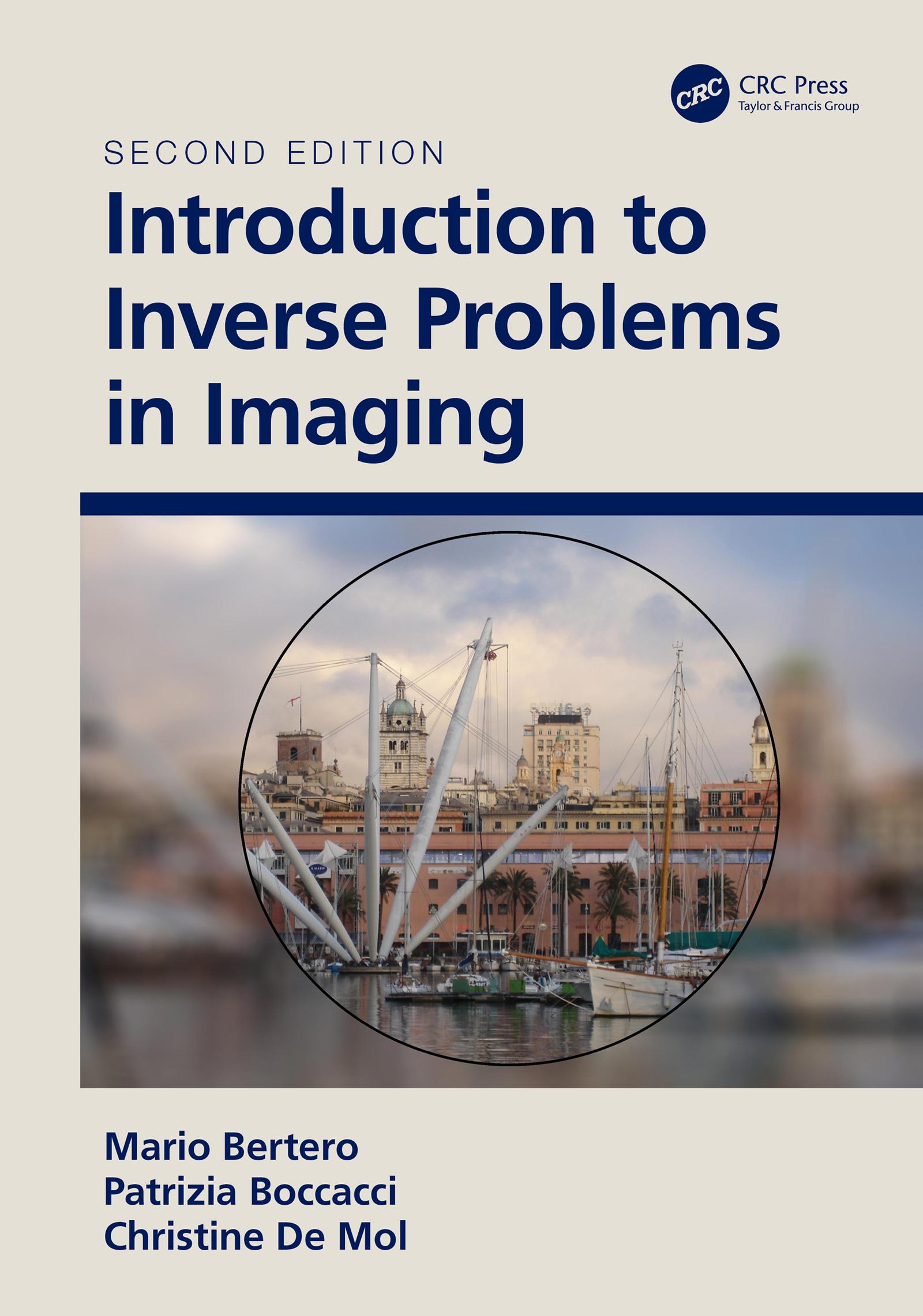
Fully updated throughout and with several new chapters, this second edition of Introduction to Inverse Problems in Imaging guides advanced undergraduate and graduate students in physics, computer science, mathematics and engineering through the principles of linear inverse problems, in addition to methods of their approximate solution and their practical applications in imaging.
This second edition contains new chapters on edge-preserving and sparsity-enforcing regularization in addition to maximum likelihood methods and Bayesian regularization for Poisson data.
The level of mathematical treatment is kept as low as possible to make the book suitable for a wide range of students from different backgrounds, with readers needing just a rudimentary understanding of analysis, geometry, linear algebra, probability theory, and Fourier analysis.
The authors concentrate on presenting easily implementable and fast solution algorithms, and this second edition is accompanied by numerical examples throughout. It will provide readers with the appropriate background needed for a clear understanding of the essence of inverse problems (ill-posedness and its cure) and, consequently, for an intelligent assessment of the rapidly growing literature on these problems.
Key features:
- Provides an accessible introduction to the topic while keeping mathematics to a minimum
- Interdisciplinary topic with growing relevance and wide-ranging applications
- Accompanied by numerical examples throughout
Zahle einfach mit Karte, Klarna, Apple Pay oder Google Pay. Nicht zufrieden? Du hast immer ein 14-tägiges Widerrufsrecht. Lies mehr in unseren AGB. Hast du Fragen, schreib uns eine E-Mail an hello@memmo.org.
Memmo macht das Lernen einfacher – wo auch immer du bist. Bei uns findest du deine Kursbücher und smarte Lerntools an einem Ort: Zusammenfassungen, Quizzes, Podcasts und Lernkarten. Und Ted, dein Lernbuddy, beantwortet alles, was du wissen möchtest. Über 50.000 Studierende lernen bereits hier – gemacht, damit du schneller lernst und weniger Stress hast.