
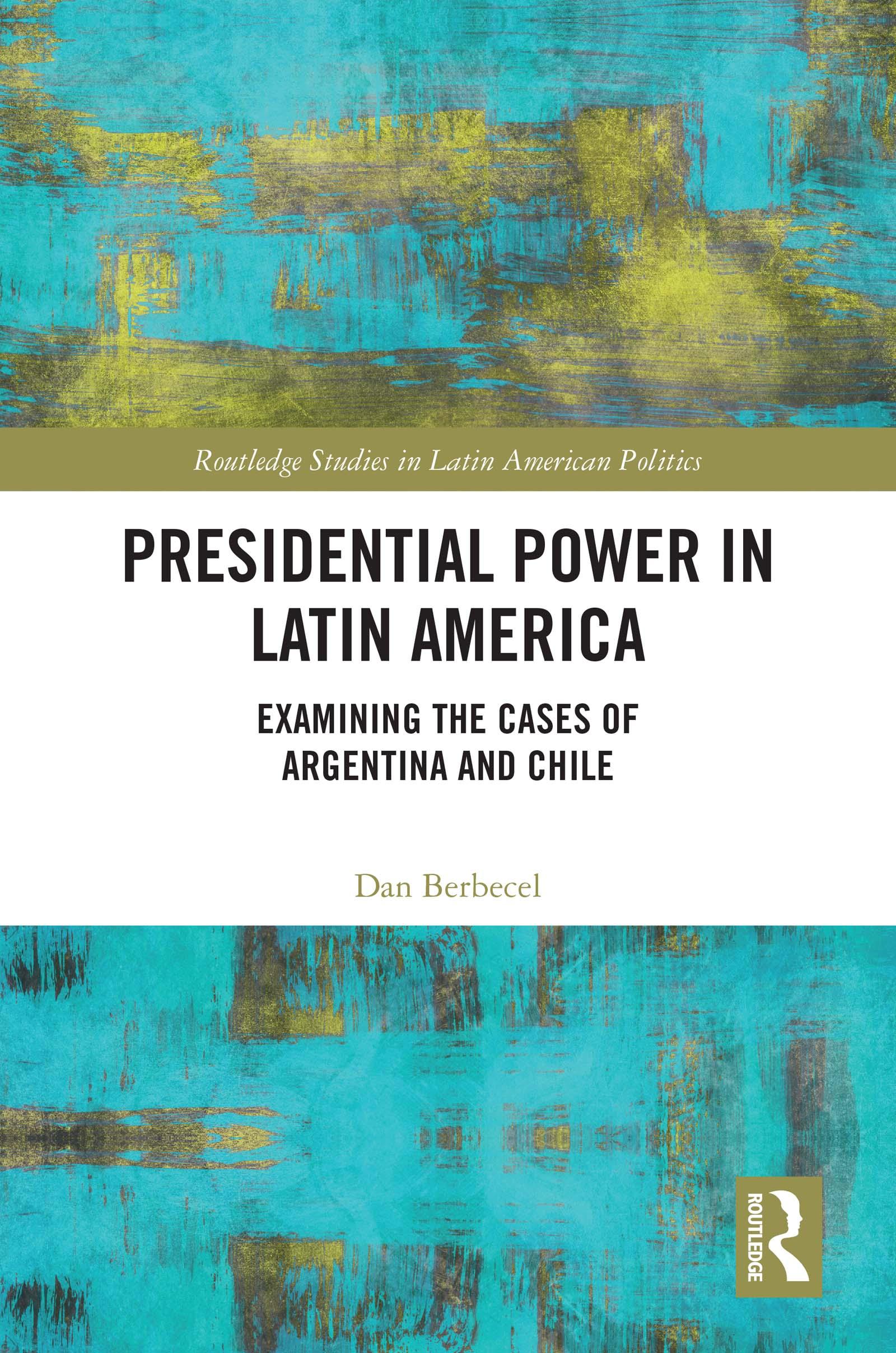
What explains variance in presidential power between countries? In Presidential Power in Latin America, Dan Berbecel provides a general, systematic theory for explaining presidential power in practice as opposed to presidential power in theory.
Using expert survey data from Varieties of Democracy (V-Dem) alongside interviews with high-level figures in politics, the judiciary, the public administration, NGOs, and academia in Argentina and Chile, Berbecel argues that constitutional presidential power (formal power) is a very poor predictor of presidential power in practice (informal power). Given the poor predictive value of formal rules, he provides an explanation why hyperpresidentialism emerges in some countries but not in others. Berbecel attributes the root causes of hyperpresidentialism to three independent variables (the strength of state institutions, the size of the president’s party in congress, and whether or not the country has a history of economic crises) which together determine how likely it is that a president will be able to concentrate power.
Presidential Power in Latin America will be of key interest to scholars and students of executive politics, Latin American politics, and more broadly, comparative politics.
Zahle einfach mit Karte, Klarna, Apple Pay oder Google Pay. Nicht zufrieden? Du hast immer ein 14-tägiges Widerrufsrecht. Lies mehr in unseren AGB. Hast du Fragen, schreib uns eine E-Mail an hello@memmo.org.
Memmo macht das Lernen einfacher – wo auch immer du bist. Bei uns findest du deine Kursbücher und smarte Lerntools an einem Ort: Zusammenfassungen, Quizzes, Podcasts und Lernkarten. Und Ted, dein Lernbuddy, beantwortet alles, was du wissen möchtest. Über 50.000 Studierende lernen bereits hier – gemacht, damit du schneller lernst und weniger Stress hast.