
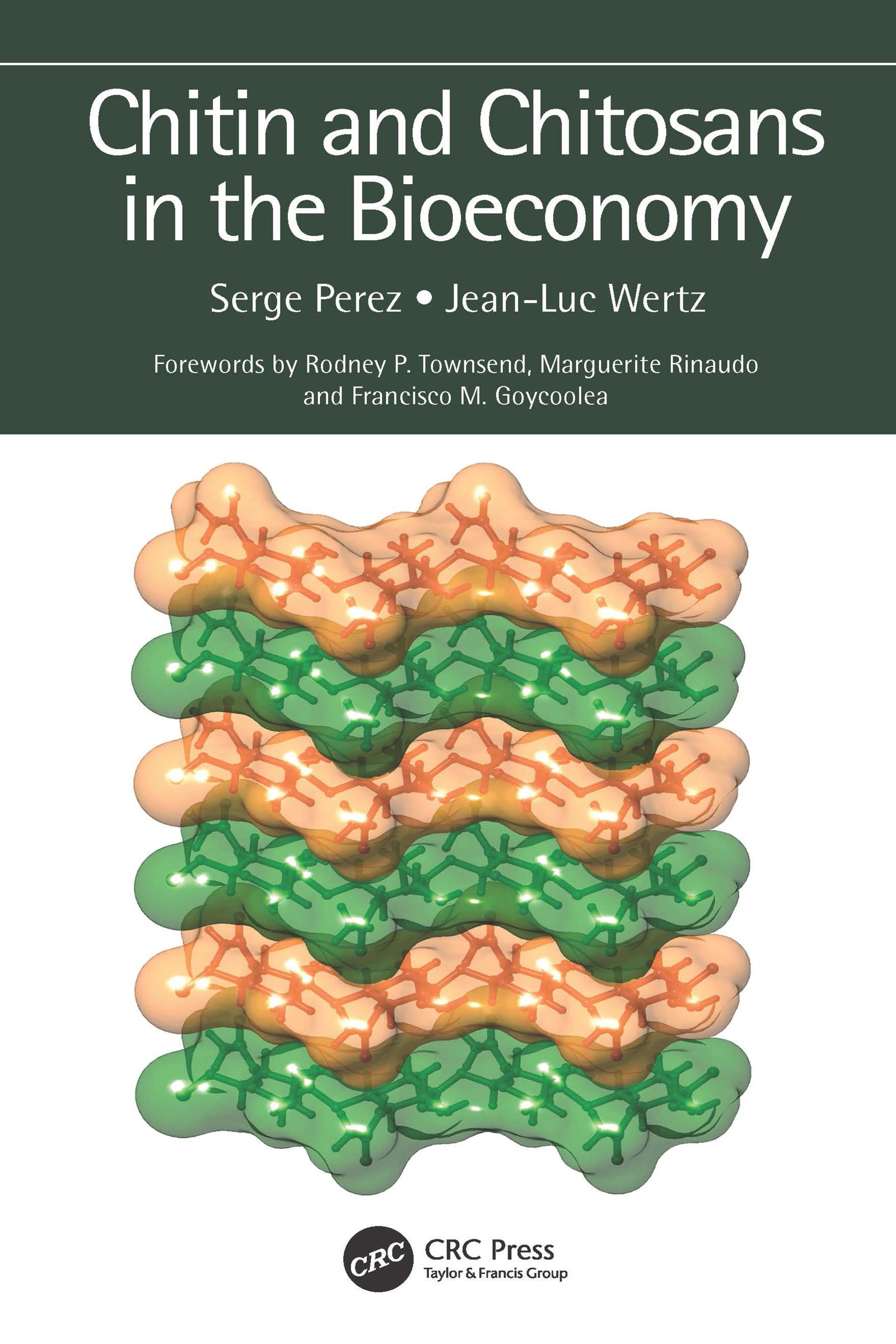
Chitin is the second most abundant natural polymer in the world after cellulose, mainly derived from the food waste of shrimp and crabs. Chitosan is the most important derivative of chitin. Thanks to their biodegradability, non-toxicity, biocompatibility, bioactivity, and versatile chemical and physical properties, chitin and chitosan derivatives are used in a wide variety of applications, including water treatment, cosmetics and toiletries, food and beverages, healthcare/medical, and agrochemicals. Chitin and Chitosans in the Bioeconomy covers all major aspects of chitin and chitosan, including structure, biosynthesis, biodegradation, properties of chitin and derivatives, applications, and market. It offers a special focus on the bioeconomy, which is the renewable segment of the circular economy.
- Describes the structure, biosynthesis, and biodegradation of chitin and chitosan
- Covers chitin- and chitosan-based products
- Details valorization of these materials
- Presents information on shell biorefineries
Chitin and Chitosans in the Bioeconomy serves as a reference for polymer scientists and engineers and is also accessible to economists and advanced students.
Zahle einfach mit Karte, Klarna, Apple Pay oder Google Pay. Nicht zufrieden? Du hast immer ein 14-tägiges Widerrufsrecht. Lies mehr in unseren AGB. Hast du Fragen, schreib uns eine E-Mail an hello@memmo.org.
Memmo macht das Lernen einfacher – wo auch immer du bist. Bei uns findest du deine Kursbücher und smarte Lerntools an einem Ort: Zusammenfassungen, Quizzes, Podcasts und Lernkarten. Und Ted, dein Lernbuddy, beantwortet alles, was du wissen möchtest. Über 50.000 Studierende lernen bereits hier – gemacht, damit du schneller lernst und weniger Stress hast.