
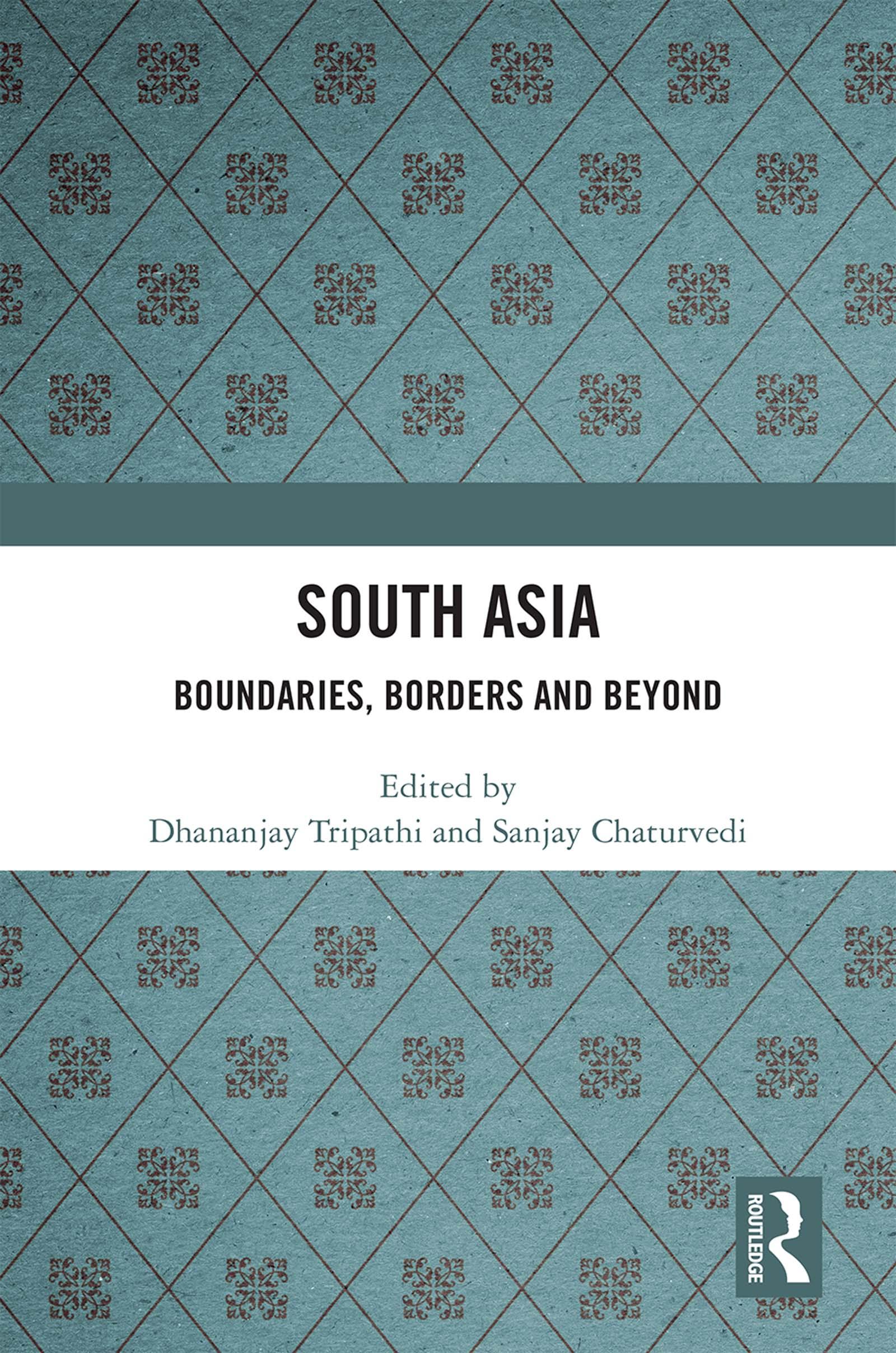
Post-colonial and post-partition South Asia, one of the fastest-growing and yet one of the least integrated regions of the world, is marked by both optimism and pessimism. This intriguing dichotomy of strength and weakness, security and insecurity, hope and fear, connections and disconnects underpins South Asia’s regionalism conundrum and gives birth to borders and boundaries – both material and mental – with a complex territoriality. The Janus-faced nature of South Asian borderlands – the inward nationalizing impulses entangled with the outward regional frontier-orientations – is a stark reminder that history of mobility in this eco-geographical region is much older than the history of territoriality and colonial cartography and ethnography. This collection of meticulously researched, theoretically informed, case studies from South Asia provides useful insights into bordering, ordering and othering narratives as practices and performances that are intricately entangled with identity politics and security discourses. It shows how a sharper focus on subterranean subregionalism(s), border communities, popular geopolitics of enmity, and transborder challenges to sustainability, could open up spaces for new multiple (re)imaginings of borders at diverse scales and sights including sub-urban neighbourhoods, school textbooks/cinema and trans-border conservation initiatives.
The chapters in this edited volume have been contributed by both renowned as well as young emerging scholars, looking into the borders and boundaries in South Asia. Each chapter offers new perspectives and insights into themes like trans-Himalayan borderlands, India-Pakistan physical and mental borders, Afghanistan-Pakistan border and numerous social boundaries that we see in everyday South Asia.
The chapters in this book were originally published as a special issue of the Journal of Borderlands Studies.
Zahle einfach mit Karte, Klarna, Apple Pay oder Google Pay. Nicht zufrieden? Du hast immer ein 14-tägiges Widerrufsrecht. Lies mehr in unseren AGB. Hast du Fragen, schreib uns eine E-Mail an hello@memmo.org.
Memmo macht das Lernen einfacher – wo auch immer du bist. Bei uns findest du deine Kursbücher und smarte Lerntools an einem Ort: Zusammenfassungen, Quizzes, Podcasts und Lernkarten. Und Ted, dein Lernbuddy, beantwortet alles, was du wissen möchtest. Über 50.000 Studierende lernen bereits hier – gemacht, damit du schneller lernst und weniger Stress hast.