
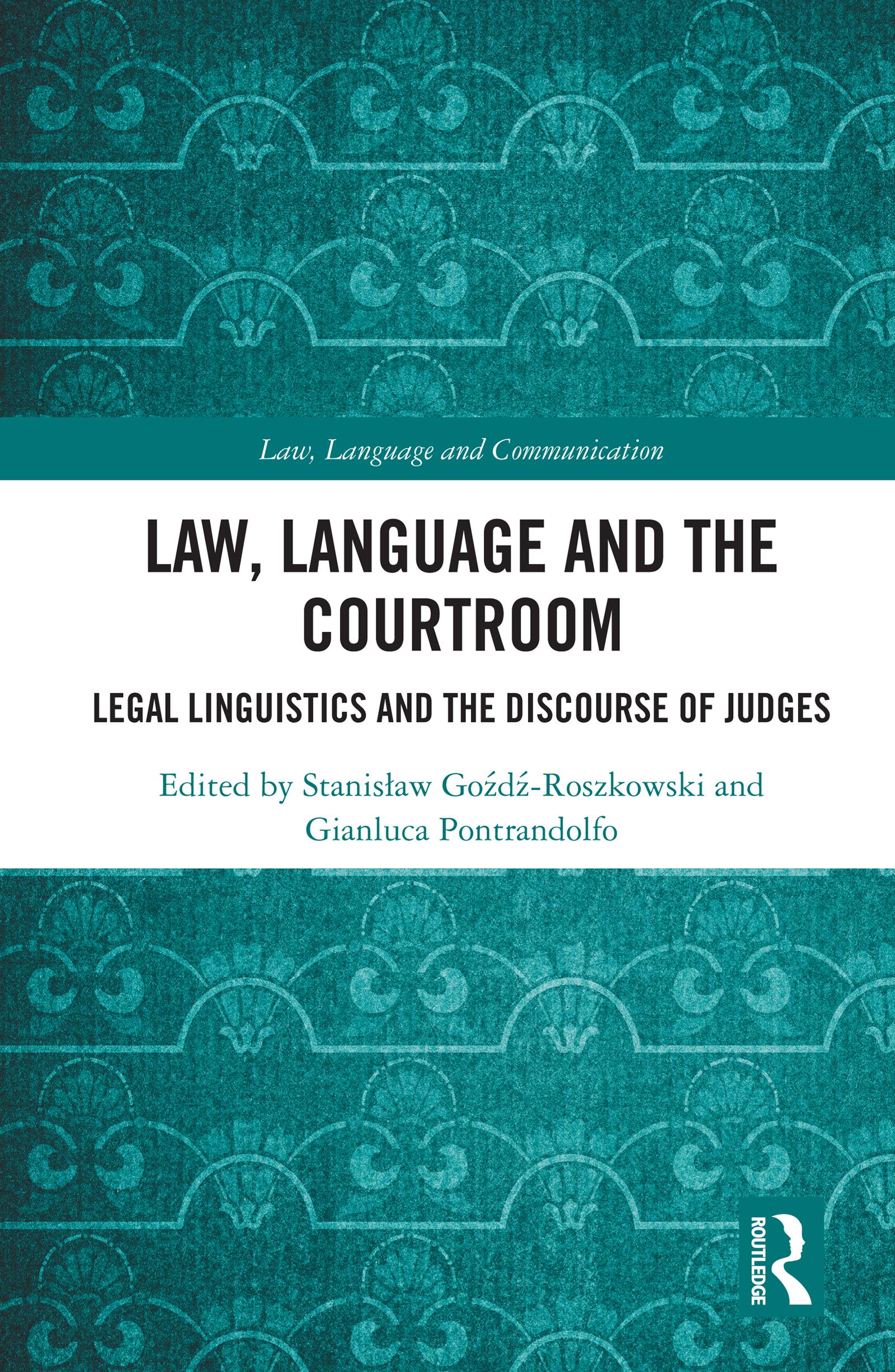
This book explores the language of judges. It is concerned with understanding how language works in judicial contexts. Using a range of disciplinary and methodological perspectives, it looks in detail at the ways in which judicial discourse is argued, constructed, interpreted and perceived. Focusing on four central themes - constructing judicial discourse and judicial identities, judicial argumentation and evaluative language, judicial interpretation, and clarity in judicial discourse - the book’s ultimate goal is to provide a comprehensive and in-depth analysis of current critical issues of the role of language in judicial settings. Contributors include legal linguists, lawyers, legal scholars, legal practitioners, legal translators and anthropologists, who explore patterns of linguistic organisation and use in judicial institutions and analyse language as an instrument for understanding both the judicial decision-making process and its outcome.
The book will be an invaluable resource for scholars in legal linguistics and those specialising in judicial argumentation and reasoning ,and forensic linguists interested in the use of language in judicial settings.
Zahle einfach mit Karte, Klarna, Apple Pay oder Google Pay. Nicht zufrieden? Du hast immer ein 14-tägiges Widerrufsrecht. Lies mehr in unseren AGB. Hast du Fragen, schreib uns eine E-Mail an hello@memmo.org.
Memmo macht das Lernen einfacher – wo auch immer du bist. Bei uns findest du deine Kursbücher und smarte Lerntools an einem Ort: Zusammenfassungen, Quizzes, Podcasts und Lernkarten. Und Ted, dein Lernbuddy, beantwortet alles, was du wissen möchtest. Über 50.000 Studierende lernen bereits hier – gemacht, damit du schneller lernst und weniger Stress hast.