
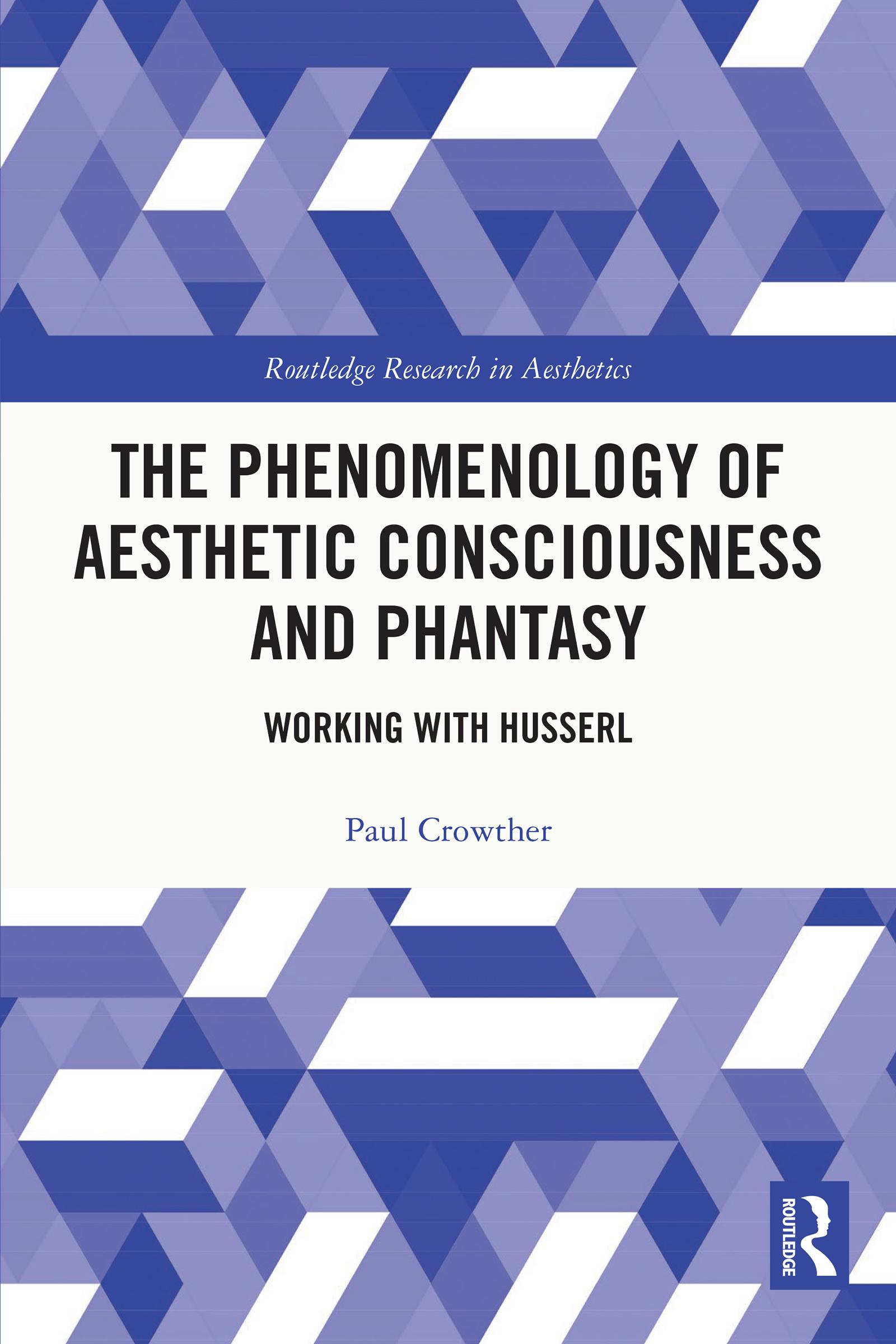
This is the first book dedicated to Husserl’s aesthetics. Paul Crowther pieces together Husserl’s ideas of phantasy and image and presents them as a unified and innovative account of aesthetic consciousness. He also shows how Husserl’s ideas can be developed to solve problems in aesthetics, especially those related to visual art, literature, theatre, and nature.
After outlining the major components of Husserl’s phenomenological method, Crowther addresses the scope and structure of Husserl’s notion of aesthetic consciousness. For Husserl, aesthetic consciousness in all its forms involves phantasy—where items or states of affairs are represented as if actually perceived or experienced, even though they are not, in fact, given in the present perceptual field. Husserl also makes some extraordinarily interesting links between aesthetic consciousness and nature, showing how natural things and environments become instigators of such consciousness when apprehended in the appropriate terms. This "unreality" of the object of aesthetic consciousness anticipates contemporary debates about pictorial representation and is also relevant to Husserl’s accounts of literature and theatre.
The Phenomenology of Aesthetic Consciousness and Phantasy will appeal to scholars and advanced students interested in aesthetics, philosophy of art, phenomenological aesthetics, and Husserl’s philosophy.
Zahle einfach mit Karte, Klarna, Apple Pay oder Google Pay. Nicht zufrieden? Du hast immer ein 14-tägiges Widerrufsrecht. Lies mehr in unseren AGB. Hast du Fragen, schreib uns eine E-Mail an hello@memmo.org.
Memmo macht das Lernen einfacher – wo auch immer du bist. Bei uns findest du deine Kursbücher und smarte Lerntools an einem Ort: Zusammenfassungen, Quizzes, Podcasts und Lernkarten. Und Ted, dein Lernbuddy, beantwortet alles, was du wissen möchtest. Über 50.000 Studierende lernen bereits hier – gemacht, damit du schneller lernst und weniger Stress hast.