
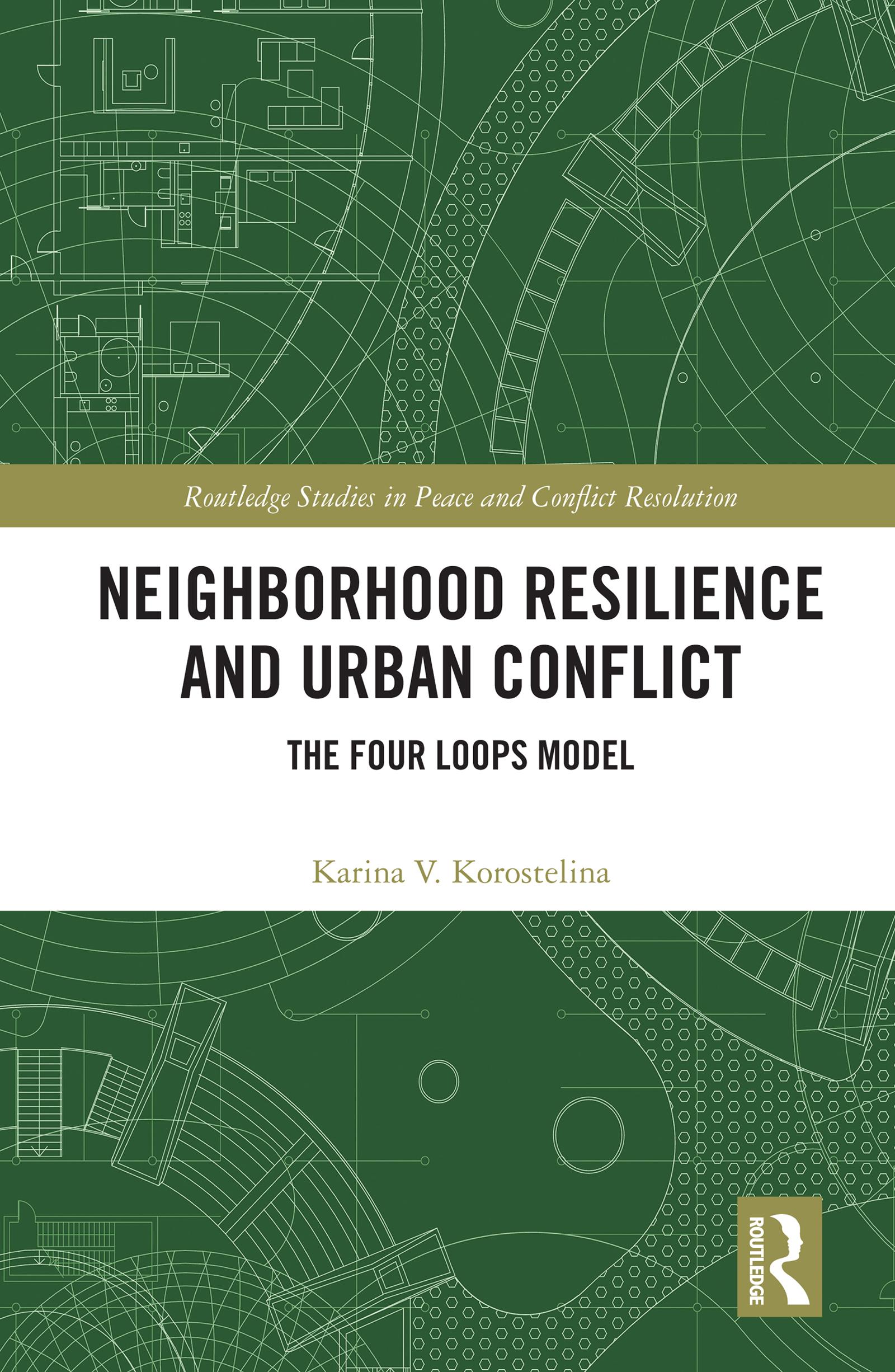
This book explores the resilience in urban neighborhoods affected by chronic conflict and violence, developing a new model for improving resilience policies.
The neighborhood resilience approach is an inclusive form of building positive resilience, which recognizes that local communities possess valuable skills and experience of dealing with crises, and prioritizes the agency of local communities in the production of knowledge and developing practices. The book identifies and describes the repertoire of neighborhood resilience practices organized in four clusters: (1) addressing the structure of conflict; (2) increasing the effectiveness of external resources; (3) enhancing the community capacities; and (4) reflecting the dynamics of identity and power in neighborhoods. One of the key findings of the book is the nonlinear connections between structure and dynamics of conflict and neighborhood resilience practices represented in the Four Loops Model. The concentration on community-based practices addresses macro-level critiques of neo-liberalism in critical resilience studies and encourages rethinking the ways community-based indicators might operate in combination with existing macro indicators of resilience. The bottom-up indicators provide more specific details and essential localized experiences for improving resilience policies at the national level.
This book will be of much interest to students of conflict resolution, resilience, urban studies, and US politics.
Zahle einfach mit Karte, Klarna, Apple Pay oder Google Pay. Nicht zufrieden? Du hast immer ein 14-tägiges Widerrufsrecht. Lies mehr in unseren AGB. Hast du Fragen, schreib uns eine E-Mail an hello@memmo.org.
Memmo macht das Lernen einfacher – wo auch immer du bist. Bei uns findest du deine Kursbücher und smarte Lerntools an einem Ort: Zusammenfassungen, Quizzes, Podcasts und Lernkarten. Und Ted, dein Lernbuddy, beantwortet alles, was du wissen möchtest. Über 50.000 Studierende lernen bereits hier – gemacht, damit du schneller lernst und weniger Stress hast.