
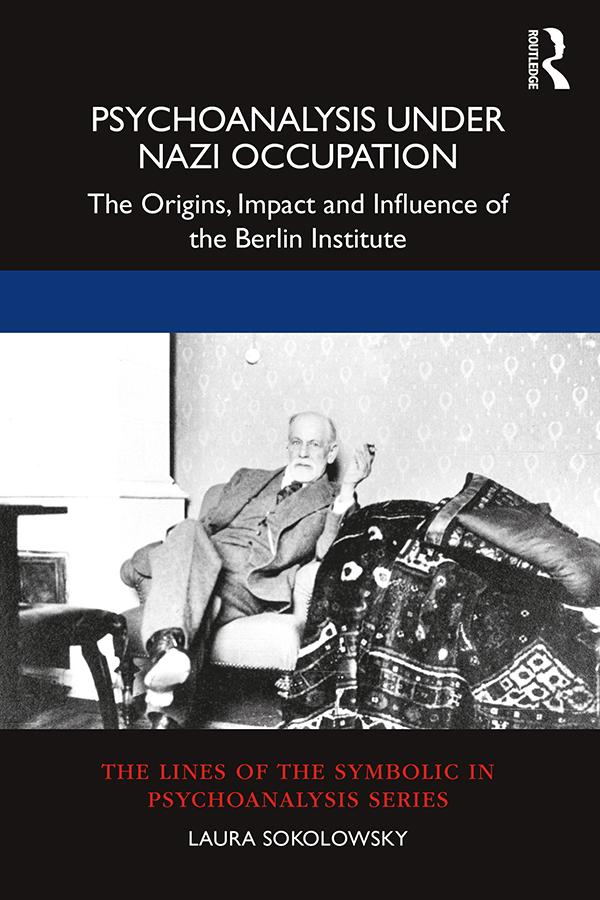
Laura Sokolowsky’s survey of psychoanalysis under Weimar and Nazism explores how the paradigm of a ‘psychoanalysis for all’ became untenable as the Nazis rose to power.
Mainly discussing the evolution of the Berlin Institute during the period between Freud’s creation of free psychoanalytic centres after the founding of the Weimar Republic and the Nazi seizure of power in 1933, the book explores the ideal of making psychoanalysis available to the population of a shattered country after World War I, and charts how the Institute later came under Nazi control following the segregation and dismissal of Jewish colleagues in the late 1930s. The book shows how Freudian standards resisted the medicalisation of psychoanalysis for purposes of adaptation and normalisation, but also follows Freud’s distinction between sacrifice (where you know what you have given up) and concession (an abandonment of position through compromise) to demonstrate how German psychoanalysts put themselves at the service of the fascist master, in the hope of obtaining official recognition and material rewards.
Discussing the relations of psychoanalysis with politics and ethics, as well as the origin of the Lacanian movement as a response to the institutionalisation of psychoanalysis during the Nazi occupation, this book is fascinating reading for scholars and practitioners of psychoanalysis working today.
Zahle einfach mit Karte, Klarna, Apple Pay oder Google Pay. Nicht zufrieden? Du hast immer ein 14-tägiges Widerrufsrecht. Lies mehr in unseren AGB. Hast du Fragen, schreib uns eine E-Mail an hello@memmo.org.
Memmo macht das Lernen einfacher – wo auch immer du bist. Bei uns findest du deine Kursbücher und smarte Lerntools an einem Ort: Zusammenfassungen, Quizzes, Podcasts und Lernkarten. Und Ted, dein Lernbuddy, beantwortet alles, was du wissen möchtest. Über 50.000 Studierende lernen bereits hier – gemacht, damit du schneller lernst und weniger Stress hast.