
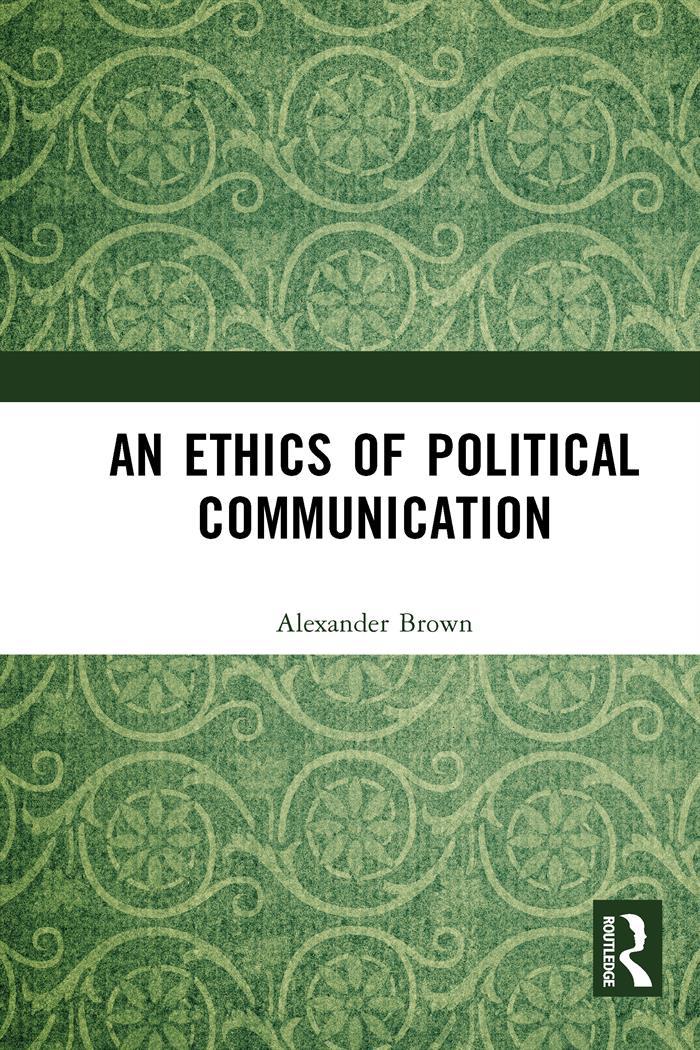
Working in the tradition of analytic philosophy, Alexander Brown argues that many different forms of political communication (or anti-communication) that often infuriate the public can also be ethically or morally objectionable. These forms include question dodging, offering scripted answers, stonewalling, not listening, disseminating propaganda, pandering, being insincere, giving false denials, issuing revisionist interpretations, refusing to take responsibility, never apologising, boasting, and gaslighting. Brown invokes a host of normative reasons including those having to do with epistemic arrogance, interference in autonomy, and violating the right to be heard. This is not to say that, all things considered, politicians should never engage in dubious political communication. Sometimes these are necessary evils. Brown argues, however, that further moral inquiry is needed to show why they are evils, and to determine when the use of these rhetorical tactics can be excessive, unreasonable, or out of place.
Key Features:
• Identifies and conceptualises forms of dubious political communication
• Develops an ethical evaluation of political communication
• Considers possible justifications for the use of dubious political communication
• Makes practical recommendations on how to regulate unethical political communication
Zahle einfach mit Karte, Klarna, Apple Pay oder Google Pay. Nicht zufrieden? Du hast immer ein 14-tägiges Widerrufsrecht. Lies mehr in unseren AGB. Hast du Fragen, schreib uns eine E-Mail an hello@memmo.org.
Memmo macht das Lernen einfacher – wo auch immer du bist. Bei uns findest du deine Kursbücher und smarte Lerntools an einem Ort: Zusammenfassungen, Quizzes, Podcasts und Lernkarten. Und Ted, dein Lernbuddy, beantwortet alles, was du wissen möchtest. Über 50.000 Studierende lernen bereits hier – gemacht, damit du schneller lernst und weniger Stress hast.