
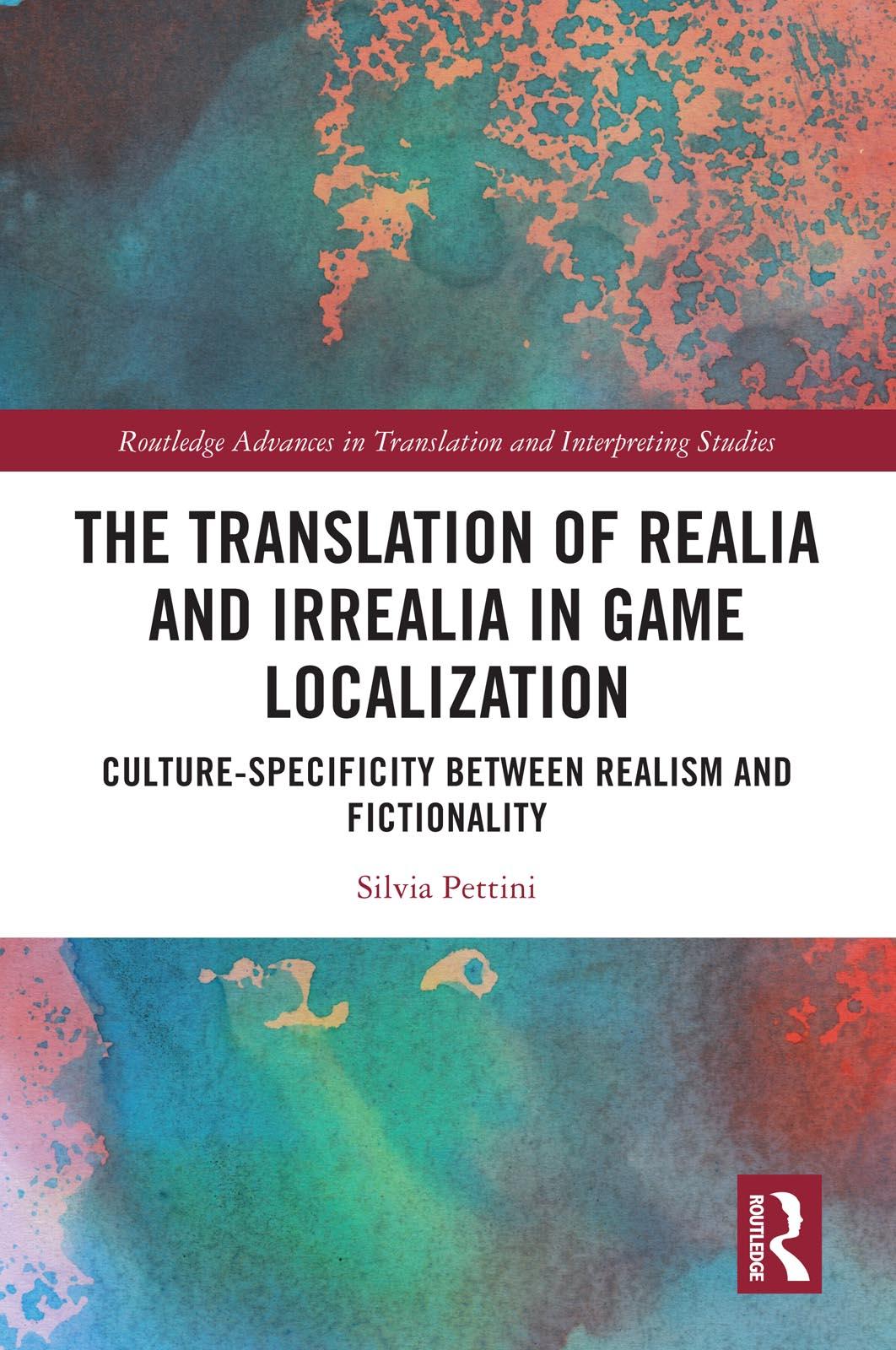
This book explores the impact of a video game’s degree of realism or fictionality on its linguistic dimensions, investigating the challenges and strategies for translating realia and irrealia, the interface of the real world and the game world where culture-specificity manifests itself.
The volume outlines the key elements in the translation of video games, such as textual non-linearity, multitextuality, and playability, and introduces the theoretical framework used to determine a game’s respective degree of realism or fictionality. Pettini applies an interdisciplinary approach drawing on video game research and Descriptive Translation Studies to the linguistic and translational analysis of in-game dialogs in English-Italian and English-Spanish language pairs from a corpus of three war video games. This approach allows for an in-depth look at the localization challenges posed by the varying degree of realism and fictionality across video games and the different strategies translators employ in response to these challenges. A final chapter offers a comparative analysis of the three games and subsequently avenues for further research on the role of culture-specificity in game localization.
This book is key reading for students and scholars interested in game localization, audiovisual translation studies, and video game research.
Zahle einfach mit Karte, Klarna, Apple Pay oder Google Pay. Nicht zufrieden? Du hast immer ein 14-tägiges Widerrufsrecht. Lies mehr in unseren AGB. Hast du Fragen, schreib uns eine E-Mail an hello@memmo.org.
Memmo macht das Lernen einfacher – wo auch immer du bist. Bei uns findest du deine Kursbücher und smarte Lerntools an einem Ort: Zusammenfassungen, Quizzes, Podcasts und Lernkarten. Und Ted, dein Lernbuddy, beantwortet alles, was du wissen möchtest. Über 50.000 Studierende lernen bereits hier – gemacht, damit du schneller lernst und weniger Stress hast.