
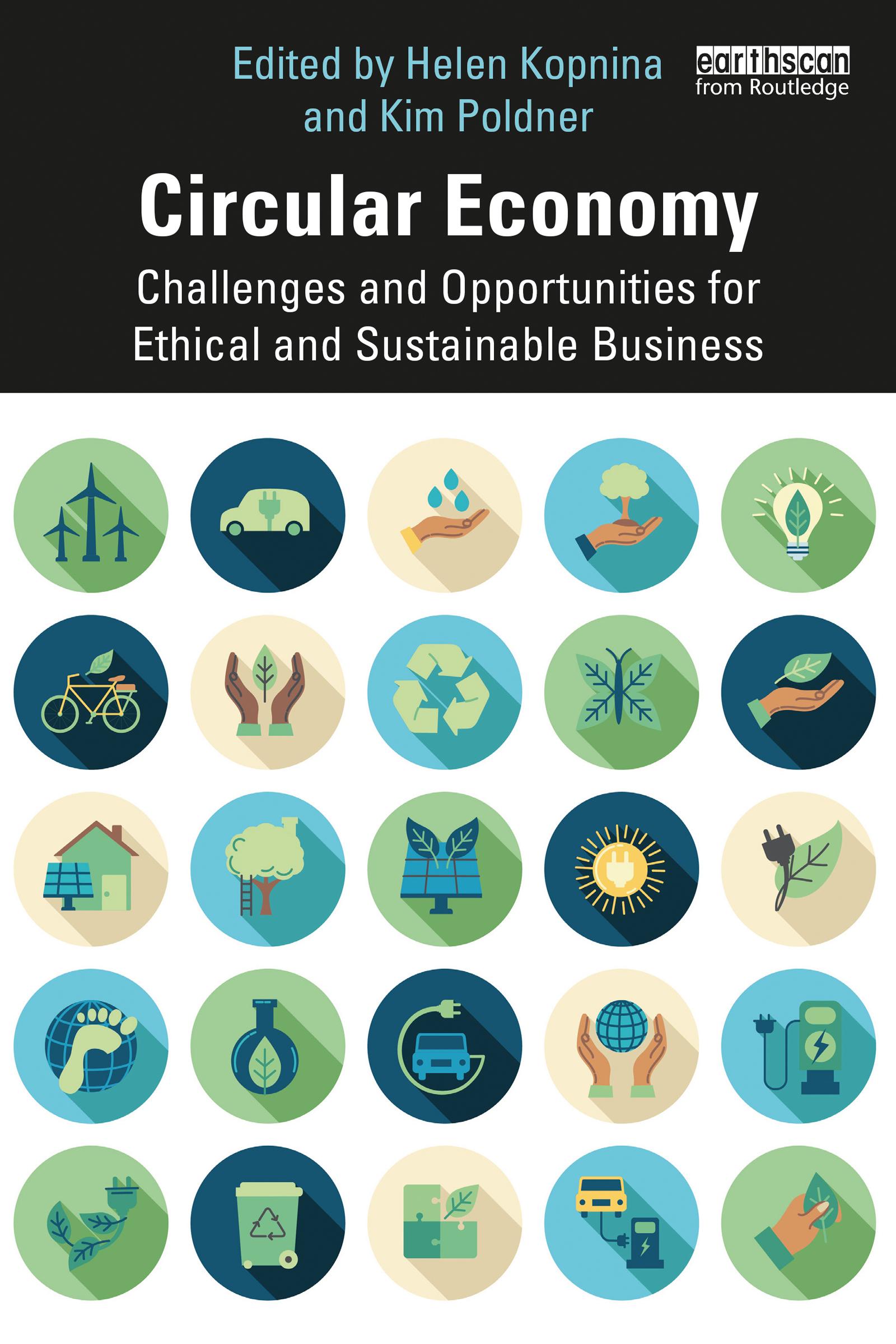
How can we design circular business models? How can we organize the transition from a linear to a circular economy? And how can we imagine circular futures that help us transform current realities? This book aims to provide answers to these questions while addressing the challenges and opportunities of the circular economy.
The authors reflect on why conventional sustainability models – such as the ‘triple P’ (People, Profit and Planet) or eco-efficiency – have failed in addressing environmental challenges, including climate change, biodiversity loss and pollution. They then move on to explore innovative circular business models, which propose to eliminate environmental damage by radically reforming the system of industrial production. Organizing the transition is a collaborative effort: entrepreneurs, consumers, policymakers, multinationals and intermediaries need to work together to foster the emergence of the circular economy as an institutional field. Together with younger generations of learners and equipped with beyond-human-centred values towards awareness of the material and natural world, novel circular futures can be imagined.
Offering points of reference for continued critical discourse and examples of practically applicable sustainability solutions, this book will be of great interest to students, teachers, practitioners and scholars of circular economy.
Zahle einfach mit Karte, Klarna, Apple Pay oder Google Pay. Nicht zufrieden? Du hast immer ein 14-tägiges Widerrufsrecht. Lies mehr in unseren AGB. Hast du Fragen, schreib uns eine E-Mail an hello@memmo.org.
Memmo macht das Lernen einfacher – wo auch immer du bist. Bei uns findest du deine Kursbücher und smarte Lerntools an einem Ort: Zusammenfassungen, Quizzes, Podcasts und Lernkarten. Und Ted, dein Lernbuddy, beantwortet alles, was du wissen möchtest. Über 50.000 Studierende lernen bereits hier – gemacht, damit du schneller lernst und weniger Stress hast.