
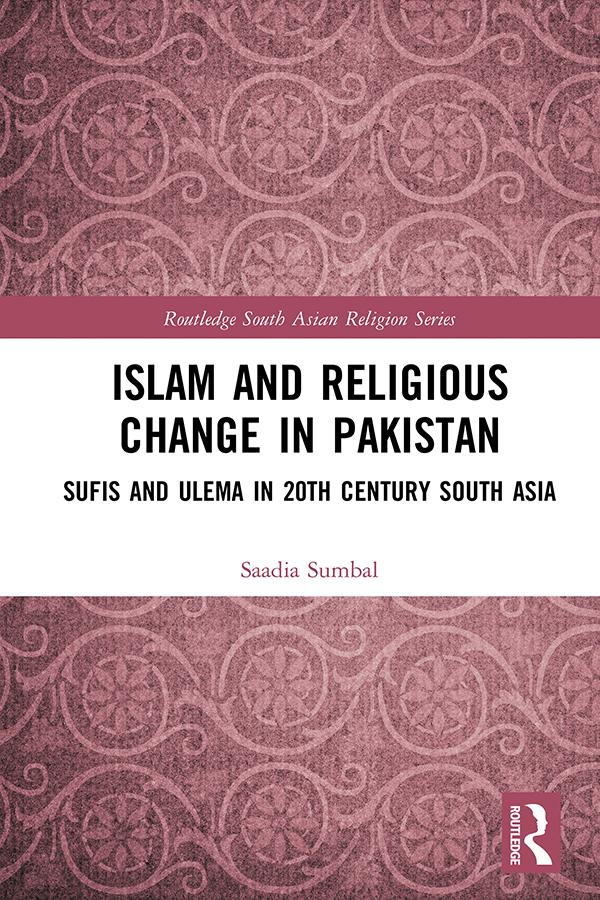
This book examines the history of, and the contestations on, Islam and the nature of religious change in 20th century Pakistan, focusing in particular on movements of Islamic reform and revival.
This book is the first to bring the different facets of Islam, particularly Islamic reformism and shrine-oriented traditions, together within the confines of a single study ranging from the colonial to post-colonial era. Using a rich corpus of Urdu and Arabic material including biographical accounts, Sufi discourses (malfuzat), letter collections, polemics and unexplored archival sources, the author investigates how Islamic reformism and shrine-oriented religiosity interacted with one another in the post-colonial state of Pakistan. Focusing on the district of Mianwali in Pakistani northwestern Punjab, the book demonstrates how reformist ideas could only effectively find space to permeate after accommodating Sufi thoughts and practices; the text-based religious identity coalesced with overlapped traditional religious rituals and practices. The book proceeds to show how reformist Islam became the principal determinant of Islamic identity in the post-colonial state of Pakistan and how one of its defining effects was the hardening of religious boundaries.
Challenging the approach of viewing the contestation between reformist and shrine-oriented Islam through the lens of binaries modern/traditional and moderate/extremist, this book makes an important contribution to the field of South Asian religion and Islam in modern South Asia.
Zahle einfach mit Karte, Klarna, Apple Pay oder Google Pay. Nicht zufrieden? Du hast immer ein 14-tägiges Widerrufsrecht. Lies mehr in unseren AGB. Hast du Fragen, schreib uns eine E-Mail an hello@memmo.org.
Memmo macht das Lernen einfacher – wo auch immer du bist. Bei uns findest du deine Kursbücher und smarte Lerntools an einem Ort: Zusammenfassungen, Quizzes, Podcasts und Lernkarten. Und Ted, dein Lernbuddy, beantwortet alles, was du wissen möchtest. Über 50.000 Studierende lernen bereits hier – gemacht, damit du schneller lernst und weniger Stress hast.