
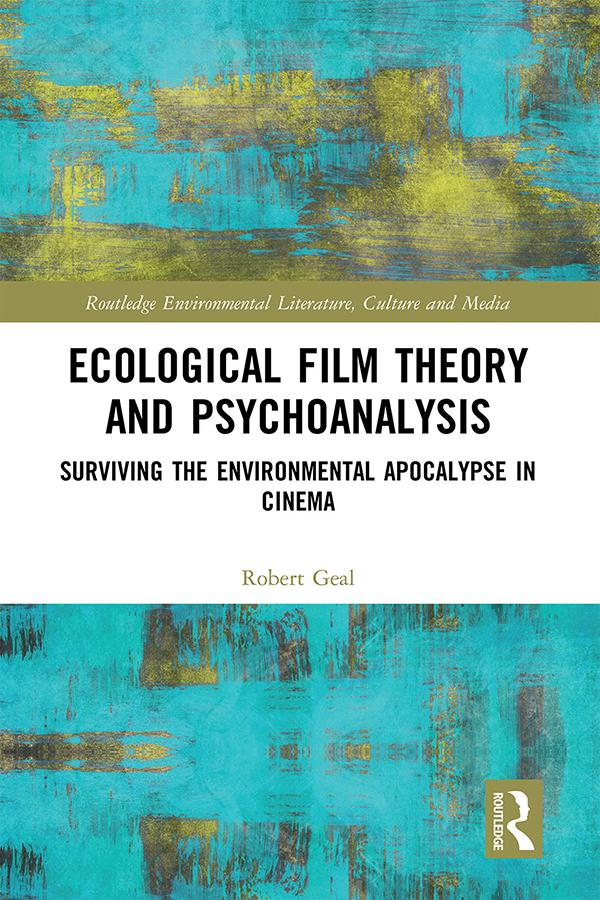
This book applies ecolinguistics and psychoanalysis to explore how films fictionalising environmental disasters provide spectacular warnings against the dangers of environmental apocalypse, while highlighting that even these apparently environmentally friendly films can still facilitate problematic real-world changes in how people treat the environment.
Ecological Film Theory and Psychoanalysis argues that these films exploit cinema’s inherent Cartesian grammar to construct texts in which not only small groups of protagonist survivors, but also vicarious spectators, pleasurably transcend the fictionalised destruction. The ideological nature of the ‘lifeboats’ on which these survivors escape, moreover, is accompanied by additional elements that constitute contemporary Cartesian subjectivity, such as class and gender binaries, restored nuclear families, individual as opposed to social responsibilities for disasters, and so on. The book conducts extensive analyses of these processes, before considering alternative forms of filmmaking that might avoid the dangers of this existing form of storytelling. The book’s new ecosophy and film theory establishes that Cartesian subjectivity is an environmentally destructive ‘symptom’ that everyday linguistic activities like watching films reinforce.
This book will be of great interest to students and scholars of film studies, literary studies (specifically ecocriticism), cultural studies, ecolinguistics, and ecosophy.
Zahle einfach mit Karte, Klarna, Apple Pay oder Google Pay. Nicht zufrieden? Du hast immer ein 14-tägiges Widerrufsrecht. Lies mehr in unseren AGB. Hast du Fragen, schreib uns eine E-Mail an hello@memmo.org.
Memmo macht das Lernen einfacher – wo auch immer du bist. Bei uns findest du deine Kursbücher und smarte Lerntools an einem Ort: Zusammenfassungen, Quizzes, Podcasts und Lernkarten. Und Ted, dein Lernbuddy, beantwortet alles, was du wissen möchtest. Über 50.000 Studierende lernen bereits hier – gemacht, damit du schneller lernst und weniger Stress hast.