
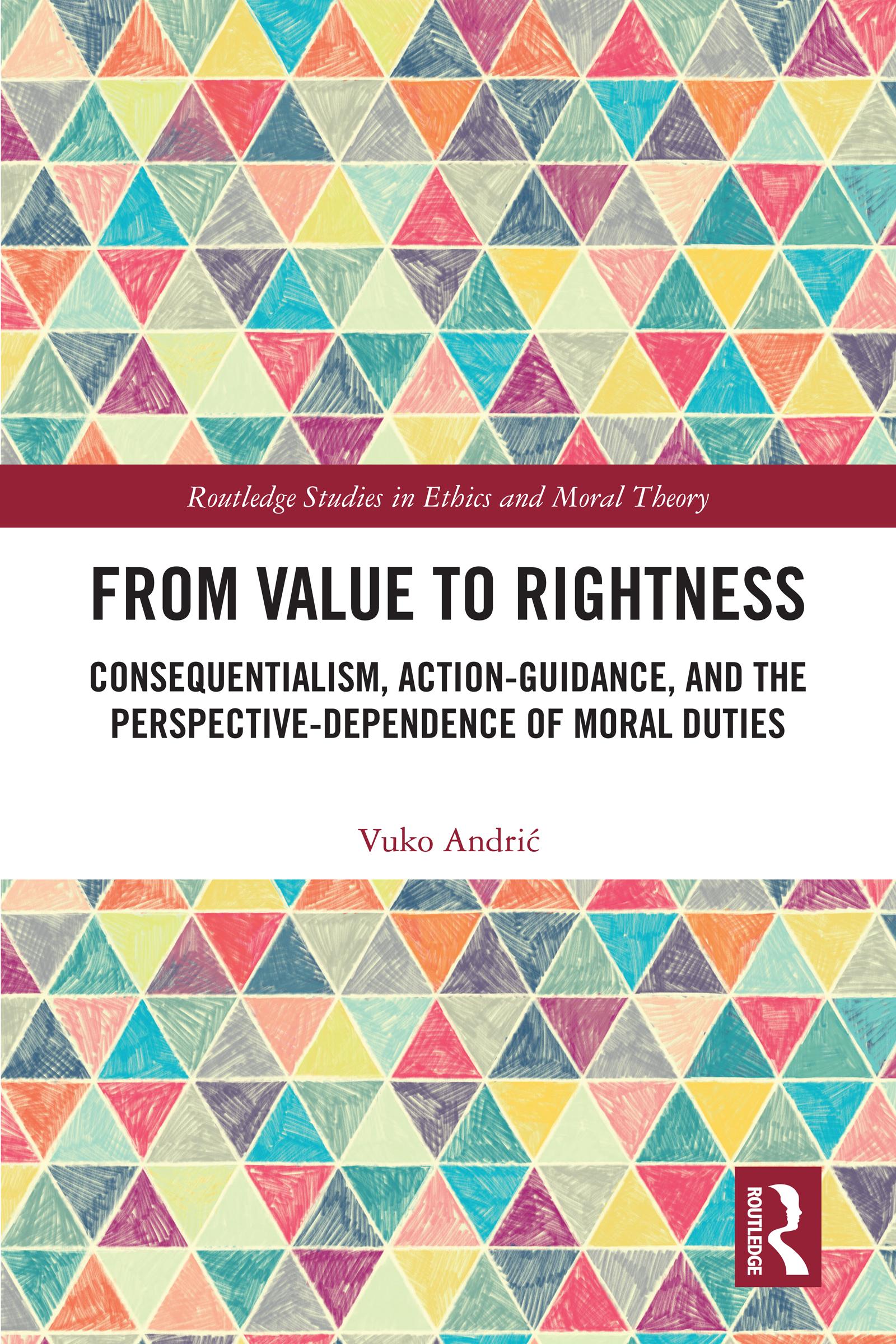
This book develops an original version of act-consequentialism. It argues that act-consequentialists should adopt a subjective criterion of rightness.
The book develops new arguments which strongly suggest that, according to the best version of act-consequentialism, the rightness of actions depends on expected rather than actual value. Its findings go beyond the debate about consequentialism and touch on important debates in normative ethics and metaethics. The distinction between criterion of rightness and decision procedures addresses how, why, and in which sense moral theories must be implemented by ordinary persons. The discussion of the rationales of "ought" implies "can" leads to the discovery of a hitherto overlooked moral principle, "ought" implies "evidence", which can be used to show that most prominent moral theories are false. Finally, in the context of discussing cases that are supposed to reveal intuitions that favour either objective or subjective consequentialism, the book argues that which cases are relevant for the discussion of objectivism and subjectivism depends on the type of moral theory we are concerned with (consequentialism, Kantianism, virtue ethics, etc.).
From Value to Rightness will be of interest to scholars and advanced students working in normative ethics and metaethics.
Zahle einfach mit Karte, Klarna, Apple Pay oder Google Pay. Nicht zufrieden? Du hast immer ein 14-tägiges Widerrufsrecht. Lies mehr in unseren AGB. Hast du Fragen, schreib uns eine E-Mail an hello@memmo.org.
Memmo macht das Lernen einfacher – wo auch immer du bist. Bei uns findest du deine Kursbücher und smarte Lerntools an einem Ort: Zusammenfassungen, Quizzes, Podcasts und Lernkarten. Und Ted, dein Lernbuddy, beantwortet alles, was du wissen möchtest. Über 50.000 Studierende lernen bereits hier – gemacht, damit du schneller lernst und weniger Stress hast.