
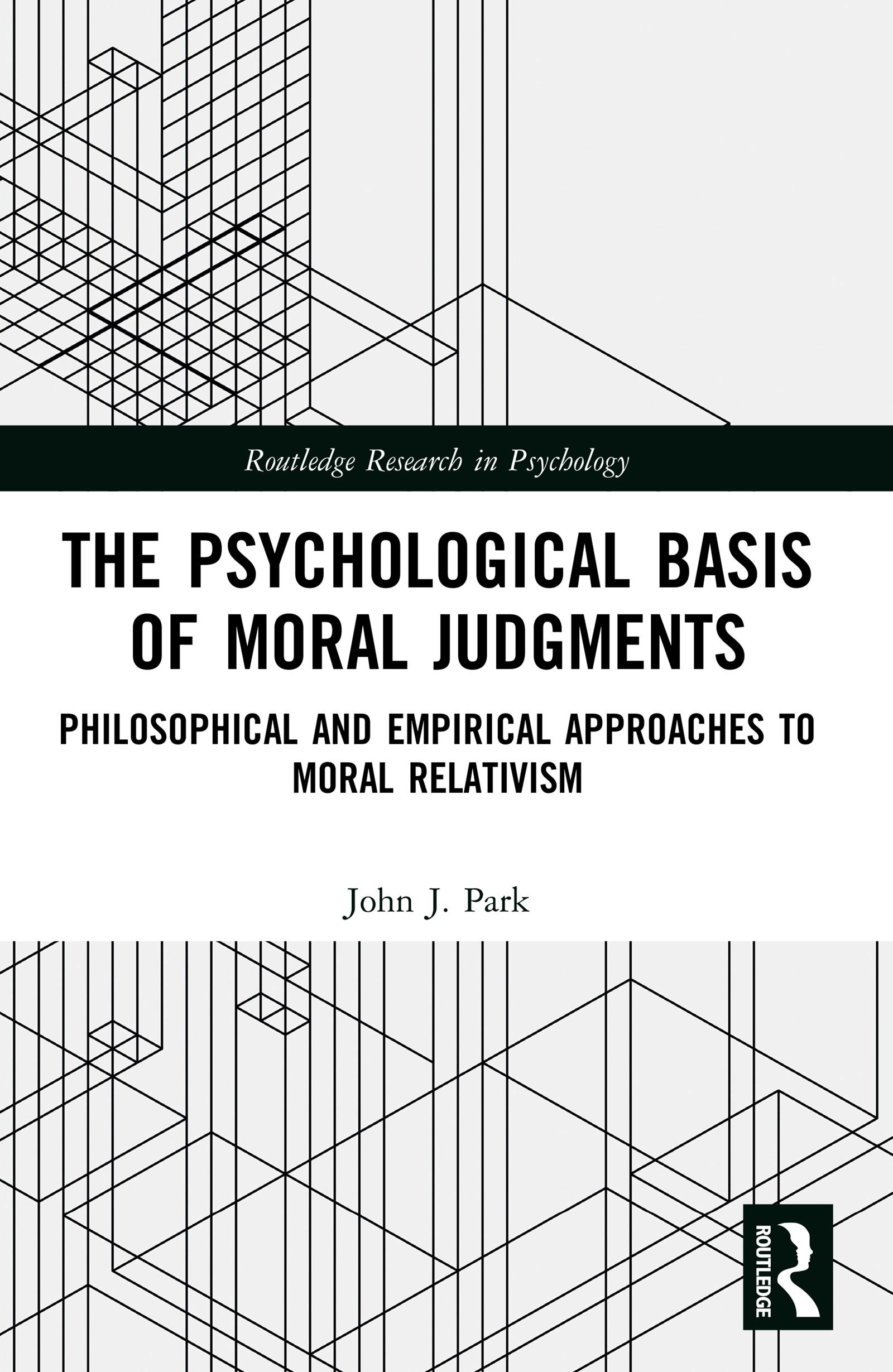
This volume examines the psychological basis of moral judgments and asks what theories of concepts apply to moral concepts. By combining philosophical reasoning and empirical insights from the fields of moral psychology, cognitive science, evolutionary psychology, and neuroscience, it considers what mental states not only influence, but also constitute our moral concepts and judgments. On this basis, Park proposes a novel pluralistic theory of moral concepts which includes three different cognitive structures and emotions. Thus, our moral judgments are shown to be a hybrid that express both cognitive and conative states.
In part through analysis of new empirical data on moral semantic intuitions, gathered via cross-cultural experimental research, Park reveals that the referents of individuals’ moral judgments and concepts vary across time, contexts, and groups. On this basis, he contends for moral relativism, where moral judgments cannot be universally true across time and location but only relative to groups.
This powerfully argued text will be of interest to researchers, academics, and educators with an interest in cognitive science, moral theory, philosophy of psychology, and moral psychology more broadly. Those interested in ethics, applied social psychology, and moral development will also benefit from the volume.
Zahle einfach mit Karte, Klarna, Apple Pay oder Google Pay. Nicht zufrieden? Du hast immer ein 14-tägiges Widerrufsrecht. Lies mehr in unseren AGB. Hast du Fragen, schreib uns eine E-Mail an hello@memmo.org.
Memmo macht das Lernen einfacher – wo auch immer du bist. Bei uns findest du deine Kursbücher und smarte Lerntools an einem Ort: Zusammenfassungen, Quizzes, Podcasts und Lernkarten. Und Ted, dein Lernbuddy, beantwortet alles, was du wissen möchtest. Über 50.000 Studierende lernen bereits hier – gemacht, damit du schneller lernst und weniger Stress hast.