
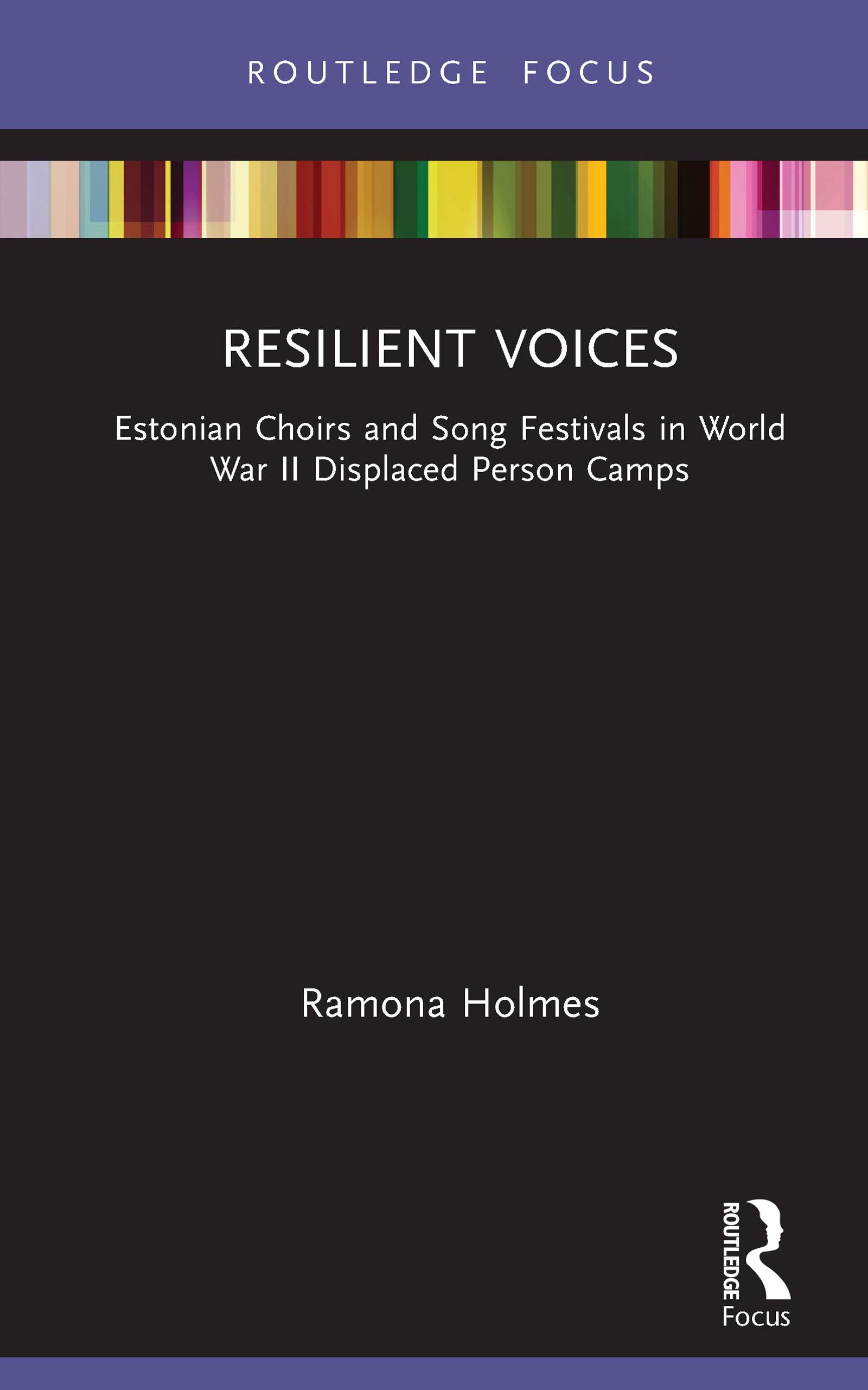
The aftermath of World War II sent thousands of Estonian refugees into Europe. The years of Estonian independence (1917-1940) had given them a taste of freedom and so relocation to displaced person (DP) camps in post-war Germany was extremely painful. One way in which Estonians dealt with the chaos and trauma of WWII and its aftermath was through choral singing. Just as song festivals helped establish national identity in 1869, song festivals promoted cultural cohesiveness for Estonians in WWII displaced person camps. A key turning point in hope for the Estonian DPs was the 1947 Augsburg Song Festival, which is the center point of this book. As Estonian DPs dispersed to Australia, Canada, Europe, and the United States these choirs and song festivals gave Estonians the resilience to retain their identity and to thrive in their new homes. This history of Estonian WWII DP camp choirs and song festivals is gathered from the stories of many courageous individuals and filled with the tenacious spirit of the Estonian singing culture. This work contributes to an understanding of immigration, identity, and resilience and is particularly important within the field of music regarding music and healing, music and identity, historical musicology, ethnomusicology, and music and politics.
Zahle einfach mit Karte, Klarna, Apple Pay oder Google Pay. Nicht zufrieden? Du hast immer ein 14-tägiges Widerrufsrecht. Lies mehr in unseren AGB. Hast du Fragen, schreib uns eine E-Mail an hello@memmo.org.
Memmo macht das Lernen einfacher – wo auch immer du bist. Bei uns findest du deine Kursbücher und smarte Lerntools an einem Ort: Zusammenfassungen, Quizzes, Podcasts und Lernkarten. Und Ted, dein Lernbuddy, beantwortet alles, was du wissen möchtest. Über 50.000 Studierende lernen bereits hier – gemacht, damit du schneller lernst und weniger Stress hast.