
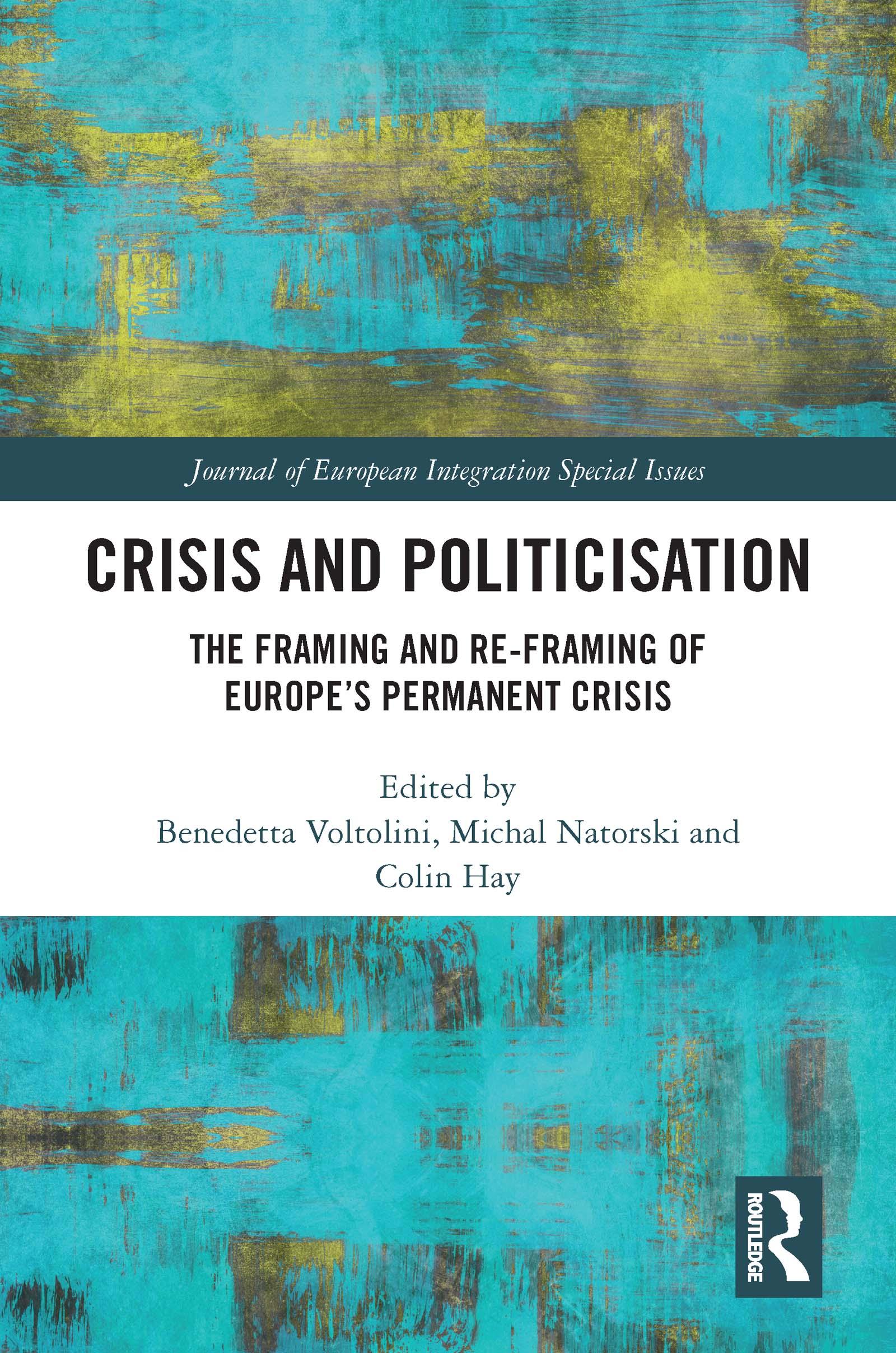
This book elucidates the link between the politics of a now seemingly permanent crisis in Europe and the politicisation of European integration. Looking at the epistemic dimension of crises, it suggests that the way in which a crisis is framed and contested determines its potential impact on the level of politicisation of European integration.
Europe is more challenged and contested today than it has even been, facing crisis of an almost existential kind. Yet, political crises are manufactured and narrated, so Europe has the possibility to intervene and ‘bring about her recovery’, instead of letting these crises prove terminal. This book explores the political process in and through which certain events come to be framed as constitutive of a moment that requires a decisive intervention. It shows that crises require a double framing: a situation needs to be identified as one of crisis in the first place and, subsequently, the nature and character of the crisis need to be specified. By examining a wide range of policy areas, the book demonstrates that framing of crises, i.e., identifying one situation both as a crisis and a crisis of a particular kind, contributes to the politicisation (or depoliticisation) of the process of European integration.
The chapters in this book were originally published as special issue of Journal of European Integration.
Zahle einfach mit Karte, Klarna, Apple Pay oder Google Pay. Nicht zufrieden? Du hast immer ein 14-tägiges Widerrufsrecht. Lies mehr in unseren AGB. Hast du Fragen, schreib uns eine E-Mail an hello@memmo.org.
Memmo macht das Lernen einfacher – wo auch immer du bist. Bei uns findest du deine Kursbücher und smarte Lerntools an einem Ort: Zusammenfassungen, Quizzes, Podcasts und Lernkarten. Und Ted, dein Lernbuddy, beantwortet alles, was du wissen möchtest. Über 50.000 Studierende lernen bereits hier – gemacht, damit du schneller lernst und weniger Stress hast.