
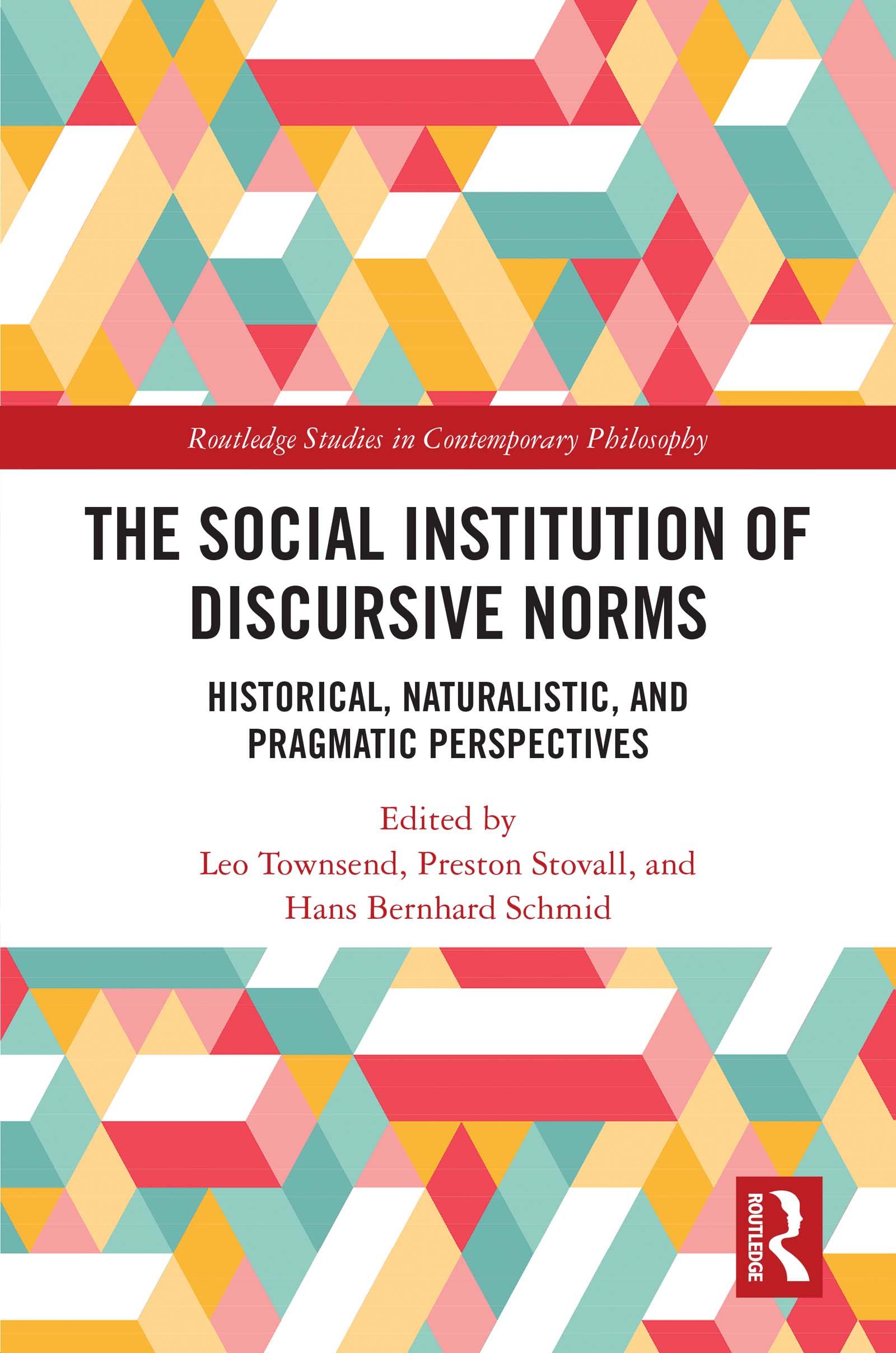
The essays in this collection explore the idea that discursive norms—the norms governing our thought and talk—are profoundly social. Not only do these norms govern and structure our social interactions, but they are sustained by a variety of social and institutional structures.
The chapters are divided into three thematic sections. The first offers historical perspectives on discursive norms, including a chapter by Robert Brandom on the way Hegel transformed Kant’s normativist approach to representation by adding both a social and a historicist dimension to it. Section II features four chapters that examine the sociality of normativity from within a broadly naturalistic framework. The third and final section focuses on the social dimension of linguistic phenomena such as online speech acts, oppressive speech, and assertions.
The Social Institution of Discursive Norms will be of interest to scholars and advanced students working in philosophy of language, philosophy of mind, and social philosophy.
Zahle einfach mit Karte, Klarna, Apple Pay oder Google Pay. Nicht zufrieden? Du hast immer ein 14-tägiges Widerrufsrecht. Lies mehr in unseren AGB. Hast du Fragen, schreib uns eine E-Mail an hello@memmo.org.
Memmo macht das Lernen einfacher – wo auch immer du bist. Bei uns findest du deine Kursbücher und smarte Lerntools an einem Ort: Zusammenfassungen, Quizzes, Podcasts und Lernkarten. Und Ted, dein Lernbuddy, beantwortet alles, was du wissen möchtest. Über 50.000 Studierende lernen bereits hier – gemacht, damit du schneller lernst und weniger Stress hast.