
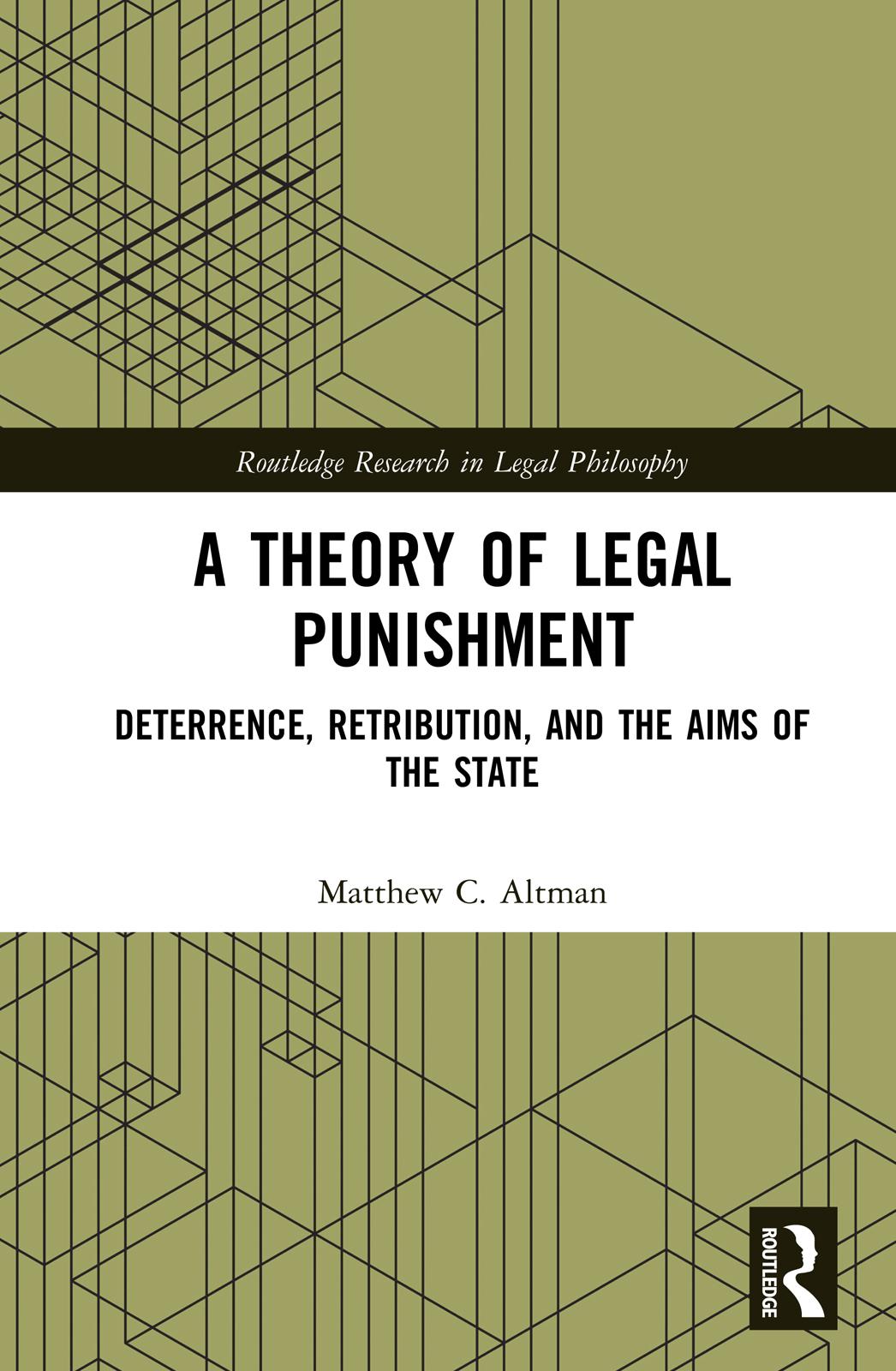
This book argues for a mixed theory of legal punishment that treats both crime reduction and retribution as important aims of the state.
A central question in the philosophy of law is why the state’s punishment of its own citizens is justified. Traditionally, two theories of punishment have dominated the field: consequentialism and retributivism. According to consequentialism, punishment is justified when it maximizes positive outcomes. According to retributivism, criminals should be punished because they deserve it. This book recognizes the strength of both positions. According to the two-tiered model, the institution of punishment and statutory penalties, as set by the legislature, are justified based on their costs and benefits, in terms of deterrence and rehabilitation. The law exists to preserve the public order. Criminal courts, by contrast, determine who is punished and how much based on what offenders deserve. The courts express the community’s collective sense of resentment at being wronged.
This book supports the two-tiered model by showing that it accords with our moral intuitions, commonly held (compatibilist) theories of freedom, and assumptions about how the extent of our knowledge affects our obligations. It engages classic and contemporary work in the philosophy of law and explains the theory’s advantages over competing approaches from retributivists and other mixed theorists. The book also defends consequentialism against a longstanding objection that the social sciences give us little guidance regarding which policies to adopt. Drawing on recent criminological research, the two-tiered model can help us to address some of our most pressing social issues, including the death penalty, drug policy, and mass incarceration. This book will be of interest to philosophers, legal scholars, policymakers, and social scientists, especially criminologists, economists, and political scientists.
Zahle einfach mit Karte, Klarna, Apple Pay oder Google Pay. Nicht zufrieden? Du hast immer ein 14-tägiges Widerrufsrecht. Lies mehr in unseren AGB. Hast du Fragen, schreib uns eine E-Mail an hello@memmo.org.
Memmo macht das Lernen einfacher – wo auch immer du bist. Bei uns findest du deine Kursbücher und smarte Lerntools an einem Ort: Zusammenfassungen, Quizzes, Podcasts und Lernkarten. Und Ted, dein Lernbuddy, beantwortet alles, was du wissen möchtest. Über 50.000 Studierende lernen bereits hier – gemacht, damit du schneller lernst und weniger Stress hast.